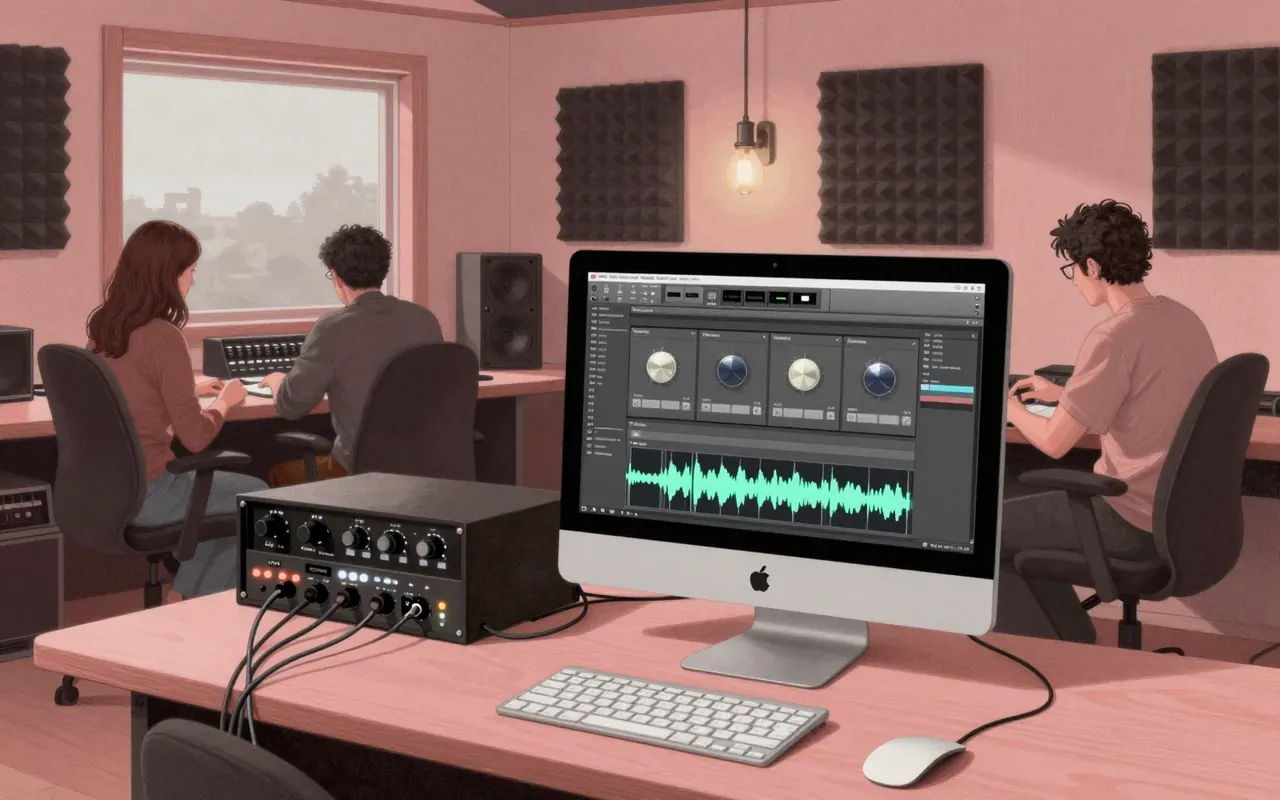
What it is and what it was built for
It is a single-channel, 1U rack-mountable, all-analog FET compressor built around germanium transistors. It was built for studio engineers who want hands-on, colour-forward compression on vocals, guitars, drum buses, and full mixes.
How it works, in terms a player would use
It is a mono, all-analog FET compressor using germanium transistors. Front-panel controls set ratio from 1.5:1 to 10:1 and select Clean (0.2–0.5% distortion) or Dirty (2–5% distortion) modes. Rear XLR I/O connects to consoles or interfaces. It links for stereo or surround use.
What it does better than anything else
It delivers immediate, tactile, distortion-tinted compression that responds fast and colourfully to transients — more aggressively than optical or VCA designs at similar ratios — thanks to its germanium FET circuitry and fixed timing architecture.
What it does badly
It does not compress stereo sources natively. It offers no built-in metering, no variable attack or release, no sidechain EQ beyond high-pass filtering, and no recallable settings.
What people made with it
People made compressed vocal tracks, saturated guitar stems, gluey drum bus treatments, and cohesive full-mix tonal shaping with it.
Who should use it, and who should not
Studio engineers and producers who work primarily in the box but want outboard colour and commitment should use it. Anyone needing stereo-linked compression without external patching, or requiring fine-grained timing control, should not.
Is it worth your time
It is worth your time if you need one-channel analog compression with switchable distortion character and precise ratio control in a compact rack unit. It is not worth your time if you need multichannel operation, digital integration, or transparent dynamics control.