A no-nonsense PCI sound card that recorded cleanly, played softsynths well, and never clicked — but offered no Wave Table Synthesis and zero modern OS love.
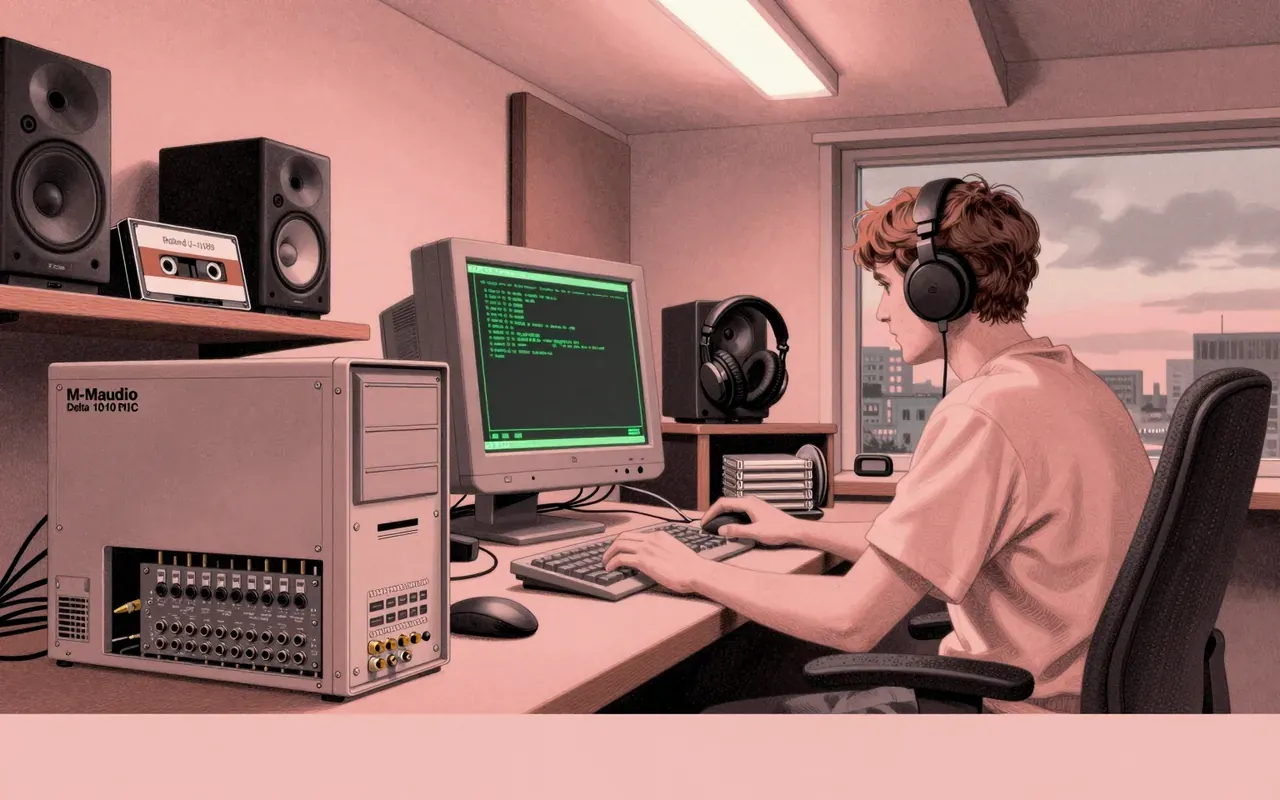
The M-Audio Delta Audiophile 24/96 is a PCI/ISA sound card for Windows-based music production and amateur vocal recording. It connects MIDI controllers and turntables. It supports 24-bit/96 kHz audio when host software allows. Latency drops to 4ms with buffer reductions. It runs silently in Cubase VST, Pro Tools, Fruity Loops, and six other DAWs. Recordings are clean. Softsynths sound great. Wave Table Synthesis is absent — but users found it unnecessary. I/O is limited. Modern OS support is not provided.
Built for music production and amateur vocal recording.
1:40
How it connects
Connects MIDI controllers and turntables; supports 24-bit/96 kHz when host software allows.
2:41
Why it stayed stable
Delivers 4ms latency and zero pops or clicks in Cubase VST, Pro Tools, and six other DAWs.
3:42
Where it sounded best
Records cleanly and makes softsynths sound great.
4:37
What it left out
Wave Table Synthesis was missing — but not missed.
Worth your time?
Yes. Use the whole thing.
4/ 5
What works
clean vocal recording
softsynth playback
stable multi-DAW operation
low-latency MIDI and line-level interfacing
What does not
support modern operating systems
include Wave Table Synthesis
offer extensive I/O
Use it if
Windows users with legacy DAW setups
producers needing stable low-latency audio on older machines
Skip it if
users requiring modern driver support
those needing onboard synthesis or expanded connectivity
The written brief1 min read
What it is and what it was built for
The M-Audio Delta Audiophile 24/96 is an internal PCI/ISA sound card built for music production and amateur vocal recording.
How it works, in terms a player would use
It is an internal PCI/ISA sound card. It connects a MIDI controller and a turntable. It supports 24-bit/96 kHz audio when host software supports it. It delivers stable drivers and low latency down to 4ms with buffer reductions.
What it does better than anything else
It delivers clean recordings, amazing sound quality, and great softsynth playback across multiple DAWs without pops or clicks.
What it does badly
It lacks Wave Table Synthesis. It has limited I/O. It does not support modern operating systems out of the box.
What people made with it
People used it for music production and amateur vocal recording. They connected MIDI controllers and turntables to it.
Who should use it, and who should not
It suits users running older Windows systems who need stable, low-latency audio for DAW work and basic hardware interfacing. It does not suit users needing modern driver support, Wave Table Synthesis, or expanded connectivity.
Is it worth your time
It is worth your time if you need a reliable, low-latency internal audio interface for music production or amateur vocal recording on older Windows systems. It is not worth your time if you require Wave Table Synthesis, extensive I/O, or modern OS compatibility.