audiobriefs
9:21in productionCh. 1 · The FireWire Pioneer/ 9:21 · ceiling 15 min
Studio & recording · Mixing & mastering

MOTU 828

FireWire was its strength and its sentence: rock-solid for its time, obsolete by design.

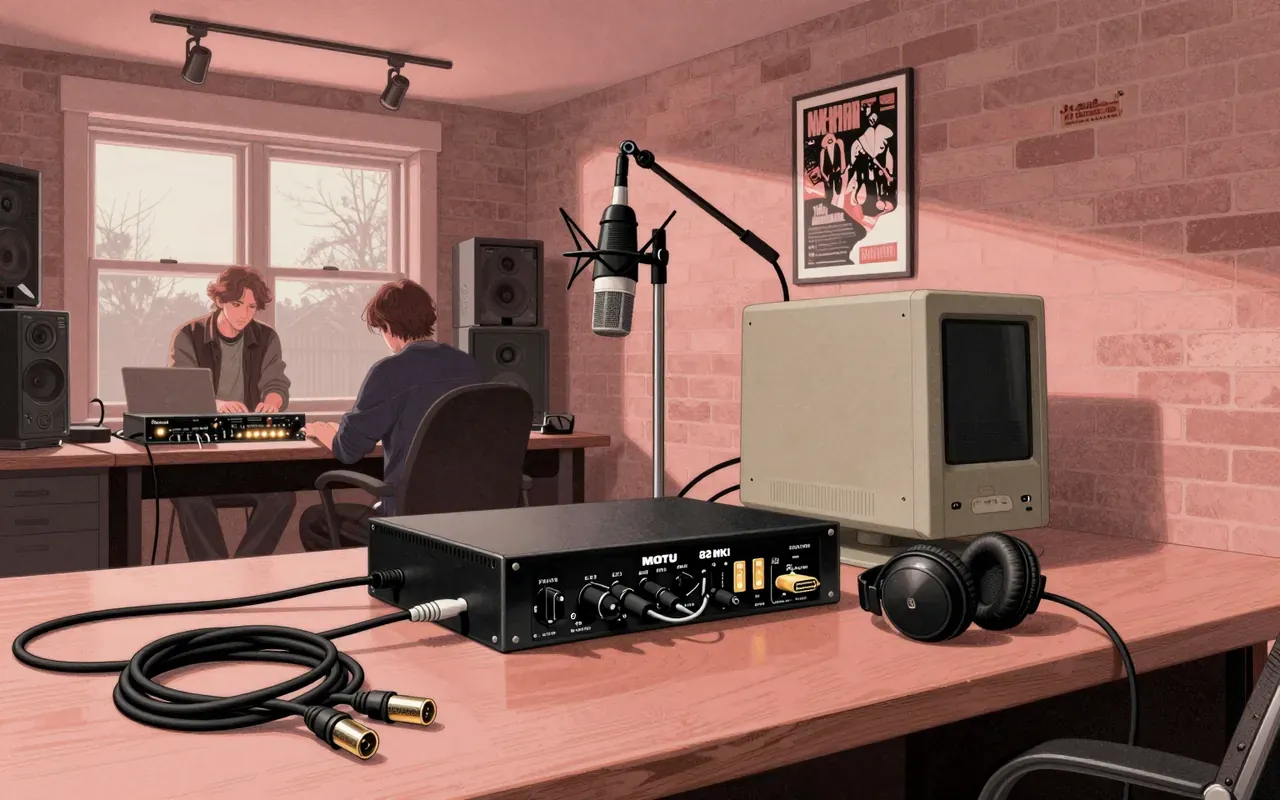
The MOTU 828 MKI is a discontinued FireWire audio interface introduced around 2001–2002. It offered two mic preamps with phantom power and XLR/1/4" inputs, six additional balanced line inputs, eight balanced outputs, ADAT and optical I/O, 24-bit 64x/128x oversampling converters, and front-panel monitoring controls. Priced at $800 at launch, it was considered expensive but highly stable and easy to install. It remains functional for years in typical home studio use but is no longer sold and has been succeeded by newer models including the 828 (2024).

Chapters & takeaways4
  1. 0:57
    The FireWire Pioneer

    It helped define FireWire as a viable audio interface standard — before USB audio matured.

  2. 2:42
    What’s On the Back Panel

    Eight balanced outs, two mic preamps, and oversampled 24-bit conversion gave it serious I/O for its class.

  3. 4:17
    The Price of Early Adoption

    $800 was steep in 2001 — but stability and sound quality justified it for professionals building first-time studios.

  4. 6:27
    Built to Last, Not to Evolve

    It ran for years without failure — then vanished from shelves, leaving only legacy users and adapters.

Worth your time?

Yes. Use the whole thing.

3.5/ 5
What works
  • stable-firewire-operation
  • clean-24-bit-conversion
  • front-panel-monitoring-control
What does not
  • usb
  • midi
  • portable
  • modern-os-compatible
Use it if
  • legacy-firewire-users
  • home-studio-archivists
  • firewire-hardware-collectors
Skip it if
  • laptop-based-producers
  • windows-11-users
  • live-performers
The written brief2 min read

What it is and what it was built for

The MOTU 828 MKI is a discontinued FireWire audio interface built for home and project studios needing reliable multichannel I/O, two mic preamps, and digital expansion — not for live performance, portability, or modern OS compatibility.

How it works, in terms a player would use

It connects to a computer via FireWire. Two XLR/1/4” inputs accept mics or line sources with phantom power and individual gain knobs. Six more balanced line inputs follow, each pair sharing a level control. Eight balanced outputs feed monitors, outboard gear, or multitrack sends. Front-panel controls include master volume, monitor level, headphone output, and LED input/output meters. ADAT and optical I/O add digital expansion.

What it does better than anything else

It delivers stable, low-latency FireWire operation — rare among early consumer interfaces. Its 24-bit conversion with 64x/128x oversampling gave clean, consistent audio for its era. Front-panel monitoring controls let users switch sources, adjust levels, and cue headphones without touching software.

What it does badly

It cannot connect to modern laptops without FireWire ports or adapters. Its $800 launch price was steep for home users. It lacks MIDI I/O, built-in effects, or DSP mixing. The six line inputs are grouped in pairs with shared level controls — no per-channel trimming. Optical I/O is present but unused by many owners, and the manual does not clarify its role.

What people made with it

Home studio users recorded full-band tracks, overdubbed vocals, and mixed stereo masters between 2001 and at least 2008. One owner used it continuously from purchase around 2001–2002 until 2008, confirming its longevity in typical desktop recording workflows.

Who should use it, and who should not

Only users with FireWire-equipped Macs or PCs, existing MOTU FireWire gear, or a working legacy setup. Avoid it if you rely on USB-C, Windows 10/11 native drivers, or need MIDI, software control, or portable operation.

Is it worth your time

Only if you already own it, run legacy FireWire hardware, or need a stable, no-frills interface for basic tracking and monitoring in a system that supports FireWire. It offers no USB fallback, no modern driver support, and no software bundle — just raw I/O and routing.
Same bench · Studio & recording4 of 146
8:19
MOTU 2408MOTUThe MOTU 2408 is a discontinued PCI/ISA rack-mount soundcard built for multitrack recording and mixing in home and project studios.
7:26
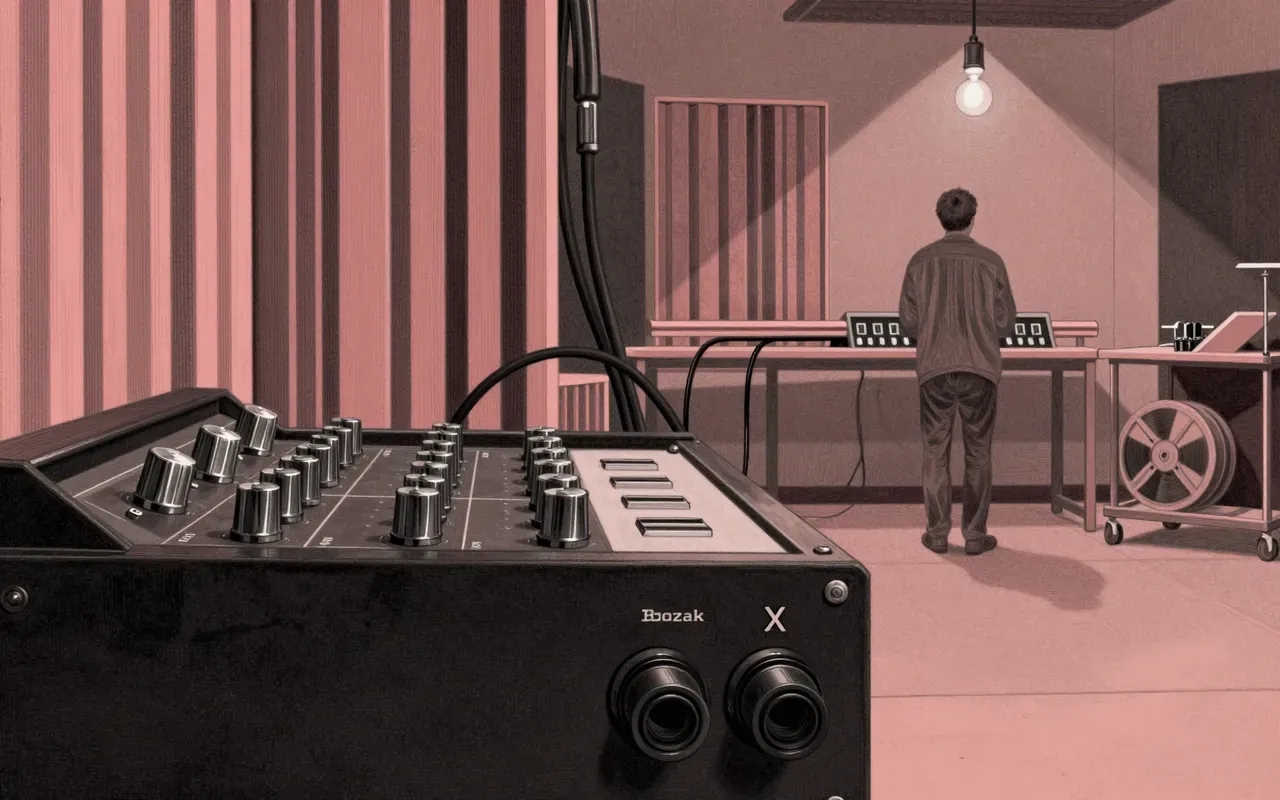
Bozak CMA-10-2DLBozakThe Bozak CMA-10-2DL is a 4+ channel analogue mixer. It routes four inputs to two outputs. It has no equalisation, no dynamics, no monitoring path, and no amplification. Its name appears in multiple inconsistent spellings. No use cases, dates, or technical specifications are verified in available sources.
8:57
MXR Flanger/DoublerMXRThe MXR M126 Flanger/Doubler is a two-space analog rack unit with front-panel 1/4" TRS I/O. It gives players manual, sweep width, sweep speed, mix, and regen knobs plus mode and bypass/invert buttons. It delivers a thick flanging sound and fulfils its synthetic doubling function as advertised. It has no stereo I/O, no expression input, no tap tempo, and no presets. No verified recordings or users are cited. Studio engineers needing fixed, tactile analog flanging or doubling should consider it. Live performers, modular users, and those requiring stereo or foot control should not.
9:43
Beyerdynamic M 160Beyerdynamic · 1957The Beyerdynamic M 160 is a hypercardioid ribbon microphone introduced in 1957. It uses dual 15-mm aluminum ribbons suspended between alnico magnets, rotated 90° to achieve end-address directionality. It softens strident sound sources without dulling transients. It was used by Eddie Kramer on Jimi Hendrix’s vocals and amplifier and by Andy Johns on John Bonham’s drums for 'When the Levee Breaks.' It remains in production after over six decades.
Up next in Audio

Digidesign 888 I/O

Digidesign · 7:57

A 16-bit bridge between analog gear and early Pro Tools — functional, narrow, and obsolete outside its original chain.

7:57