audiobriefs
8:19in productionCh. 1 · Discontinued and replaced/ 8:19 · ceiling 15 min
Studio & recording · Mixing & mastering

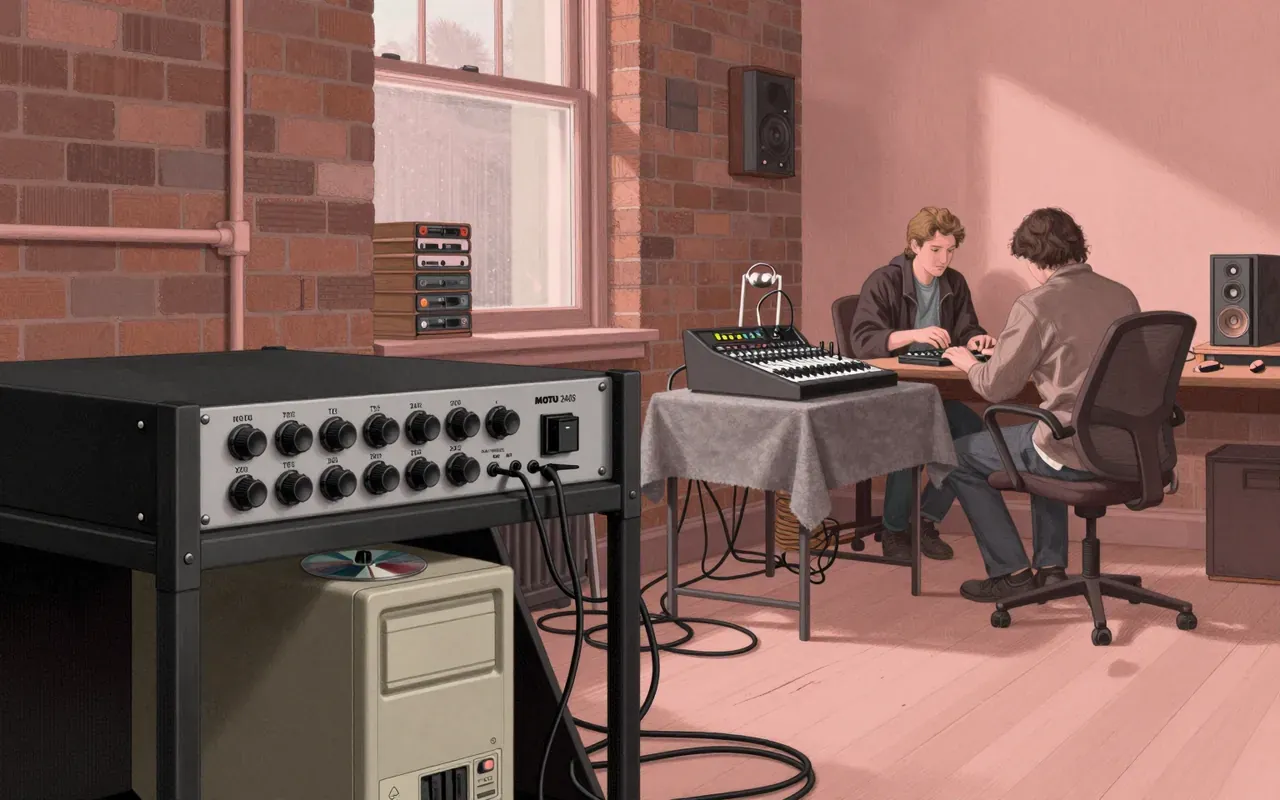
MOTU 2408

A discontinued rack soundcard that gave project studios 24-track mixing — but only if you still own a working PCI motherboard from 2003.

The MOTU 2408 is a discontinued PCI/ISA rack-mount soundcard built for multitrack recording and mixing in home and project studios.

Chapters & takeaways4
  1. 0:49
    Discontinued and replaced

    It is obsolete hardware, replaced by the 2408 Mk3 and unsupported since discontinuation.

  2. 2:00
    High-channel I/O at 24-bit/48 kHz

    It delivers 8 analog inputs plus 16 more over ADAT, running at 24-bit/48 kHz in Cubase 5.

  3. 3:22
    24-track mixing, 8-in/16-out recording

    It handles 8-track recording, 16-track playback with 10 effects, and 24-track mixing — all simultaneously.

  4. 4:48
    Expandable beyond 70 I/O channels

    Chaining multiple units over PCI scales I/O beyond 70 channels.

Worth your time?

No. The brief is enough.

2.5/ 5
What works
  • stable 24-track mixing
  • 8-in/16-out recording at 24-bit/48 kHz
  • ADAT expansion
  • PCI chaining for over 70 I/O channels
What does not
  • run on modern operating systems
  • support current DAWs natively
  • offer USB or Thunderbolt connectivity
  • include onboard DSP effects
Use it if
  • project studio engineers using Windows XP-era Cubase or Logic Audio
  • archivists restoring legacy multitrack sessions
Skip it if
  • anyone building a new studio
  • macOS users
  • musicians needing plug-and-play compatibility
The written brief1 min read

What it is and what it was built for

The MOTU 2408 is a discontinued PCI/ISA rack-mount soundcard built for multitrack recording and mixing in home and project studios.

How it works, in terms a player would use

It installs in a PCI or ISA slot. It gives 8 analog inputs and expands to 16 more via ADAT optical. It handles 24 simultaneous tracks for mixing. It runs at 24-bit/48 kHz in Cubase 5. It connects to other 2408 units over PCI for over 70 total I/O channels.

What it does better than anything else

It delivered stable 24-track mixing and 8-in/16-out recording with low-latency effects routing in its era — more simultaneous I/O than most contemporaries at the same price point.

What it does badly

It is discontinued and unsupported. It has no native macOS or modern Windows driver. It requires vintage hardware and software ecosystems to function.

What people made with it

Users recorded 8 tracks simultaneously while playing back 16 with 10 effects. They mixed 24 tracks at once. They used it as a live console patch interface and chained multiple units for over 70 I/O channels.

Who should use it, and who should not

Only collectors, restoration specialists, or studio archivists maintaining period-accurate Windows XP-era setups. Not for anyone building or upgrading a current studio.

Is it worth your time

Only if you need high-channel-count, stable multitrack I/O on legacy Windows hardware — and can source working units, drivers, and compatible motherboards. It does not run on modern systems.
Same bench · Studio & recording4 of 146
Up next in Audio

Neve 31102

Neve · 8:26

It is not a Neve console module. It is not analogue. It is a UAD-only graphic EQ — and it tells you nothing about how it sounds.

8:26