audiobriefs
8:32in productionCh. 1 · Not for sale. Then sold./ 8:32 · ceiling 15 min
Mixing & mastering · Studio & recording

Trident A Range

The Trident A Range isn’t a synth — it’s a vanishingly rare console that made drums sound like gods struck the earth.

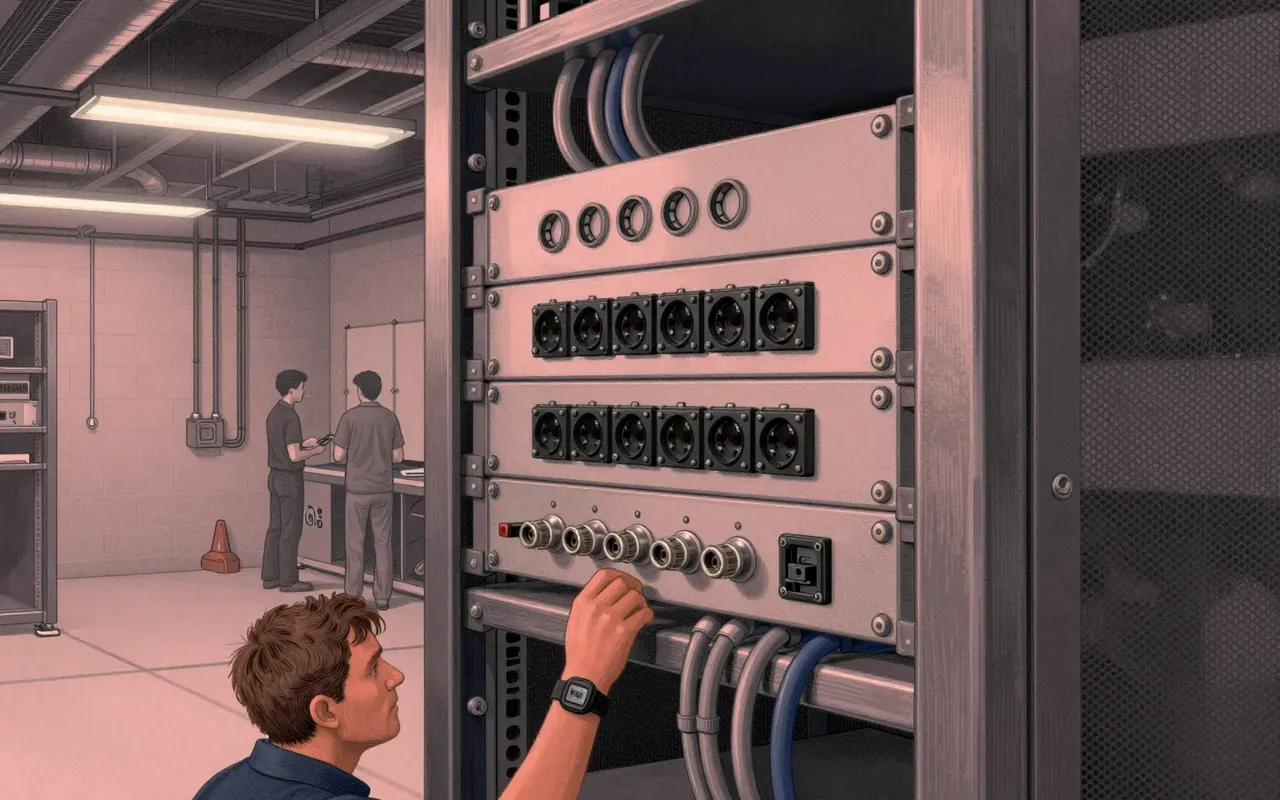
The Trident A Range is a rare, studio-built analog mixing console — not an instrument — with only 13 units ever made. It was built by and for Trident Studios, adopted by Cherokee Studios after outperforming Neve, Helios, and Cadac in a drum-miking test, and prized for its distinct, 'musical' EQ and saturated tonal character. It offers no automation, no digital features, no portability, and no relevance outside high-end analog studio contexts.

Chapters & takeaways4
  1. 0:48
    Not for sale. Then sold.

    Built by Trident Studios, not for sale — until other studios demanded it.

  2. 2:09
    Thirteen consoles. One sound.

    Thirteen units. One reputation: ‘musical’ EQ and distinct tone.

  3. 3:48
    The drum test that ended the search

    It won a drum shootout against Neve, Helios, and Cadac — no contest.

  4. 4:54
    Los Angeles got one of the first

    Cherokee Studios installed one of the first production models in Los Angeles.

Worth your time?

No. The brief is enough.

4/ 5
What works
  • tracking live drums
  • vocal bus compression via summing
  • EQ-driven tonal shaping
What does not
  • audio/instruments
  • audio/synths-and-drum-machines
  • audio/keyboards-and-organs
Use it if
  • audio/mixing-and-mastering
  • audio/studio-and-recording
Skip it if
  • home producers
  • performers
  • DAW-centric users
The written brief1 min read

What it is and what it was built for

It is a studio-built analog recording console, not a musical instrument. It was built by and for Trident Studios to track and mix multi-track recordings in the early 1970s.

How it works, in terms a player would use

It is a 24- or 32-channel analog mixing console with discrete transistor circuitry, transformer-coupled outputs, and a dedicated EQ section per channel. It routes signals through mic preamps, line inputs, monitor paths, and stereo busses — all operated via physical faders, rotary knobs, and switches.

What it does better than anything else

It does better than most consoles at imparting harmonic saturation and a cohesive tonal balance across full mixes — especially on drums and vocals — due to its ‘musical’ EQ and transformer colouration.

What it does badly

It does badly at signal routing flexibility, automation, and channel count scalability. There is no patchbay standard, no solo-in-place, no mute groups, and no built-in dynamics processing beyond basic gain staging.

What people made with it

Cherokee Studios used it to record major label albums in Los Angeles after choosing it over Neve, Helios, and Cadac modules in a blind drum-miking test.

Who should use it, and who should not

Only engineers or studios with access to a fully serviced, calibrated unit — and the budget to maintain it — should use it. No one else should. It is not for home producers, performers, or software-based workflows.

Is it worth your time

It is not worth your time unless you are restoring, operating, or critically evaluating a rare studio console in a professional tracking or mixing environment. It has no interface for DAW integration, no recall, no digital features, and no portability.
Same bench · Mixing & mastering4 of 4
8:48
Fairchild 660FairchildThe Fairchild 660 is a mono tube compressor introduced in 1959. It was the first intelligent automatic volume control limiter. Designed by Rein Narma, the first ten units were built by him. The first unit went to Rudy Van Gelder, who used it to cut lacquer masters for Blue Note Records and Vox Records. It functions as a compressor (2:1, threshold 5 dB below normal) or peak limiter (30:1, threshold 10 dB above normal), with fixed 1/10,000-second attack and variable release. Its push-pull amplification and high control voltage yield low distortion, low noise, and no audible thumps.
9:00
Neve 80 SeriesNeveThe Neve 80 Series is a hand-wired analogue mixing console built from 1968 to 1979. It uses custom preamps, line amps, and compressor/limiters wired point-to-point by hand. The 8048 model features the 1081 preamp and 4-band EQ across 24 or 32 channels. In 1976, Neve launched the in-line-monitor 8058 and 8068. Late-’70s units offered NECAM, the world’s first successful moving-fader automation system. Production was limited; manufacturing ceased in 1979.
9:46
Pultec EQP-1PultecThe Pultec EQP-1 is a passive, tube-amplified equalizer introduced in 1956 in a 3U 19-inch rack chassis, designed specifically for professional recording studios to overcome noise issues in existing film-industry equalizers. It features a low-frequency shelving filter with three bands (30, 60, 100 Hz) and a parametric high-frequency section with boost frequencies at 3, 5, 8, 10, and 12 kHz plus adjustable bandwidth. Its design enabled simultaneous boost and attenuation of adjacent low frequencies — a technique later adopted despite being discouraged in the original manual.
9:03
EMI TG12345EMIThe TG12345 was Abbey Road’s first solid-state console, installed in late 1968 to enable 8-track recording. It had 24 mic inputs, 8 tape outputs, and per-channel compression and EQ — a leap from the tube-based REDD .51 and the four-track Studer J37. It did one thing decisively: expand track count while integrating dynamics and tone shaping into every channel. It offered no automation, no recall, and no adaptability beyond that fixed architecture. It belongs in a working historical studio, not a modern hybrid setup.
Up next in Audio

Neumann U 47

Neumann · 2015 · 10:30

The U 47 didn’t define studio sound — it defined what a studio microphone had to be able to do.

10:30