What it is and what it was built for
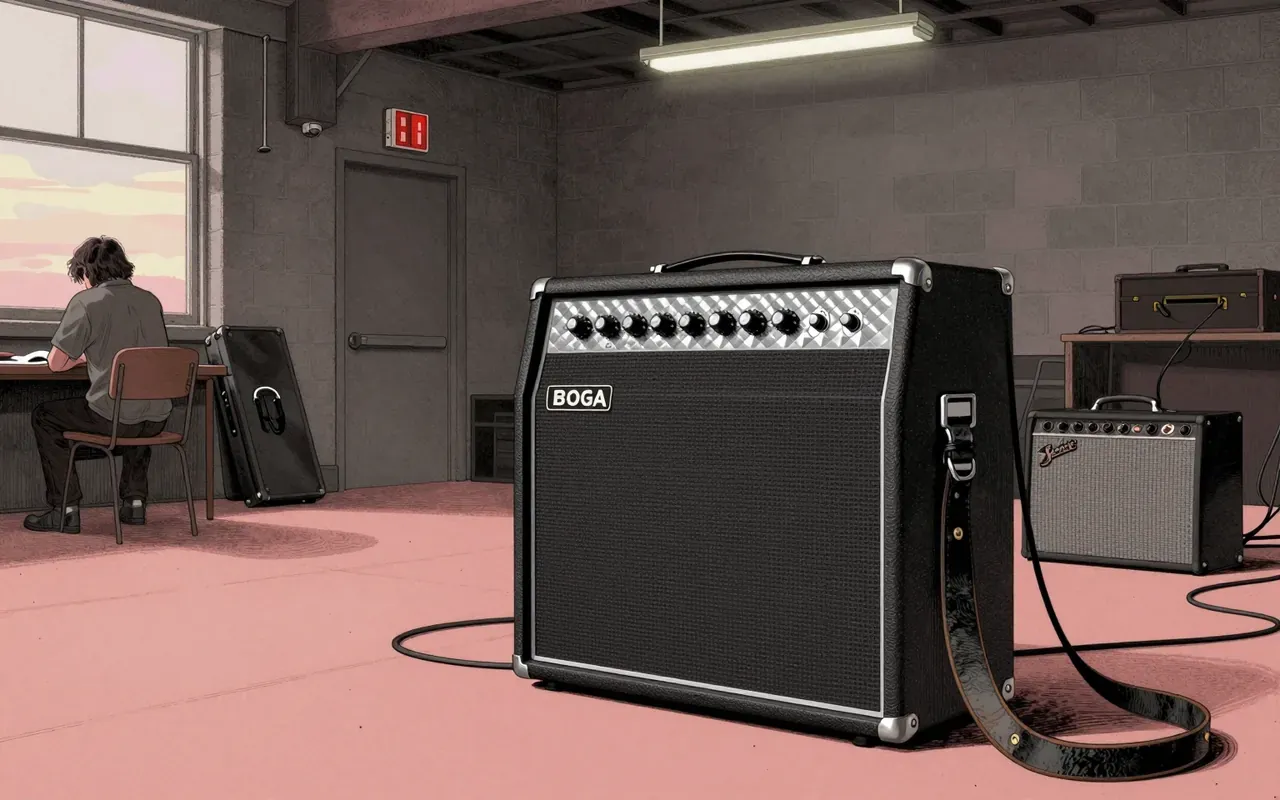
A 12-inch combo guitar amplifier built by Fender Electric Instrument Company and successors. Designed for gigging guitarists who needed reverb and tremolo onboard, without external units.
How it works, in terms a player would use
It runs two 6V6GT power tubes hard—beyond their rated voltage—to deliver 22 watts into an 8-ohm load. It uses four 12AX7s for preamp gain and tremolo, two 12AT7s to drive reverb and phase inversion, and a 5AR4 rectifier. The spring reverb is built-in. The speaker is usually a Jensen C-12Q, but Oxford, Marlboro, Utah, and Eminence variants appear across production runs.
What it does better than anything else
It delivers immediate, tactile response from the first note: touch-sensitive breakup, singing sustain at low volumes, and reverb that feels wet and three-dimensional—not digital, not simulated, but physically present in the tank and speaker.
What it does badly
It distorts early and cannot stay clean above moderate volume. Its 22-watt output sags under heavy bass or sustained chords. The reverb lacks depth control. There is no master volume, no footswitching, and no EQ beyond treble, middle, bass, presence, and reverb/tremolo knobs.
What people made with it
Players used it for surf rock, blues, country, and indie rock—any genre where reverb-drenched clarity, warm compression, and organic decay mattered more than pristine cleans or high-gain saturation.
Who should use it, and who should not
Guitarists who play at home, in small venues, or track with mic’d cabinets—and who value immediacy over flexibility. Not for metal players, front-of-house engineers needing line-level outputs, or anyone who relies on silent practice or digital integration.
Is it worth your time
Yes—if you need a compact, responsive tube amp that breaks up early, delivers lush spring reverb, and sits in a band without dominating. No—if you need clean headroom, high-volume stability, or modern features like effects loops or channel switching.