audiobriefs
9:04in productionCh. 1 · No Preamps. No Headphone Out./ 9:04 · ceiling 15 min
Studio & recording · Mixing & mastering

Echo AudioFire 12

No mic preamps. No headphone jack. But 12 pristine line inputs that don’t bleed—ever.

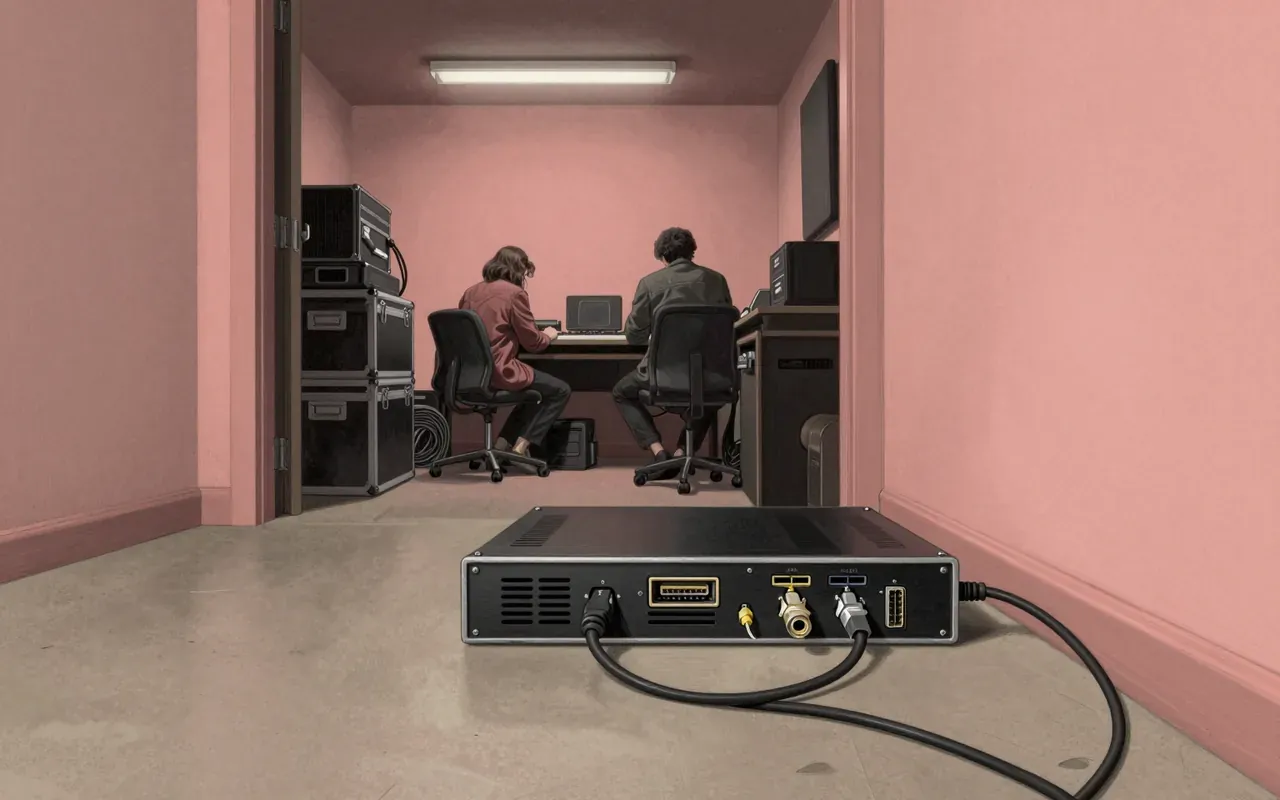
The Echo Audiofire 12 is a FireWire audio interface in the Audiofire series. It has 12 line inputs and 12 outputs. It has no mic preamps. It has no headphone output. It supports daisy-chaining up to three units for 36 I/O. It achieves 2.9 ms round-trip latency at 24-bit/96 kHz. Its line inputs are transparent and electrically isolated. Users record 12 tracks simultaneously at up to 192 kHz, firmware permitting.

Chapters & takeaways4
  1. 0:42
    No Preamps. No Headphone Out.

    It’s a FireWire-only line interface—no mic preamps, no exceptions.

  2. 2:14
    Transparent. Separated. Bleed-Free.

    Its line inputs stay electrically isolated—even with six external preamps on drums.

  3. 3:27
    Chains Deep. Latency Low.

    Daisy-chain three for 36 I/O. Hit 2.9 ms latency at 24/96 kHz.

  4. 4:57
    12 Tracks. Up to 192 kHz.

    Records 12 tracks at up to 192 kHz—firmware permitting.

Worth your time?

Yes. Use the whole thing.

3.5/ 5
What works
  • 12-track recording at up to 192 kHz
  • daisy-chaining for 36 I/O
  • electrically isolated line inputs with zero observed bleed
  • stable drivers and robust thermal performance
What does not
  • offer mic preamps
  • include a headphone output
  • support USB or Thunderbolt
  • run on modern macOS or Windows without legacy FireWire support
Use it if
  • FireWire-equipped studios
  • engineers with external preamps and headphone amps
  • users prioritising channel count and signal isolation over convenience
Skip it if
  • laptop-based producers without FireWire
  • solo recordists needing all-in-one I/O
  • anyone expecting plug-and-play compatibility
The written brief1 min read

What it is and what it was built for

The Echo Audiofire 12 is a FireWire audio interface in the Audiofire series. It was built for professional and home studios needing high channel count, low-latency line I/O without onboard preamps.

How it works, in terms a player would use

It connects via FireWire 500. It routes 12 line-level inputs and 12 outputs with no built-in mic preamps. You must supply external preamps. It daisy-chains up to two more units for 36 I/O total. Latency is 2.9 ms at 24-bit/96 kHz with a 256-sample buffer.

What it does better than anything else

It delivers transparent, electrically isolated line inputs—no bleed even when feeding six external preamps simultaneously. It sustains 12-track recording at up to 192 kHz, subject to firmware.

What it does badly

It has no headphone output. It offers no mic preamps. It cannot drive headphones or microphones directly. Its FireWire dependency limits compatibility with modern laptops.

What people made with it

Users recorded full drum kits using six external mic preamps, relying on its clean, separated line inputs. They expanded I/O to 36 channels by chaining three units.

Who should use it, and who should not

Use it if you run a FireWire-based studio, own external preamps and a headphone amp, and prioritise channel count and signal integrity over convenience. Do not use it if you need mic preamps, a headphone output, or USB compatibility.

Is it worth your time

Yes—if you already own FireWire-equipped hardware, need high-channel-count line I/O, and can source external preamps and a headphone amp. No—if you rely on plug-and-play USB, need mic preamps, or lack FireWire ports.
Same bench · Studio & recording4 of 146
8:15
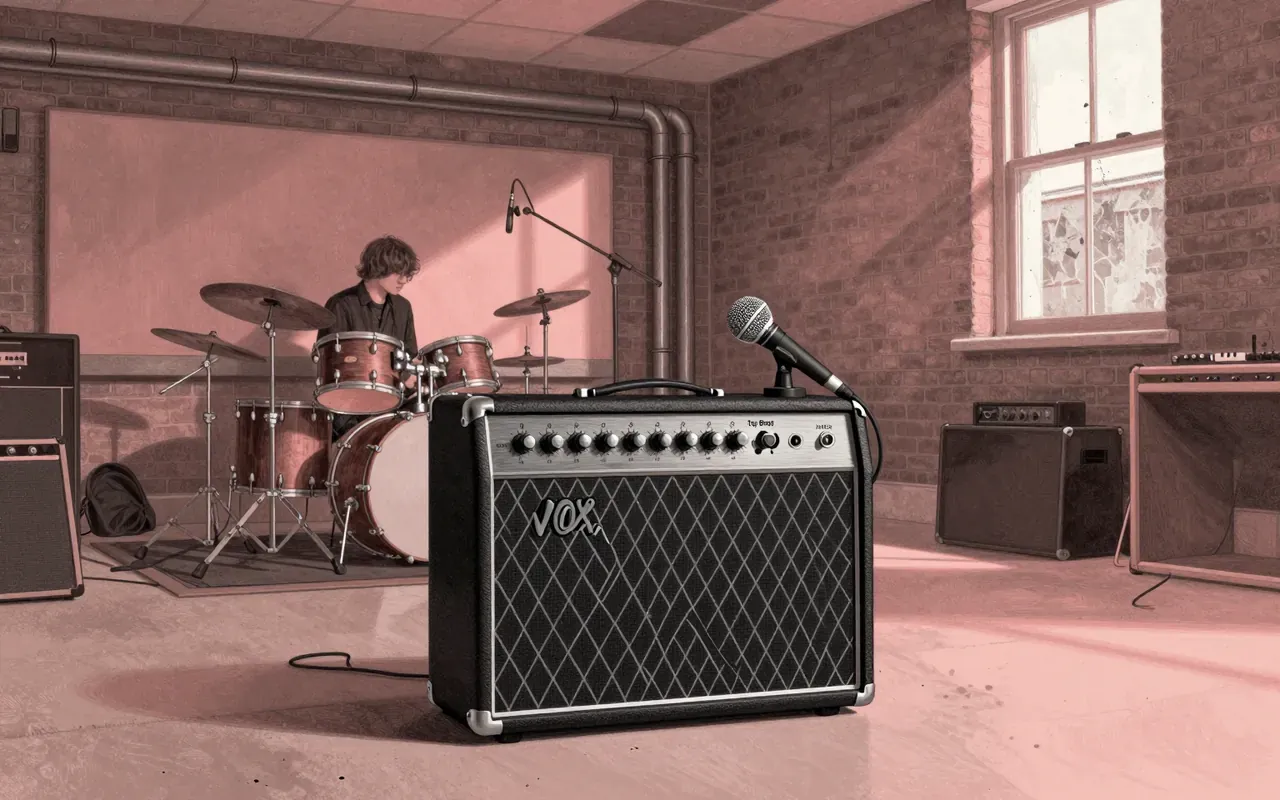
Vox AC30VoxThe Vox AC30 is a valve-powered guitar amplifier introduced in 1959 to provide higher wattage and greater volume than the AC15. Its class AB operation, cathode-biased EL84 push-pull output stage, and Celestion Blue speaker pairing produce a jangly, mid-forward, high-clarity tone with limited low-end at low volumes but strong headroom and smooth overdrive. It is not synthesizer-based and does not employ digital or solid-state synthesis methods.
8:50
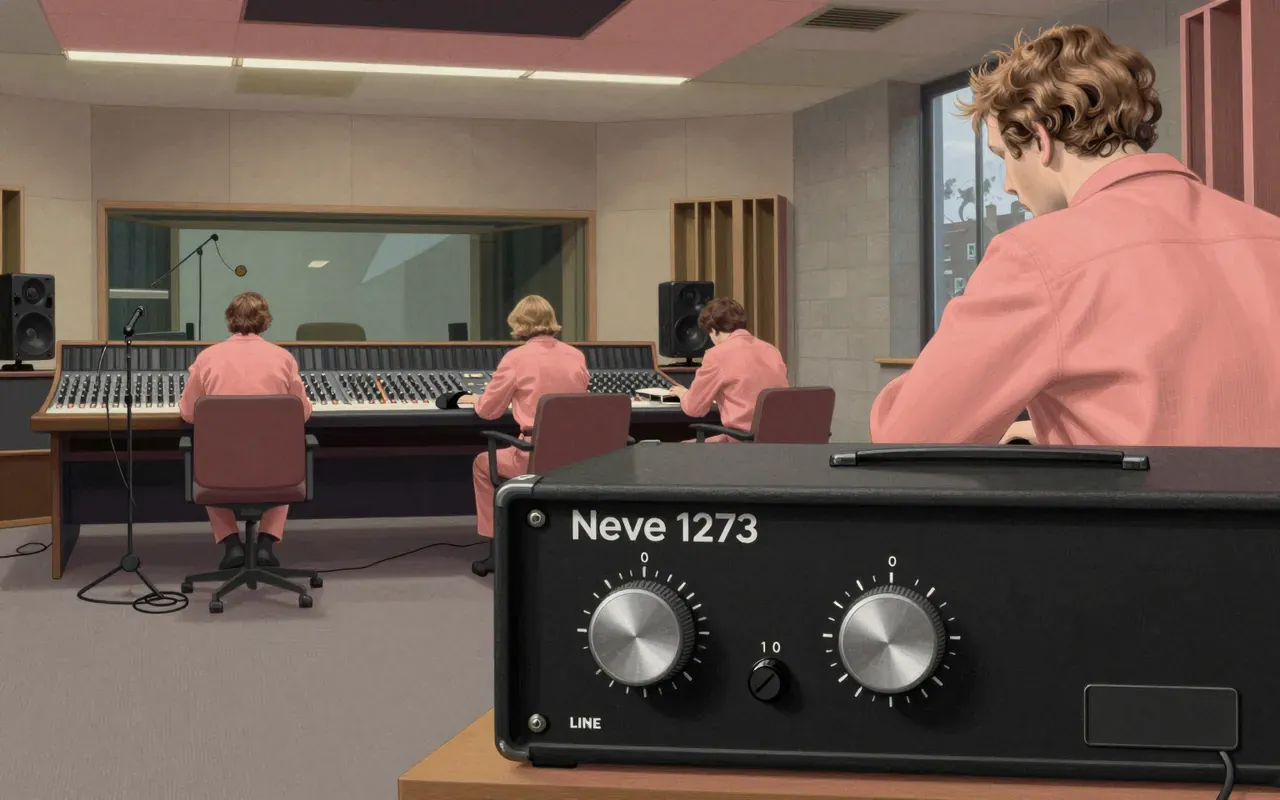
Neve 1272 Line AmpNeveThe Neve 1272 is a solid-state line amplifier. It does not accept microphone signals. It adds clean, transformer-coupled gain to line-level sources. It offers no input flexibility, no EQ, no saturation controls. Its value lies in its place in a fixed-path studio chain — not in versatility.
9:21
Prism Sound ADA-8Prism SoundThe Prism Sound Dream ADA-8 is a dual-path AD/DA converter built for clean, separated signal routing at up to 96 kHz. It delivers stable internal clocking and user-friendly displays, but lacks built-in sample rate conversion and fails under external sync with Pro Tools HD interfaces. It belongs in studios where path independence matters more than interoperability.
8:36
Avalon Design Avalon AD2022Avalon DesignThe Avalon AD2022 is a two-channel, analog, solid-state, pure class A microphone preamplifier. It delivers transparent, low-noise amplification. It has variable input impedance. It accepts microphones and DI sources. It includes phantom power, a 20dB pad per channel, polarity reversal, and a switchable variable high-pass filter. It uses XLR connections. It has front-panel XLR and jack connectors for instruments. It is rackmounted and occupies two standard rack spaces.
Up next in Audio

M-Audio Audiophile 2496

M-Audio · 8:01

A no-nonsense PCI sound card that recorded cleanly, played softsynths well, and never clicked — but offered no Wave Table Synthesis and zero modern OS love.

8:01