A preamp that refuses to get in the way — and therefore refuses to help you decide.
The Avalon AD2022 is a two-channel, analog, solid-state, pure class A microphone preamplifier. It delivers transparent, low-noise amplification. It has variable input impedance. It accepts microphones and DI sources. It includes phantom power, a 20dB pad per channel, polarity reversal, and a switchable variable high-pass filter. It uses XLR connections. It has front-panel XLR and jack connectors for instruments. It is rackmounted and occupies two standard rack spaces.
Pure class A means no crossover distortion — and two discrete channels mean no crosstalk.
2:14
Tune the source, not the signal
Variable impedance and a switchable high-pass filter let you tune the source before gain — not after.
3:46
Front-panel access, no detours
XLR and front-panel jacks put mics and instruments within reach — no patchbay needed.
5:24
Rack space earned, not borrowed
Two rack units is all it takes — no extra space for features it lacks.
Worth your time?
Yes. Use the whole thing.
4/ 5
What works
transparent gain staging
low-noise amplification
source-tailored impedance matching
front-panel instrument access
What does not
colour sound
compress
provide EQ beyond high-pass
support digital routing
Use it if
studio engineers tracking clean sources
Skip it if
engineers seeking harmonic texture
producers working outside fixed-rack studios
The written brief1 min read
What it is and what it was built for
The Avalon AD2022 is a two-channel, analog, solid-state, pure class A microphone preamplifier. It was built for studio engineers who demand clean gain staging from microphones and direct instruments.
How it works, in terms a player would use
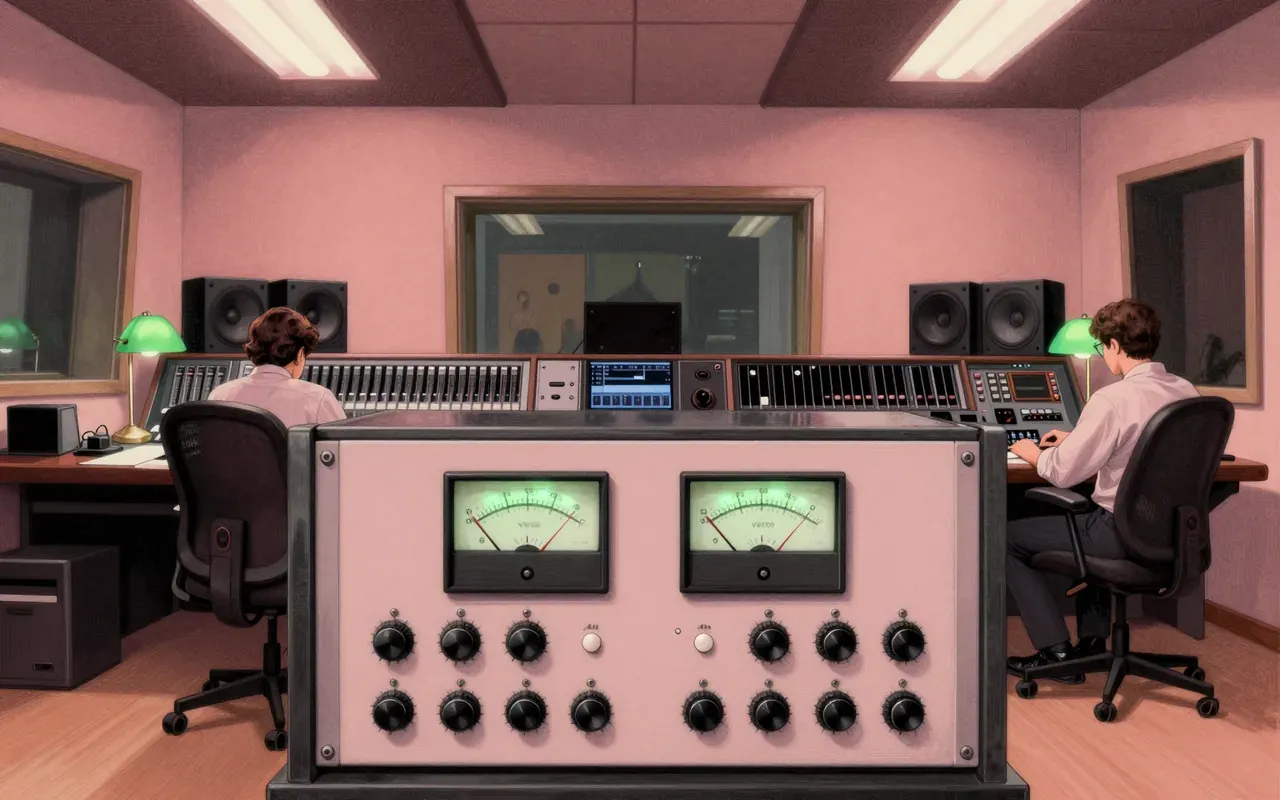
It has two discrete channels. Each channel offers phantom power, a 20dB pad, polarity reversal, and a switchable variable high-pass filter. Input impedance is variable. It accepts microphones and DI sources via XLR and front-panel jack connectors. Backlit VU meters show level per channel.
What it does better than anything else
It delivers transparent, low-noise amplification more consistently than most solid-state preamps — because it runs pure class A across both discrete channels, with no shared circuitry or compromise on headroom.
What it does badly
It does not colour sound. It gives no harmonic saturation, no compression, no EQ beyond the high-pass filter, and no output routing options.
What people made with it
The sources do not state what people made with it.
Who should use it, and who should not
Studio engineers who track vocals, acoustic guitars, and bass DI with minimal colouration should use it. Anyone seeking warmth, grit, or character from their preamp should not.
Is it worth your time
It is worth your time if you need transparent, low-noise class A amplification in a fixed-rack format with precise input control — but not if you require tube colouration, digital routing, or channel linking.