audiobriefs
8:43in productionCh. 1 · What’s on the front panel/ 8:43 · ceiling 15 min
Studio & recording

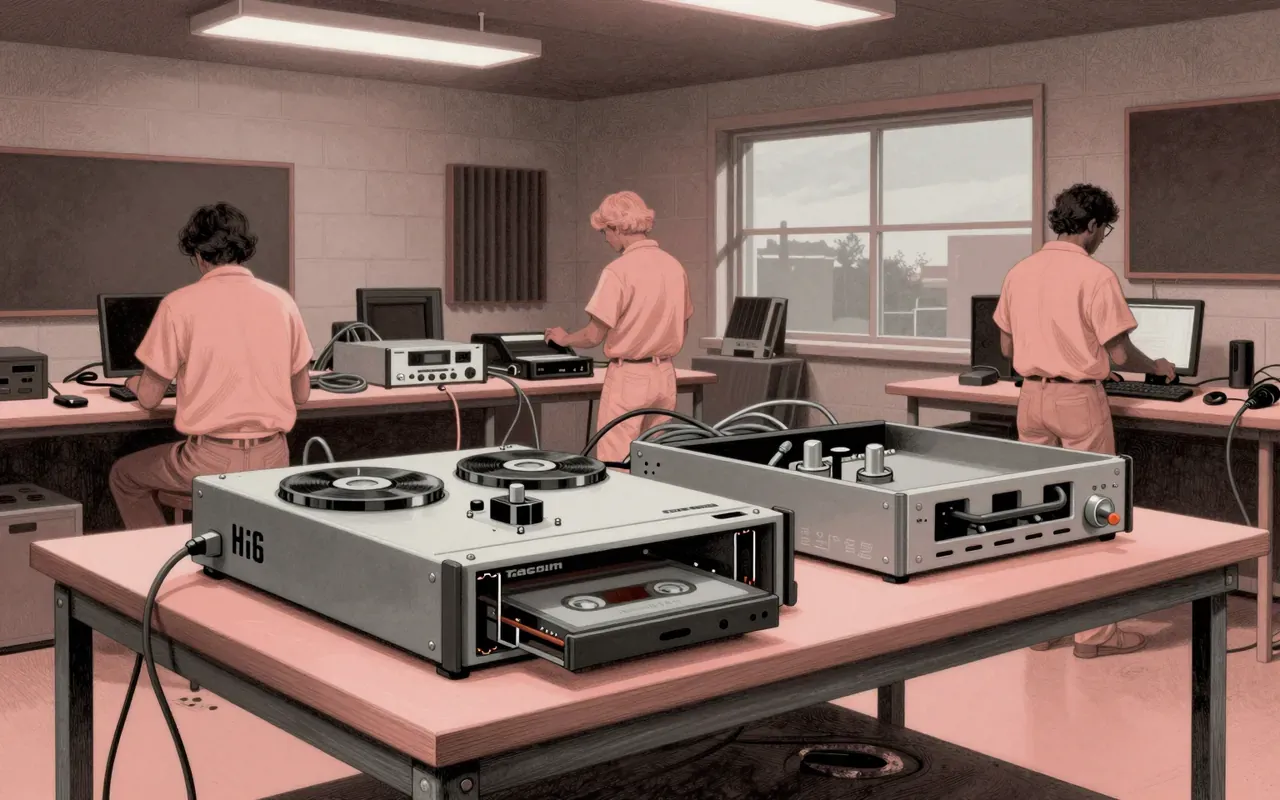
Tascam Portastudio 244

It degrades your sound with every bounce — and that’s why people loved it.

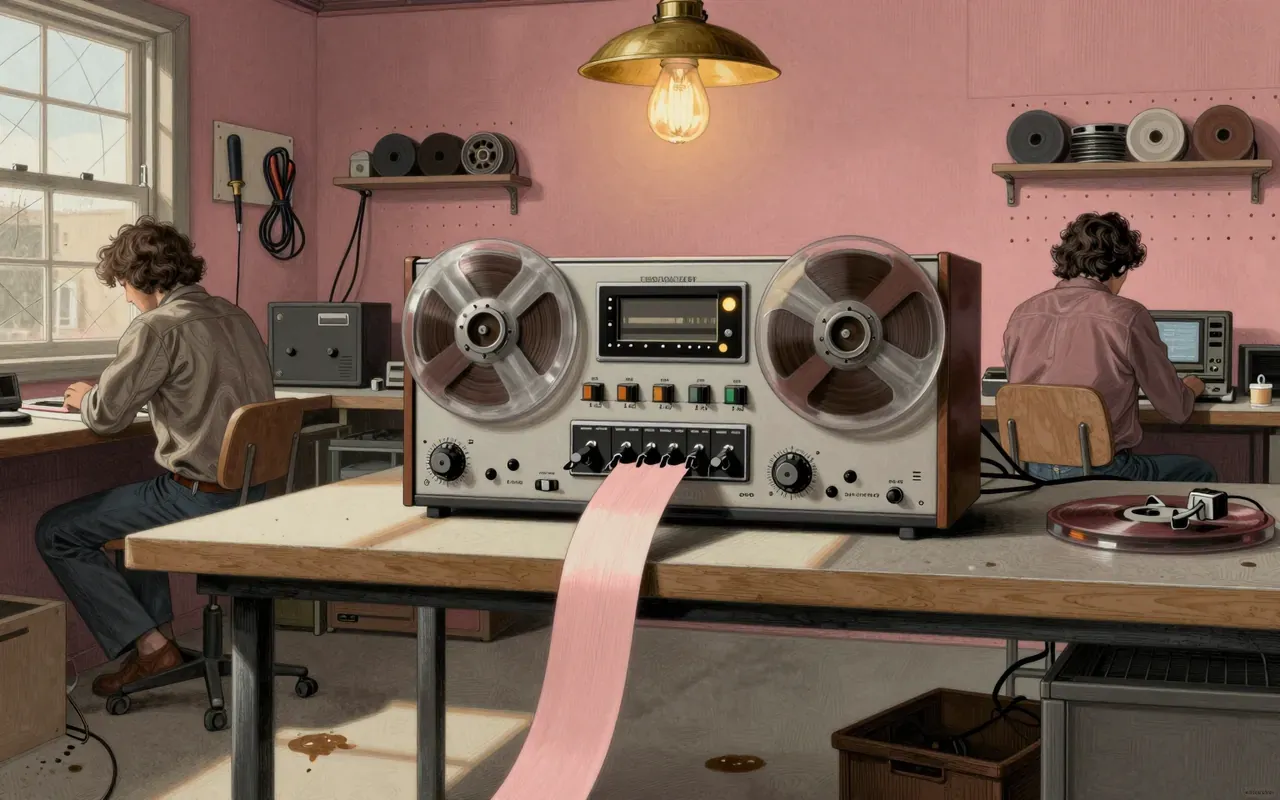
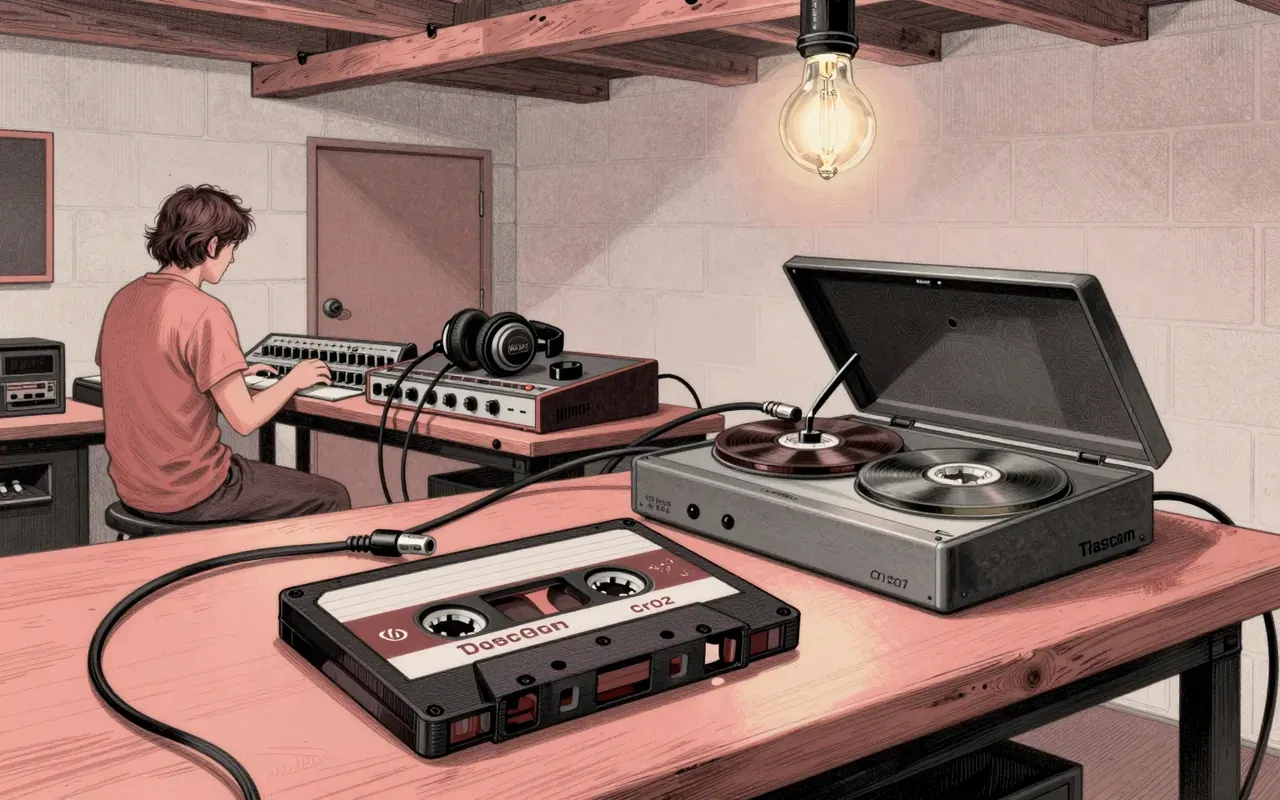
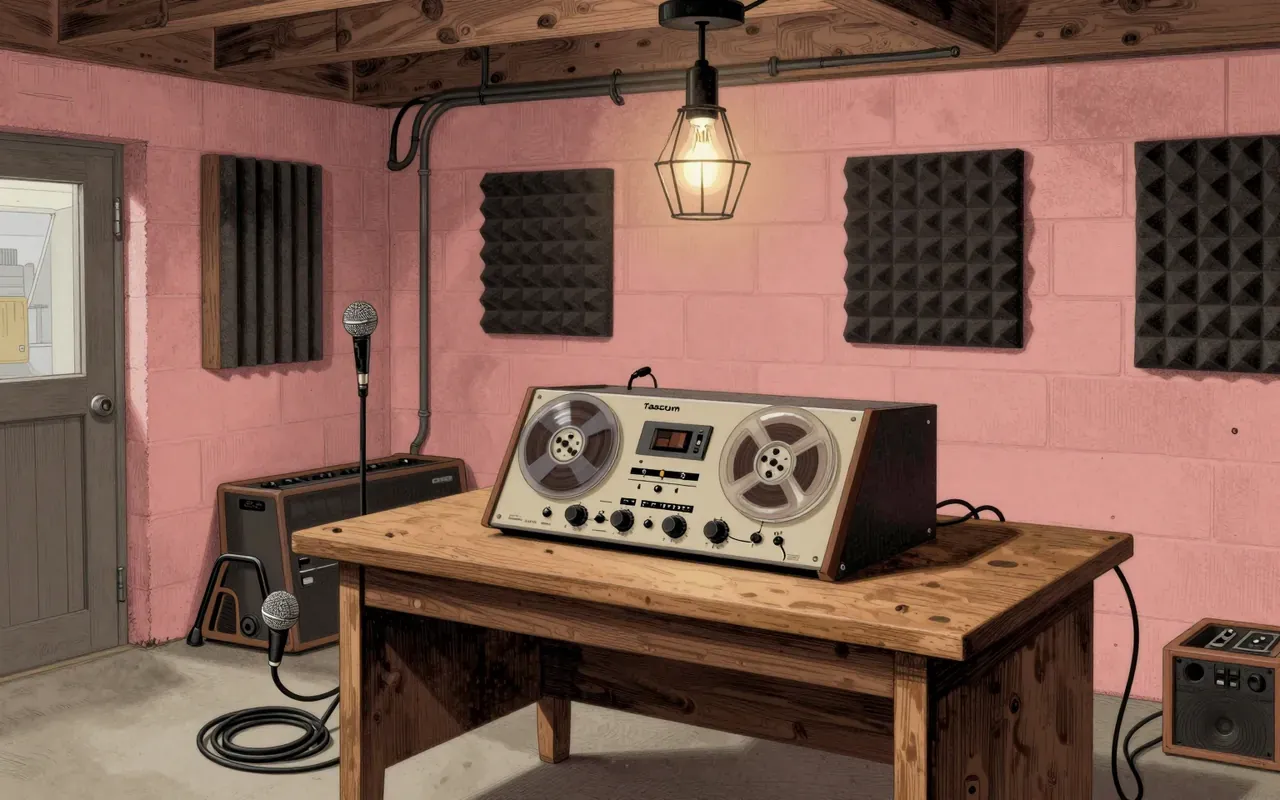
The Tascam Portastudio 244 is a 1984 four-track cassette recorder. It gives immediate, portable multitrack recording with EQ, gain, and switchable input impedance per track. DBX noise reduction works. Analog saturation stays musical. But signal degrades horribly at each bounce. Cassette transport is fragile. Preamps sound thin and harsh. No phantom power. Unbalanced inputs only. It was bought in Paris in 1984 for nearly 5,000 francs.

Chapters & takeaways4
  1. 0:46
    What’s on the front panel

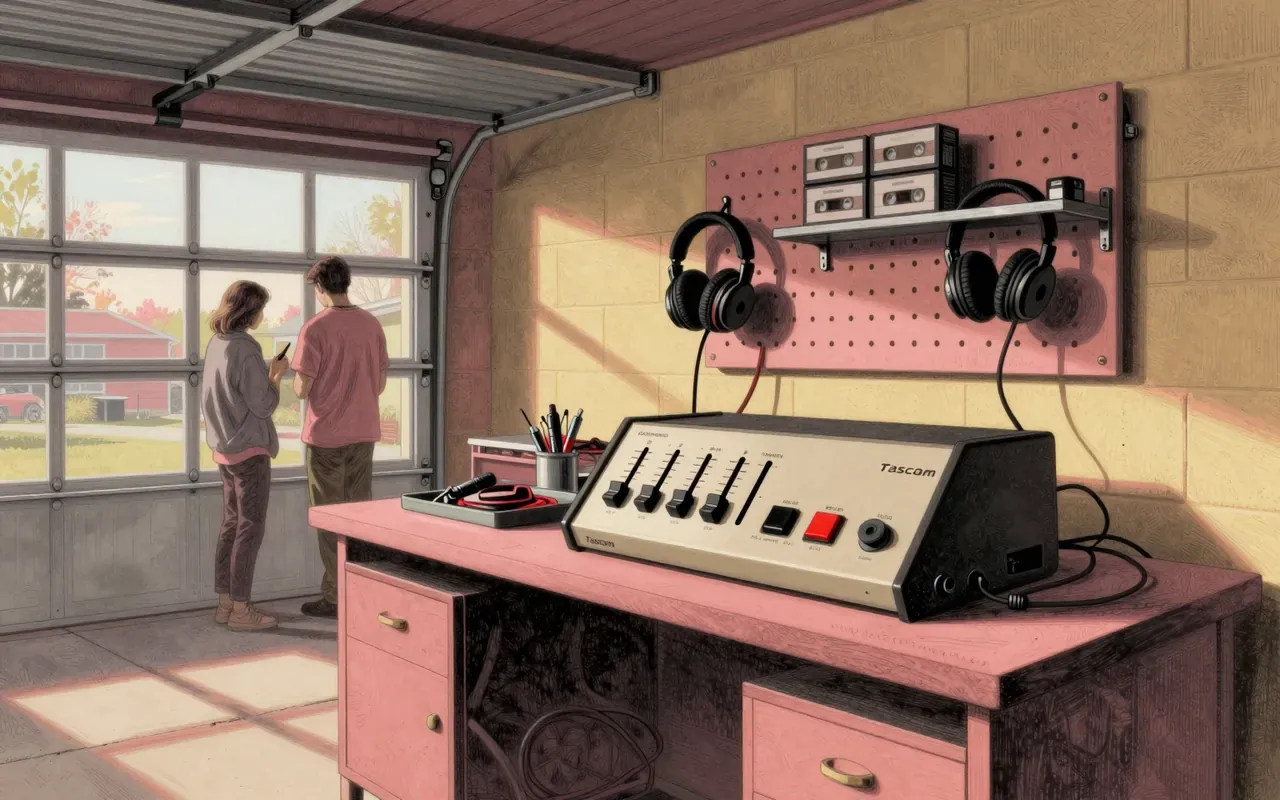
    Four mono tracks, EQ, gain, and line/mic impedance switching — but no phantom power and unbalanced inputs only.

  2. 2:14
    How it sounds when you push it

    DBX noise reduction tames tape hiss, and analog saturation stays musical — not brittle — when pushed.

  3. 3:53
    Why bouncing kills the sound

    Signal deteriorates horribly at each track-to-track transfer — a hard limit baked into the workflow.

  4. 5:14
    What people actually used it for

    Bought in Paris in 1984 for nearly 5,000 francs, it was prized for mobility and preamp character — not fidelity.

Worth your time?

Yes. Use the whole thing.

3.5/ 5
What works
  • audio/studio-and-recording
  • audio/studio
  • audio/recording
What does not
  • audio/daws-and-software
  • audio/dj-gear
  • audio/effects-and-pedals
  • audio/guitars-and-amps
Use it if
  • audio/studio-and-recording
  • audio/studio
  • audio/recording
Skip it if
  • audio/keyboards-and-organs
  • audio/synths-and-drum-machines
  • audio/microphones-and-preamps
The written brief1 min read

What it is and what it was built for

The Tascam Portastudio 244 is a 1984 four-track analog cassette recorder built for home and mobile multitrack recording.

How it works, in terms a player would use

It records four mono tracks onto cassette tape. Each track has EQ, gain, and a switch to set input impedance for line or mic sources. DBX noise reduction engages automatically. Analog saturation is possible without harsh distortion. There is no phantom power. Inputs are unbalanced jacks only.

What it does better than anything else

It delivers portable, immediate, all-in-one multitrack recording with tactile, hands-on workflow and analog saturation that stays musical — not brittle — when pushed.

What it does badly

Signal deteriorates horribly at each track-to-track bounce. Cassette transport is fragile and difficult to control during punch-in/out or rewind. Preamps sound thin and harsh under load. Unbalanced inputs exclude condenser microphones. Four tracks run out fast.

What people made with it

People made demos, lo-fi albums, and bedroom recordings in Paris and elsewhere — using its simplicity, mobility, and preamp character despite its limitations.

Who should use it, and who should not

Use it if you seek analog texture, physical immediacy, and constraints as creative tools. Do not use it if you need clean signal paths, phantom power, stable tape transport, or more than four tracks.

Is it worth your time

It is worth your time only if you want to work within severe generational degradation, accept fragile tape handling, and value portability and preamp character over fidelity or flexibility.
Same bench · Studio & recording4 of 146
Up next in Audio

Tascam Portastudio 246

Tascam · 7:10

No specs. No compromises. Just tape — if you can trust it.

7:10