audiobriefs
8:50in productionCh. 1 · Built for the SQ-10/ 8:50 · ceiling 15 min
Synths & drum machines · Sound design & sampling

Korg MS-50

A patchbay-first analog expander that demands a sequencer, rejects modern standards, and rewards deep wiring.

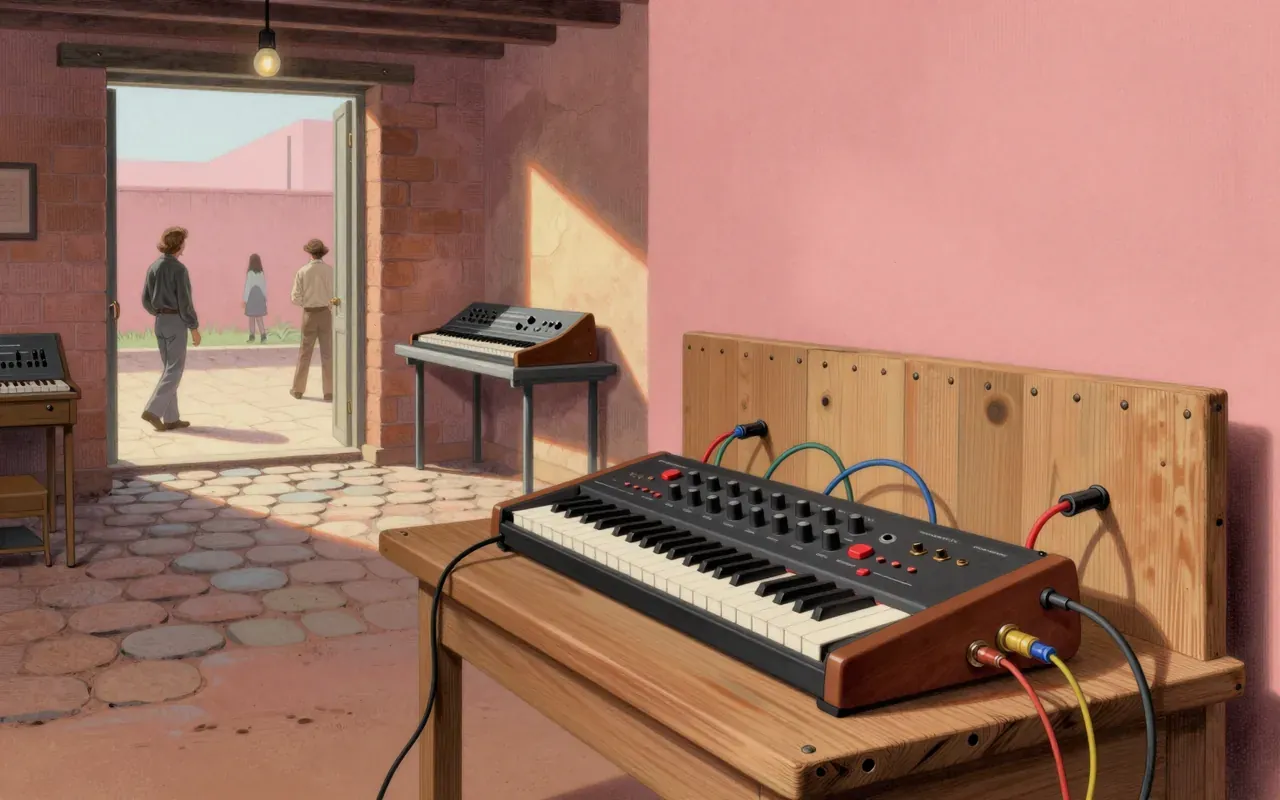
The Korg MS-50 is a 1978 keyboard-less analog expander module. It has one VCO, two VCFs (highpass and lowpass), two ADSRs, an LFO, pink and white noise, ring modulator, voltmeter, and sample & hold. It uses Hz/V CV/Gate control and was designed to complement the SQ-10 sequencer.

Chapters & takeaways4
  1. 0:57
    Built for the SQ-10

    It was built for the SQ-10 — not as a standalone instrument, but as a voltage-controlled extension.

  2. 2:16
    Patchable, Not Playable

    More patch points than any other MS synth — but only one oscillator and no keyboard.

  3. 3:37
    Lab-Grade Tools

    Ring mod, sample & hold, and a voltmeter give it surgical control over texture and timing.

  4. 5:34
    Hz/V, Not Volts/Octave

    Hz/V control means it talks to the MS-20 — but not to most gear made after 1980.

Worth your time?

Yes. Use the whole thing.

3.5/ 5
What works
  • as a dedicated sound-design engine
  • in tandem with the SQ-10
  • for generating unstable, textural bass and percussion
What does not
  • play chords
  • track reliably with modern sequencers
  • integrate with MIDI or Eurorack without adaptation
Use it if
  • SQ-10 owners
  • MS-20 users
  • patch-cable tinkerers
Skip it if
  • DAW-first producers
  • live performers needing polyphony
  • anyone without a Hz/V-compatible system
The written brief1 min read

What it is and what it was built for

The Korg MS-50 is a keyboard-less, monophonic analog expander module released in 1978. It was built to extend the SQ-10 sequencer and integrate with other Hz/V synths like the MS-20.

How it works, in terms a player would use

It patches like a lab bench: VCO feeds into highpass and lowpass filters, ring modulator, noise sources, sample & hold, and two ADSR envelopes — all wired via front-panel jacks. It responds to Hz/V CV and Gate, not volts/octave, so it tracks poorly with modern sequencers unless adapted.

What it does better than anything else

It offers deeper patchability than any other MS-series synth: dual filters, ring mod, S&H, and voltmeter in one compact module — all designed for tactile, real-time signal routing.

What it does badly

It cannot play chords. Its single VCO and monophonic architecture force strict sequencing or external triggering. Its Hz/V control limits compatibility with most post-1980 gear.

What people made with it

People used it to generate complex, evolving basslines, percussive textures, and experimental sound effects — especially when patched with the SQ-10 for step-based modulation and timing.

Who should use it, and who should not

Use it if you own or plan to use an SQ-10, MS-20, or other Hz/V gear — and value physical patching over convenience. Avoid it if you rely on MIDI, need stable intonation, or work primarily in DAW-based workflows.

Is it worth your time

Yes — if you want raw, hands-on analog patching without keyboard distraction. No — if you need polyphony, stable tuning, or integration with Eurorack or MIDI gear.
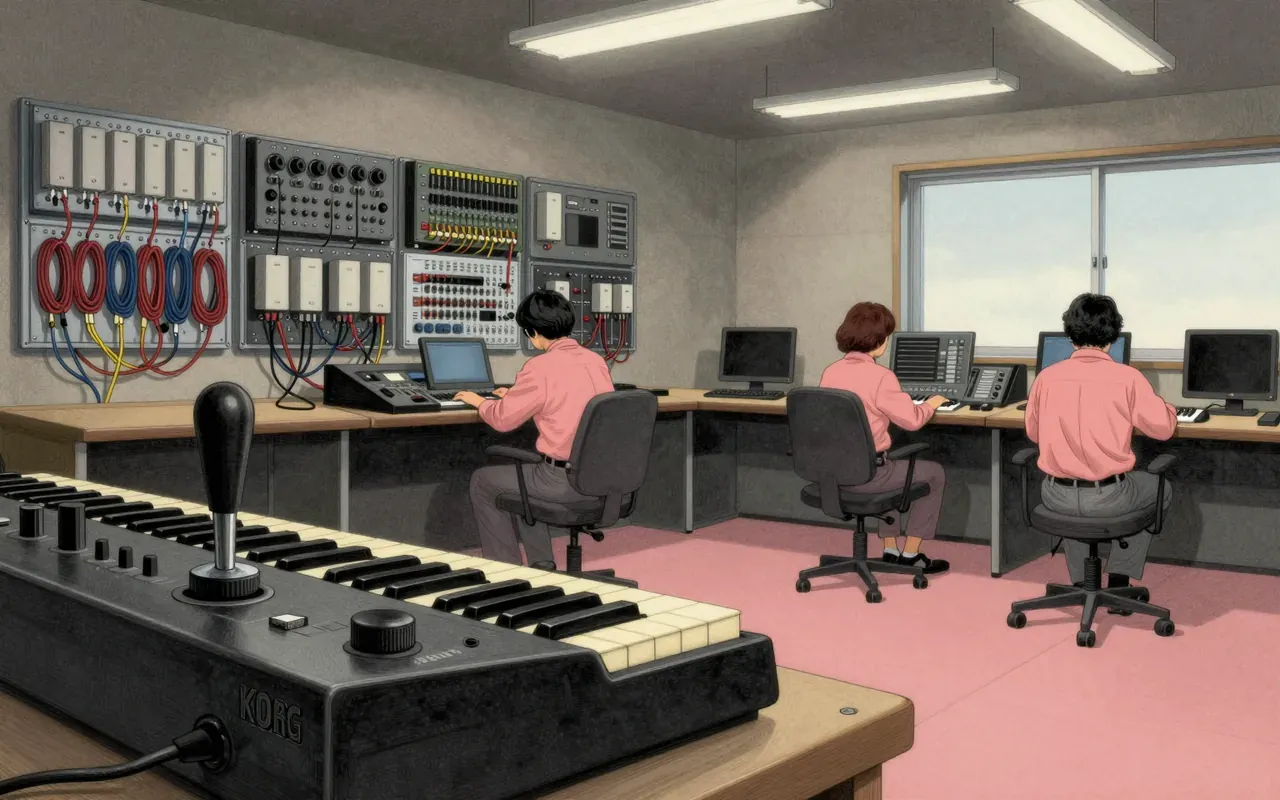
Same bench · Synths & drum machines4 of 243
9:25
Korg DeltaKorgThe Korg Delta is a 1979 analog semi-polyphonic string machine and synthesizer. It was built as a slimmed-down, budget alternative to the Korg Trident. It splits into two independent sections—Strings and Synth—with dedicated outputs. The String section uses two pitch sliders and tone/ADSR controls. The Synth section uses four pitch sliders, white noise, a multimode 24dB/oct filter, and full ADSR. A joystick provides pitch bend and modulation. It has CV/gate connectivity but no memory, no MIDI, and no presets. Its 'unlimited polyphony' is inaccurate: pressing multiple keys does not apply independent envelopes to each note. It delivers high-quality layered string-and-synth sounds despite limited range. Its build is robust, but its keyboard is fragile and its filter is bland.
8:16
Roland SH-2000RolandThe SH-2000 is a 1973 monophonic analog preset synthesizer. It is Roland’s second synth and a simplified version of the SH-1000. It was built for home organists needing expressive, portable tone colour without synthesis theory.
9:49
Korg MS-10Korg · 1978The Korg MS-10 is a monophonic, 32-key analogue synthesizer released in 1978. It has one VCO (triangle, sawtooth, pulse, white noise), one 12dB/octave low-pass VCF, one LFO with pulse and sloped outputs, and one envelope generator with Hold, Attack, Decay, Sustain, and Release. Its normalized patch points allow flexible modulation without cables — but it offers no second envelope, no polyphony, no effects, and no key transpose.
10:18
Korg VC-10KorgThe Korg VC-10 is a 1978 analog vocoder with a built-in 32-note keyboard, 20-band analysis and synthesis, and support for both internal and external signal modulation — including voice, guitar, and pitch control inputs — making it a self-contained, polyphonic vocoding instrument.
Up next in Audio

Roland MSQ-100

Roland · 7:30

A sequencer with no specs is a black box — useful only if you already know what’s inside.

7:30