audiobriefs
9:48in productionCh. 1 · Polyphony by brute force/ 9:48 · ceiling 15 min
Synths & drum machines

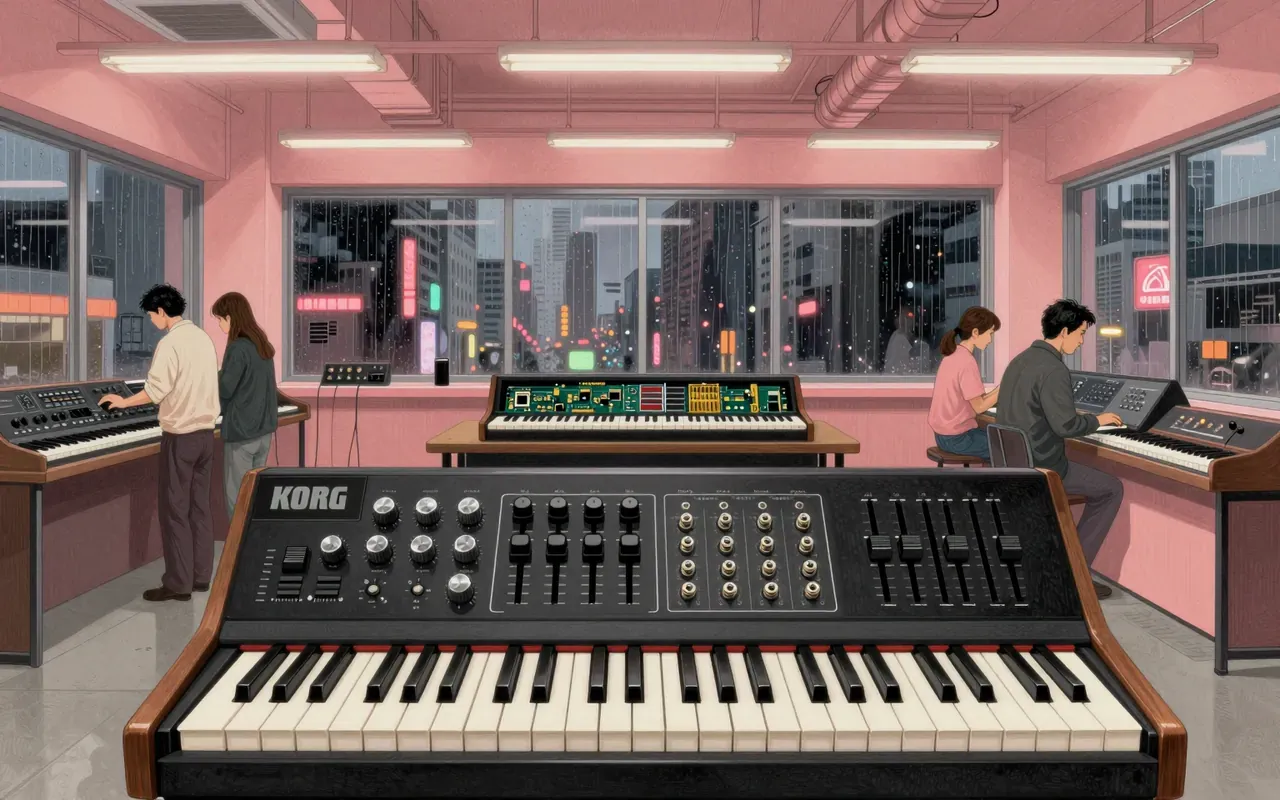
Korg PS-3200

It gave you 48 voices — but locked every one behind fixed wiring.

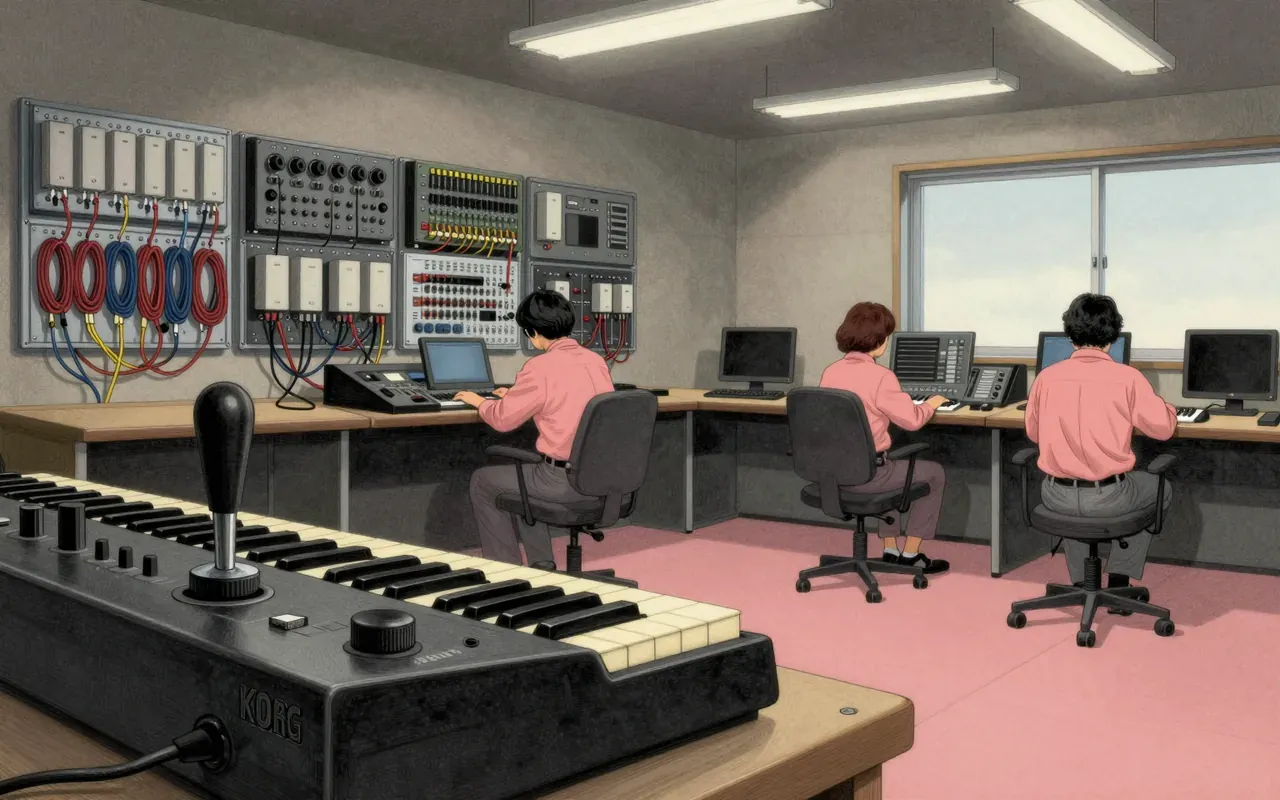
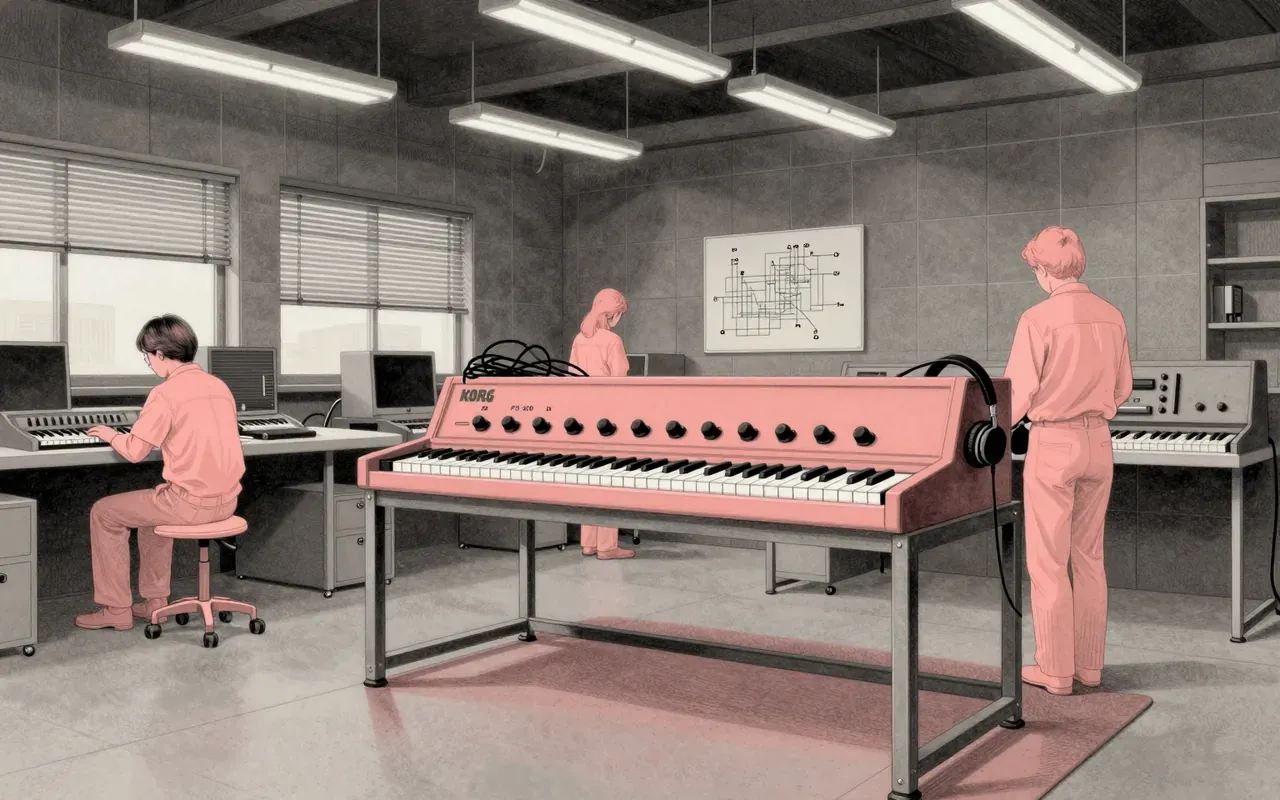
The Korg PS-3200 is the final model in Korg's PS series. It integrates two PS-3100 units into a single chassis. It provides 16 memory locations that can be individually addressed and recalled. It was regarded as remarkable in its era due to having two oscillators per key and 48-note polyphony. Each voltage-controlled oscillator module includes a dedicated voltage-controlled filter and low-frequency oscillator. Its patching and signal routing capabilities were comparatively restricted versus other modular systems. Its envelope generator design was constrained. It was considered sonically rich for its era, and its 16-patch memory was highly valued.

Chapters & takeaways4
  1. 1:00
    Polyphony by brute force

    Two PS-3100s fused into one chassis — 48 notes, two oscillators per key.

  2. 2:26
    One filter, one LFO, one envelope — per voice

    Each voice gets its own VCF and LFO — but envelopes are rigid and unshapable.

  3. 4:27
    Fixed architecture, no compromises

    No signal rerouting. No CV depth control. No modulation matrix.

  4. 6:28
    Memory as mission-critical

    Sixteen patches stored and recalled — a lifeline in an era of manual reset.

Worth your time?

Yes. Use the whole thing.

3.5/ 5
What works
  • dense chordal textures
  • layered sustaining tones
  • immediate recall of 16 patches
What does not
  • digital
  • modular
  • portable
  • affordable
Use it if
  • studio composer needing thick pads
  • live performer needing stable polyphony
Skip it if
  • modular tinkerer
  • expressive lead player
  • budget buyer
The written brief1 min read

What it is and what it was built for

The Korg PS-3200 is a 1978 semi-modular analog synthesizer. It was built to deliver rich, layered polyphonic textures for live performance and studio work without requiring external modular integration.

How it works, in terms a player would use

It runs two PS-3100 units in one chassis. Each voice has two VCOs, its own VCF and LFO. Patching is fixed: no re-routable signal path. Envelopes are ADSR but limited in shape or control. Sixteen memory locations store patch settings — each addressable and recallable.

What it does better than anything else

It delivers 48-note polyphony with two oscillators per key better than any other analog synth of its era.

What it does badly

It does patching badly. Signal routing is fixed. Envelope shaping is constrained. There is no CV/Gate flexibility beyond basic note triggering.

What people made with it

People made thick, evolving pads and sustained chords with it — the kind that filled large rooms before digital samplers existed.

Who should use it, and who should not

A player who values stability, density and immediacy over sonic experimentation should use it. Anyone needing flexible modulation, deep patching or expressive envelope control should not.

Is it worth your time

It is worth your time only if you need dense, stable polyphony from a single analog source and accept rigid routing and minimal modulation control.

Same bench · Synths & drum machines4 of 243
8:40
Korg PS-3100KorgThe Korg PS-3100 is a rare (600 units), 30kg, 48-voice analog synthesizer from 1977. It uses 12 divide-down VCOs to drive 48 independent voice circuits — one VCO, VCF, VCA and EG per key. Its warm LPF and 3-band resonator enable rich formant and phase effects. LFO1 reaches audio rate and delivers AM up to ring modulation. One EG is polyphonic; the other is universal and paraphonic. Twelve intonation scaling controls allow non-equal-tempered tuning. It has no patch memory.
8:50
Korg MS-50KorgThe Korg MS-50 is a 1978 keyboard-less analog expander module. It has one VCO, two VCFs (highpass and lowpass), two ADSRs, an LFO, pink and white noise, ring modulator, voltmeter, and sample & hold. It uses Hz/V CV/Gate control and was designed to complement the SQ-10 sequencer.
9:25
Korg DeltaKorgThe Korg Delta is a 1979 analog semi-polyphonic string machine and synthesizer. It was built as a slimmed-down, budget alternative to the Korg Trident. It splits into two independent sections—Strings and Synth—with dedicated outputs. The String section uses two pitch sliders and tone/ADSR controls. The Synth section uses four pitch sliders, white noise, a multimode 24dB/oct filter, and full ADSR. A joystick provides pitch bend and modulation. It has CV/gate connectivity but no memory, no MIDI, and no presets. Its 'unlimited polyphony' is inaccurate: pressing multiple keys does not apply independent envelopes to each note. It delivers high-quality layered string-and-synth sounds despite limited range. Its build is robust, but its keyboard is fragile and its filter is bland.
8:16
Roland SH-2000RolandThe SH-2000 is a 1973 monophonic analog preset synthesizer. It is Roland’s second synth and a simplified version of the SH-1000. It was built for home organists needing expressive, portable tone colour without synthesis theory.
Up next in Audio

Make Noise QMMG

Make Noise · 8:12

It is not a synth. It is not an effect. It is one thing: a filter — and nothing more.

8:12