audiobriefs
9:25in productionCh. 1 · A Trident for the rest of us/ 9:25 · ceiling 15 min
Synths & drum machines

Korg Delta

It promises unlimited polyphony—but gives you one envelope for all notes.

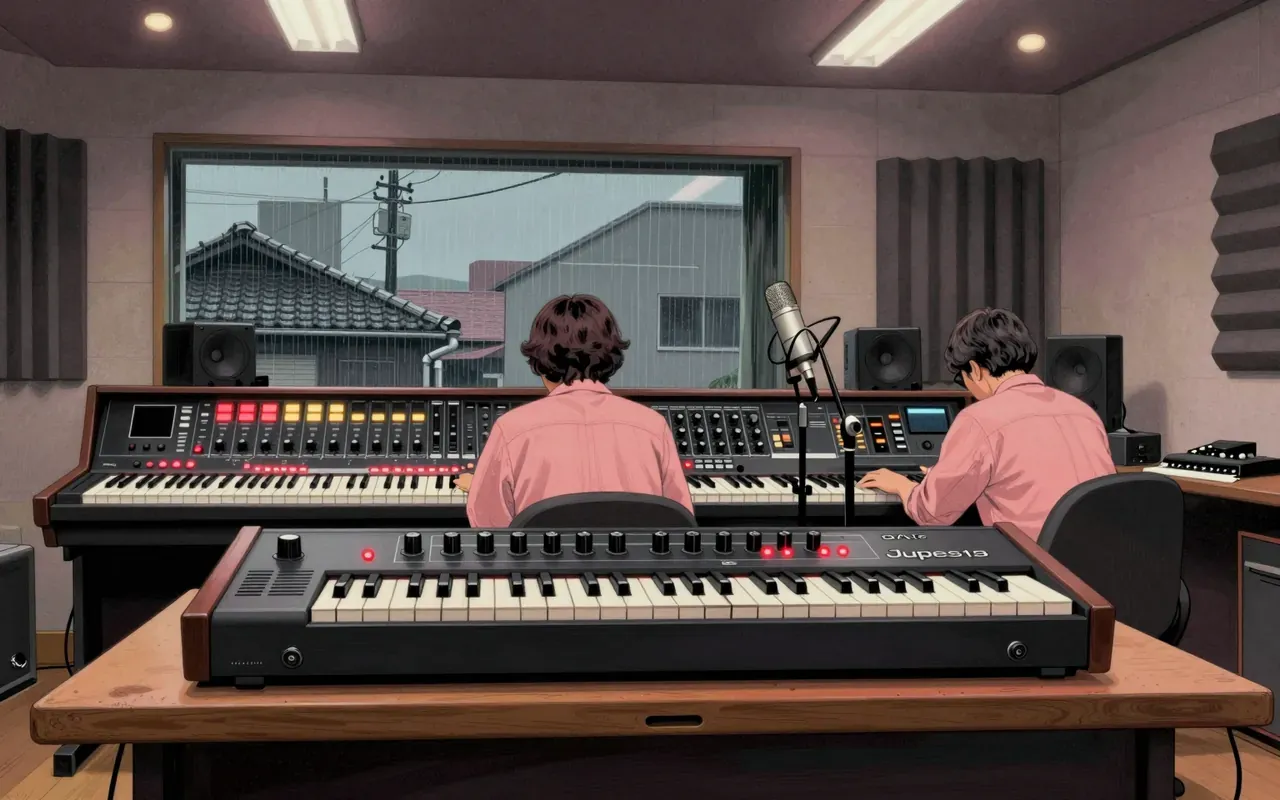
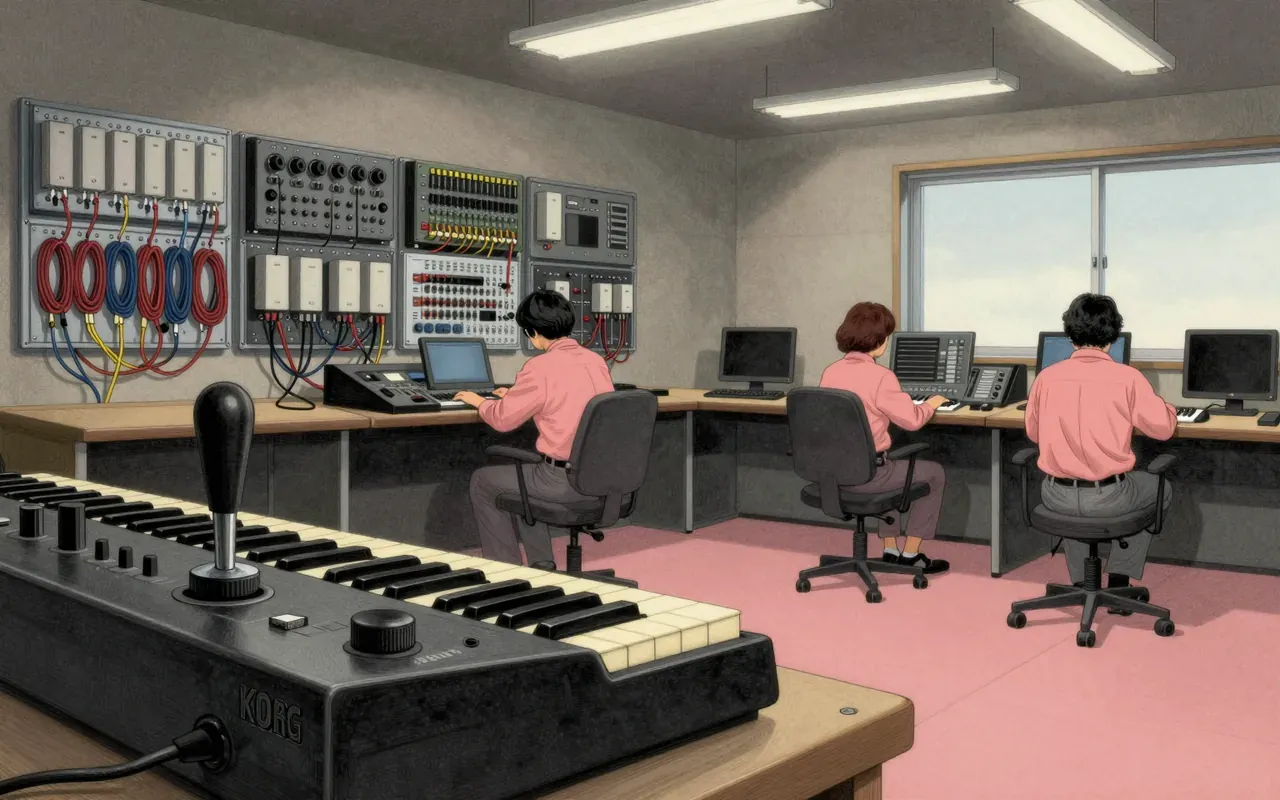
The Korg Delta is a 1979 analog semi-polyphonic string machine and synthesizer. It was built as a slimmed-down, budget alternative to the Korg Trident. It splits into two independent sections—Strings and Synth—with dedicated outputs. The String section uses two pitch sliders and tone/ADSR controls. The Synth section uses four pitch sliders, white noise, a multimode 24dB/oct filter, and full ADSR. A joystick provides pitch bend and modulation. It has CV/gate connectivity but no memory, no MIDI, and no presets. Its 'unlimited polyphony' is inaccurate: pressing multiple keys does not apply independent envelopes to each note. It delivers high-quality layered string-and-synth sounds despite limited range. Its build is robust, but its keyboard is fragile and its filter is bland.

Chapters & takeaways4
  1. 0:56
    A Trident for the rest of us

    It is a budget Trident clone designed to mimic both string machines and organs.

  2. 2:20
    Strings and synth, side by side

    Two fully independent sections—with separate outputs, sliders, filters, and envelopes—controlled by hand and joystick.

  3. 3:48
    Polyphony without independence

    Full 49-note polyphony prevents note starvation—but envelope sharing undermines polyphonic expression.

  4. 5:26
    No recall. Just response.

    No memory, no MIDI, no presets—just voltage control, gate, and immediate sound shaping.

Worth your time?

Yes. Use the whole thing.

3.5/ 5
What works
  • full 49-note polyphony
  • separate string and synth outputs
  • hands-on slider-based sound shaping
  • joystick modulation
What does not
  • arguably
  • perhaps
  • in many ways
  • seminal
Use it if
  • players who value tactile control, discrete signal routing, and vintage analog texture over flexibility or reliability
Skip it if
  • those needing stable per-note envelopes, preset libraries, or MIDI sync
The written brief1 min read

What it is and what it was built for

A 1979 analog semi-polyphonic string machine and synthesizer built as a slimmed-down, budget alternative to the Korg Trident. Designed as a hybrid string/organ instrument, it prioritises immediacy and physical control over flexibility or recall.

How it works, in terms a player would use

It splits into two independent sections: Strings and Synth, each with dedicated outputs. The String section uses two pitch sliders (16’ and 8’), Bass/Treble tone controls, and variable Attack/Release. The Synth section uses four pitch sliders (16’, 8’, 4’, 2’), white noise, a multimode 24dB/oct filter (low-pass, high-pass, band-pass), and full ADSR. A joystick handles pitch bend and modulation. CV/gate ins and outs are present, but no memory, no MIDI, no presets.

What it does better than anything else

It delivers a classic layered string-and-synth sound with full 49-note polyphony—no note starvation—and separate outputs for clean mixing. Its simplicity forces direct, tactile decisions, yielding characterful results despite limited sound range.

What it does badly

Its ‘unlimited polyphony’ is misleading: pressing multiple keys does not apply independent envelopes to each note, causing unnatural attack behaviour when layering. The filter is described as bland. The keyboard is fragile. It has no patch memory or MIDI.

What people made with it

Layered string-and-synth pads and drones—especially where full polyphony and separate outputs enabled clean blending in live or studio settings. Its character comes from juxtaposing basic string textures with raw synth tones.

Who should use it, and who should not

Players who value tactile control, discrete signal routing, and vintage analog texture over programmability or reliability. Not for those needing stable per-note envelopes, preset libraries, or MIDI sync.

Is it worth your time

Yes—if you want hands-on, immediate layering of string pads and synth tones in a compact, robust analog unit. No—if you need per-note envelope control, patch recall, or modern integration.

Same bench · Synths & drum machines4 of 243
9:49
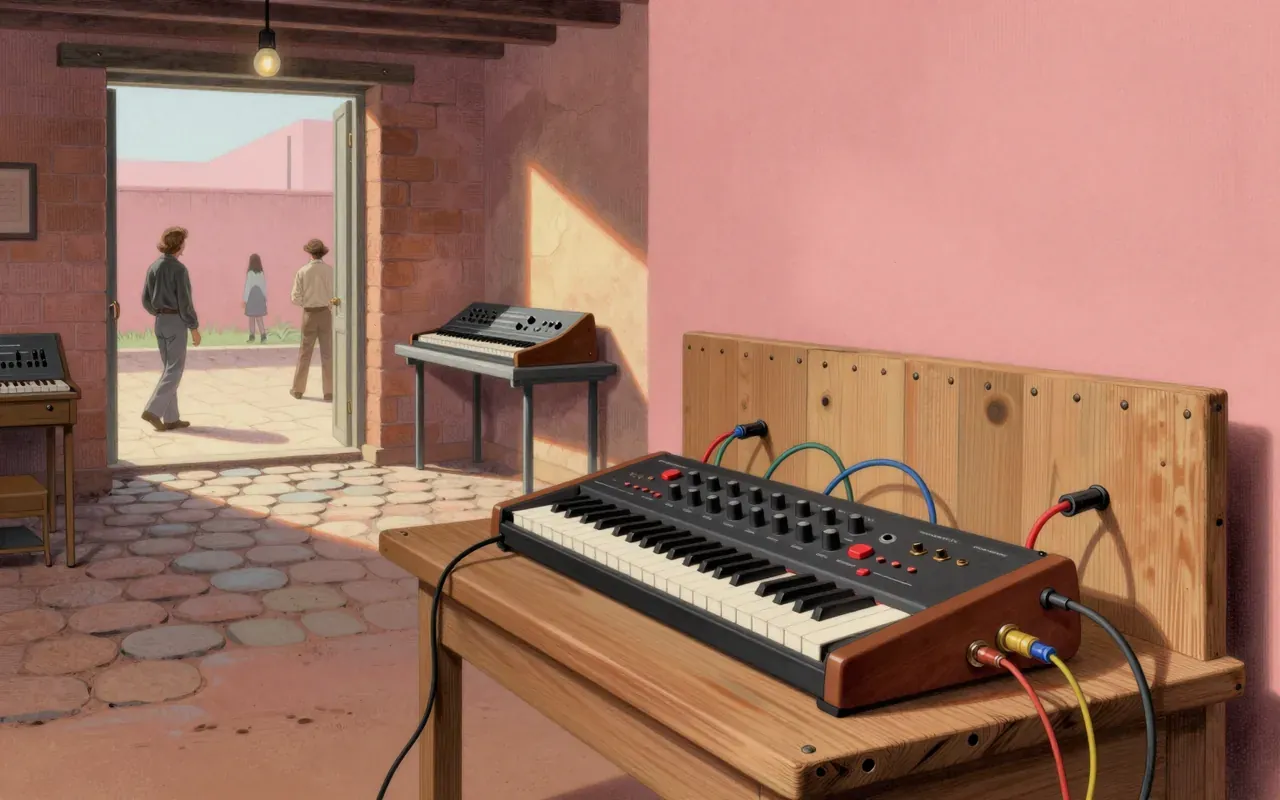
Korg MS-10Korg · 1978The Korg MS-10 is a monophonic, 32-key analogue synthesizer released in 1978. It has one VCO (triangle, sawtooth, pulse, white noise), one 12dB/octave low-pass VCF, one LFO with pulse and sloped outputs, and one envelope generator with Hold, Attack, Decay, Sustain, and Release. Its normalized patch points allow flexible modulation without cables — but it offers no second envelope, no polyphony, no effects, and no key transpose.
8:50
Korg MS-50KorgThe Korg MS-50 is a 1978 keyboard-less analog expander module. It has one VCO, two VCFs (highpass and lowpass), two ADSRs, an LFO, pink and white noise, ring modulator, voltmeter, and sample & hold. It uses Hz/V CV/Gate control and was designed to complement the SQ-10 sequencer.
8:29
Roland Jupiter-8RolandThe Jupiter-8 is an eight-voice polyphonic analog subtractive synthesizer introduced by Roland in early 1981. Each voice features two discrete VCOs with cross-modulation and sync, pulse-width modulation, a non-resonant high-pass filter, a resonant low-pass filter with 2-pole and 4-pole settings, an LFO with variable waveforms and routings, and two envelope generators (one invertible). It includes adjustable polyphonic portamento, a hold function for infinite sustain, an assignable bender for pitch or filter frequency, balanced XLR and unbalanced 1/4" outputs for Upper and Lower presets in Split mode, and a unique polyphonic unison mode where all 16 oscillators stack onto one note and divide down when more keys are pressed. Its arpeggiator syncs externally via DCB or CV. Tuning stability improved from serial #171700 onward.
10:18
Korg VC-10KorgThe Korg VC-10 is a 1978 analog vocoder with a built-in 32-note keyboard, 20-band analysis and synthesis, and support for both internal and external signal modulation — including voice, guitar, and pitch control inputs — making it a self-contained, polyphonic vocoding instrument.
Up next in Audio

M-Audio Delta 1010

M-Audio · 8:31

It’s not vintage charm — it’s a PCI card that still records 8 channels at zero-latency, if you’ve got a garage-sale PC to plug it into.

8:31