audiobriefs
9:02in productionCh. 1 · The First $1695 Sampler/ 9:02 · ceiling 15 min
Sound design & sampling · Synths & drum machines

Ensoniq Mirage

It didn’t democratise sampling — it weaponised compromise.

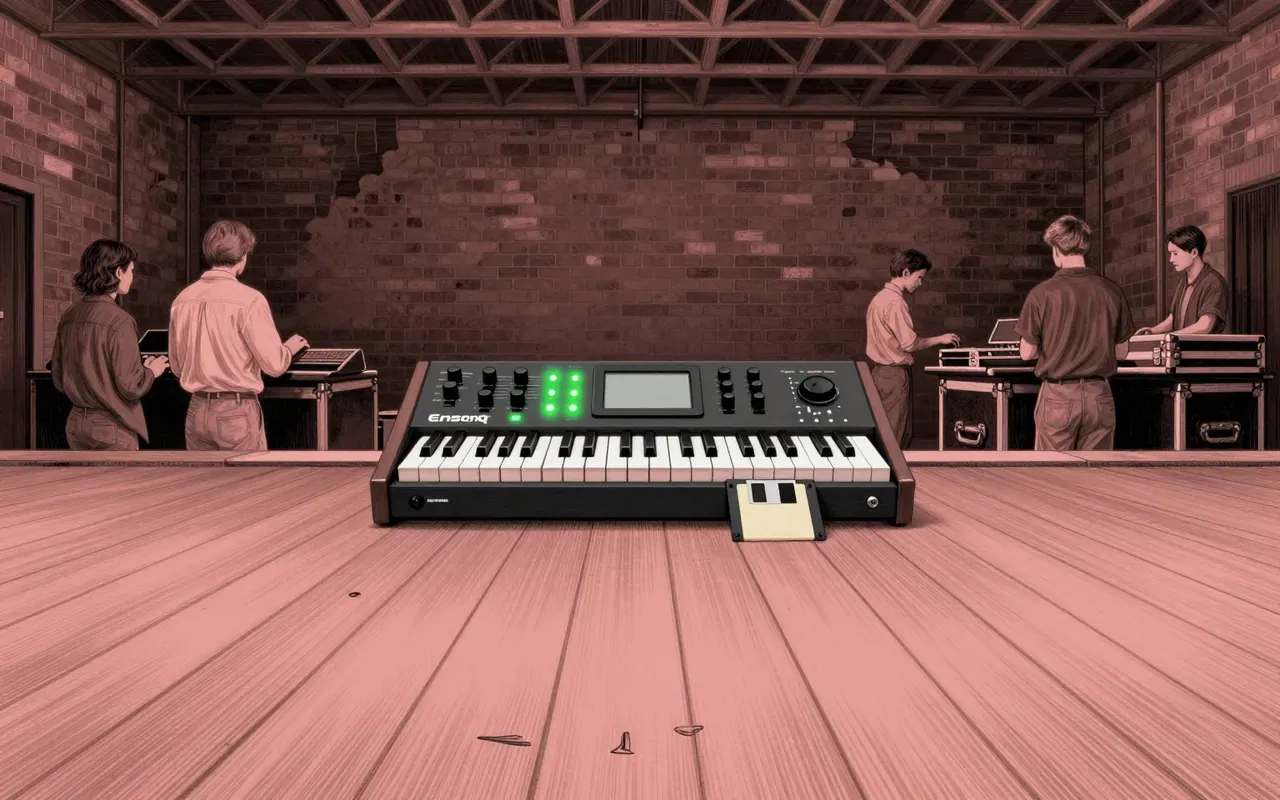
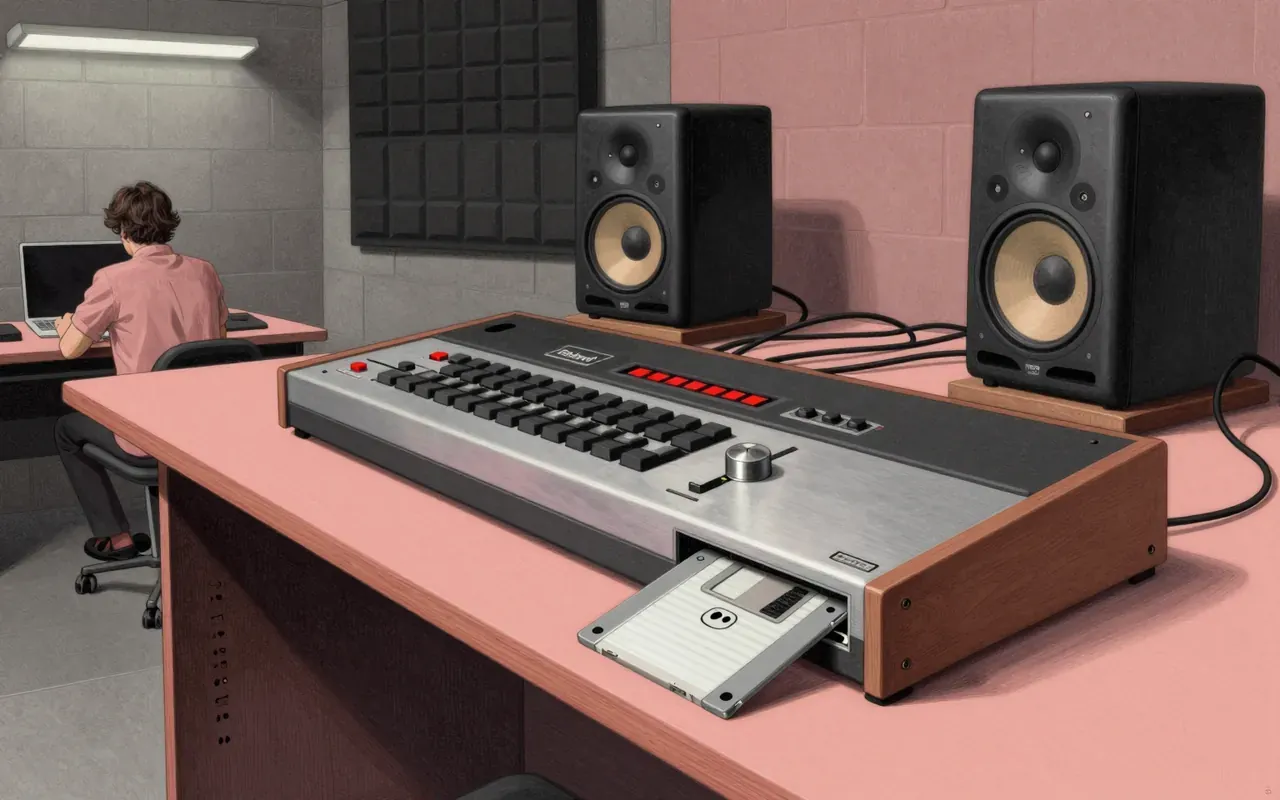
The Ensoniq Mirage is an 8-bit sampling keyboard introduced in late 1984 as Ensoniq's first product. It offered eight-voice polyphony, analog Curtis CEM3328 filtering, and wavetable synthesis via alternative OS. It booted and stored data on a built-in 3.5-inch floppy drive — one of the first consumer uses of that format. Priced at $1695, it sold 8,000 units in its first year, undercutting the Fairlight CMI and E-MU Emulator.

Chapters & takeaways5
  1. 1:12
    The First $1695 Sampler

    It was Ensoniq’s debut instrument — and the first sampler most amateurs ever touched.

  2. 2:24
    How It Actually Works

    You load samples from floppy, shape them with analog filters, and play eight voices — no editing, no undo.

  3. 3:13
    What It Sounds Like

    Its 8-bit resolution and Curtis filters made it dirtier and warmer than the Emulator or Fairlight.

  4. 4:30
    The Floppy Was the Interface

    That 3.5-inch floppy drive wasn’t just storage — it was the boot loader, the OS carrier, and the bottleneck.

  5. 5:42
    Why It Sold

    Eight thousand units sold in year one because it worked — not well, but enough.

Worth your time?

Yes. Use the whole thing.

3.5/ 5
What works
  • as a gritty, hands-on gateway to sampling
  • as a source of warm, filtered 8-bit texture
  • as a historically significant interface between amateur and professional studios
What does not
  • deliver sample editing
  • support modern workflows
  • offer high-fidelity playback
Use it if
  • producers who value tactile, constraint-led sound design
  • collectors of foundational sampling hardware
  • students of 1980s studio practice
Skip it if
  • anyone needing sample manipulation
  • users reliant on instant recall or large libraries
  • those unwilling to work with floppy-based sequencing
The written brief2 min read

What it is and what it was built for

The Ensoniq Mirage is an 8-bit sampling keyboard launched in late 1984 as Ensoniq’s first product. It was built to bring sampling to amateur musicians using affordable hardware: a microfloppy drive, eight-voice polyphony, and analog filters.

How it works, in terms a player would use

It boots from a 3.5-inch floppy disk. You load samples into RAM, assign them to keys, shape them with analog Curtis CEM3328 filters, and play across eight voices. The two-digit LED display shows basic status; the 333-event sequencer records note data only — no audio. Wavetable synthesis requires swapping in an alternative OS.

What it does better than anything else

It delivers analog-filtered 8-bit sampling at a price point that shattered market barriers in 1984. Its hybrid architecture — digital sampling plus true analog filtering — gives it a grittier, more immediate tone than contemporaries like the Emulator I.

What it does badly

It cannot edit samples in real time. RAM holds only short samples. There is no pitch-shifting, time-stretching, or looping within the unit. The sequencer stores MIDI events only. The floppy drive is slow and fragile. The keyboard is velocity-sensitive but not aftertouch-capable.

What people made with it

Musicians used it for early hip-hop breaks, synth-pop textures, and experimental tape-style layering — exploiting its lo-fi character and quick sample loading. Its affordability put sampling in home studios for the first time.

Who should use it, and who should not

A hardware-focused producer who values physical interaction, analog colour, and historical workflow constraints. Not for anyone needing sample editing, large libraries, or integration beyond basic MIDI.

Is it worth your time

Yes — if you want hands-on, tactile sampling with analog warmth and are willing to accept severe memory limits, no real-time editing, and floppy-based workflow. No — if you need sample manipulation, modern storage, or instant recall.

Same bench · Sound design & sampling4 of 107
8:40
Prophet 2000Sequential CircuitsThe Prophet 2000 is Sequential Circuits’ first sampler — released in 1985. It uses 12-bit sampling at up to 41.667 kHz, with 256 kilowords of memory. It offers 8-voice polyphony and early multitimbral operation via MIDI channels. Its analog VCFs and VCAs give it warmth absent in later samplers. It was relatively affordable at £2,000.
8:56
Roland S-50RolandThe Roland S-50 is a 61-key 12-bit sampler keyboard introduced in 1986. It uses variable sampling rates (15–30 kHz), stores samples on a 3.5-inch DSDD floppy disk drive, supports external CRT monitor editing, and holds up to 32 samples. A rack-mounted version with expanded memory was also available.
9:11
Ensoniq EPS-16 PlusEnsoniqThe EPS-16 Plus is a purpose-built 1990 sampler that trades flexibility for immediacy. It records mono, plays back 16-bit samples at seven fixed rates, and routes everything through stereo panning and 13 effects. Its ES5505 OTIS chip gives it tight, responsive playback—but no sample rate conversion, no stereo input, and no non-destructive editing. Turbo versions added flash and SCSI, but Ensoniq replaced it with the ASR-10 in 1992. It belongs in a room where decisions are made by ear and fingers—not by menu diving.
8:56
Ensoniq EPSEnsoniqThe Ensoniq EPS is a 13-bit sampling keyboard introduced in 1988 as the Mirage's successor. It uses dual processors and a dedicated sound engine to enable load-while-play. It reads double-density 3.5" floppies formatted to 800k. It integrates MIDI for control or computer connection. Early units suffered mechanical issues with their polypressure keyboard.
Up next in Audio

Roland MKS-80

Roland · 10:36

The only MKS-series synth with true VCOs—and the price is eight voices of warm, unstable, unfiltered analog polyphony.

10:36