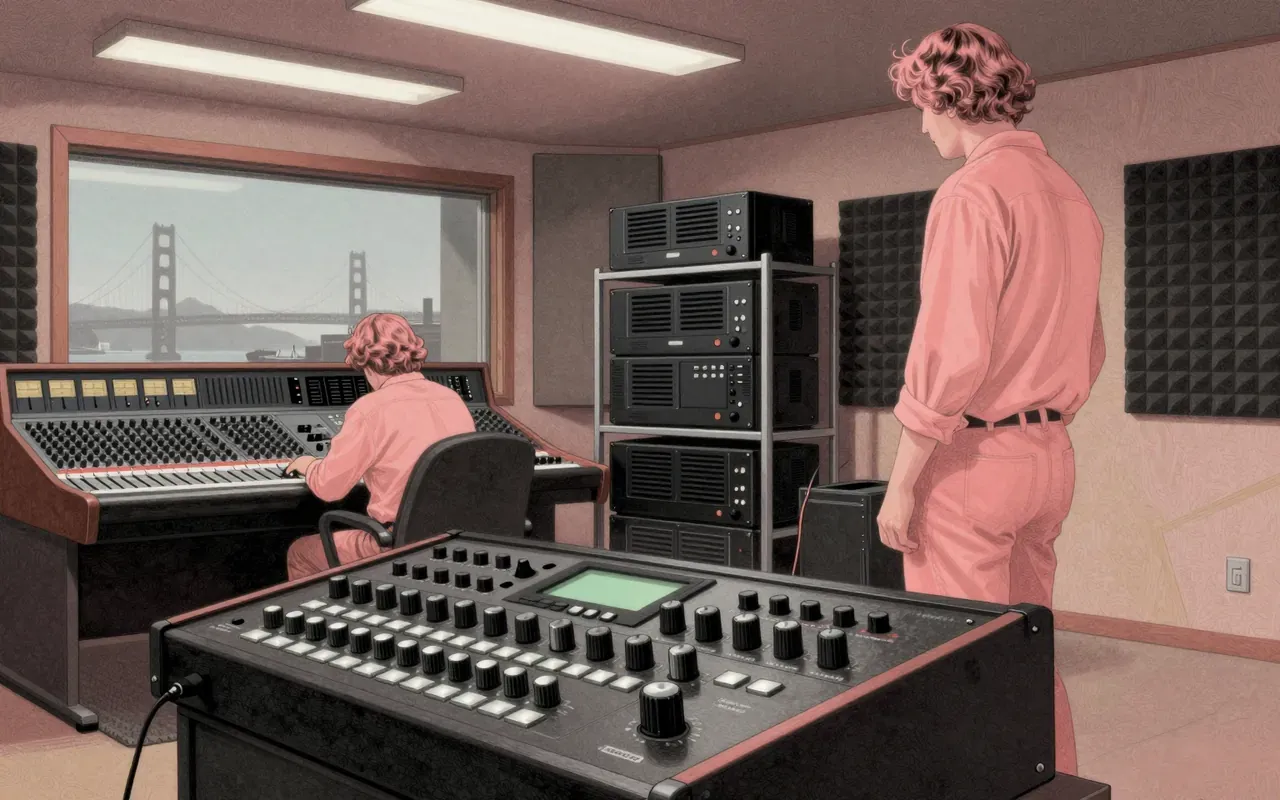
The S-50 doesn’t sample music — it samples time, and charges for every millisecond in floppy disk and CRT lag.
The Roland S-50 is a 61-key 12-bit sampler keyboard introduced in 1986. It uses variable sampling rates (15–30 kHz), stores samples on a 3.5-inch DSDD floppy disk drive, supports external CRT monitor editing, and holds up to 32 samples. A rack-mounted version with expanded memory was also available.
It is a 61-key, 12-bit sampler keyboard from 1986 — not a synth, not a workstation, not a DAW.
2:03
How it works
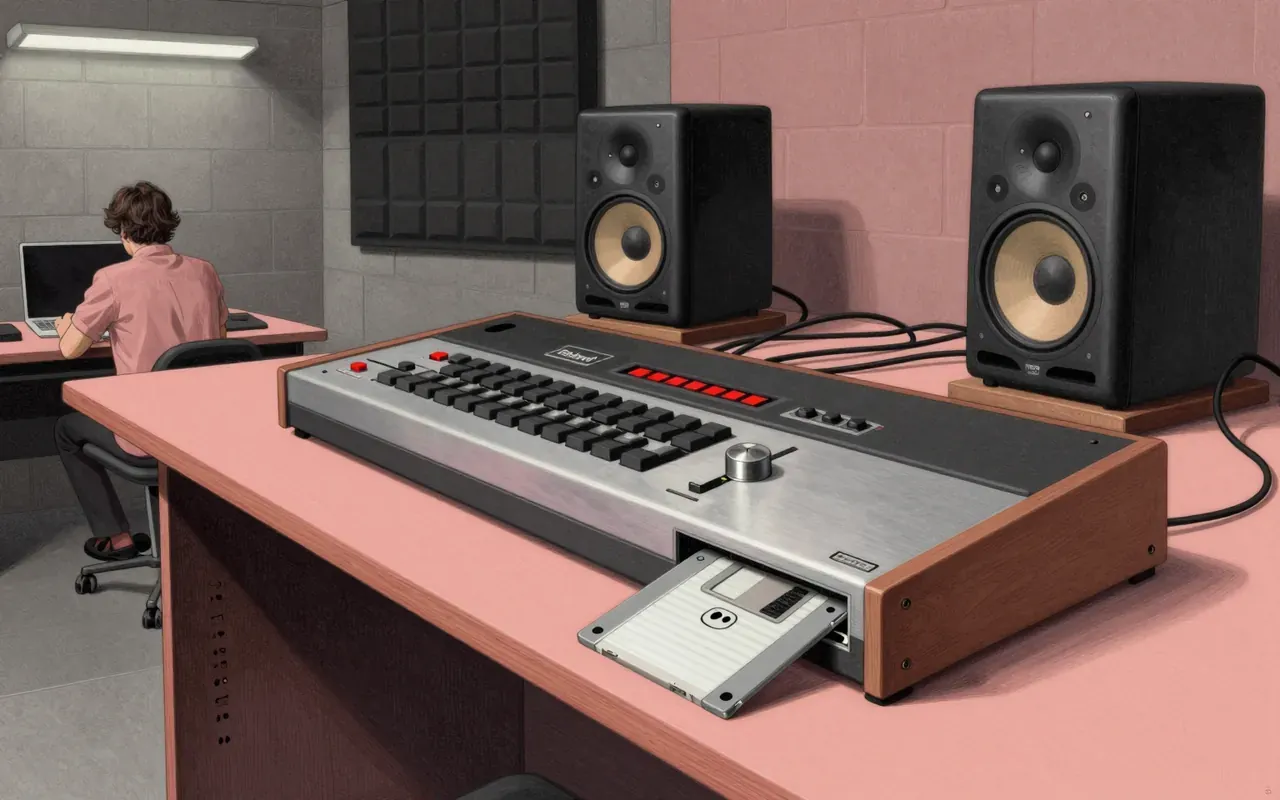
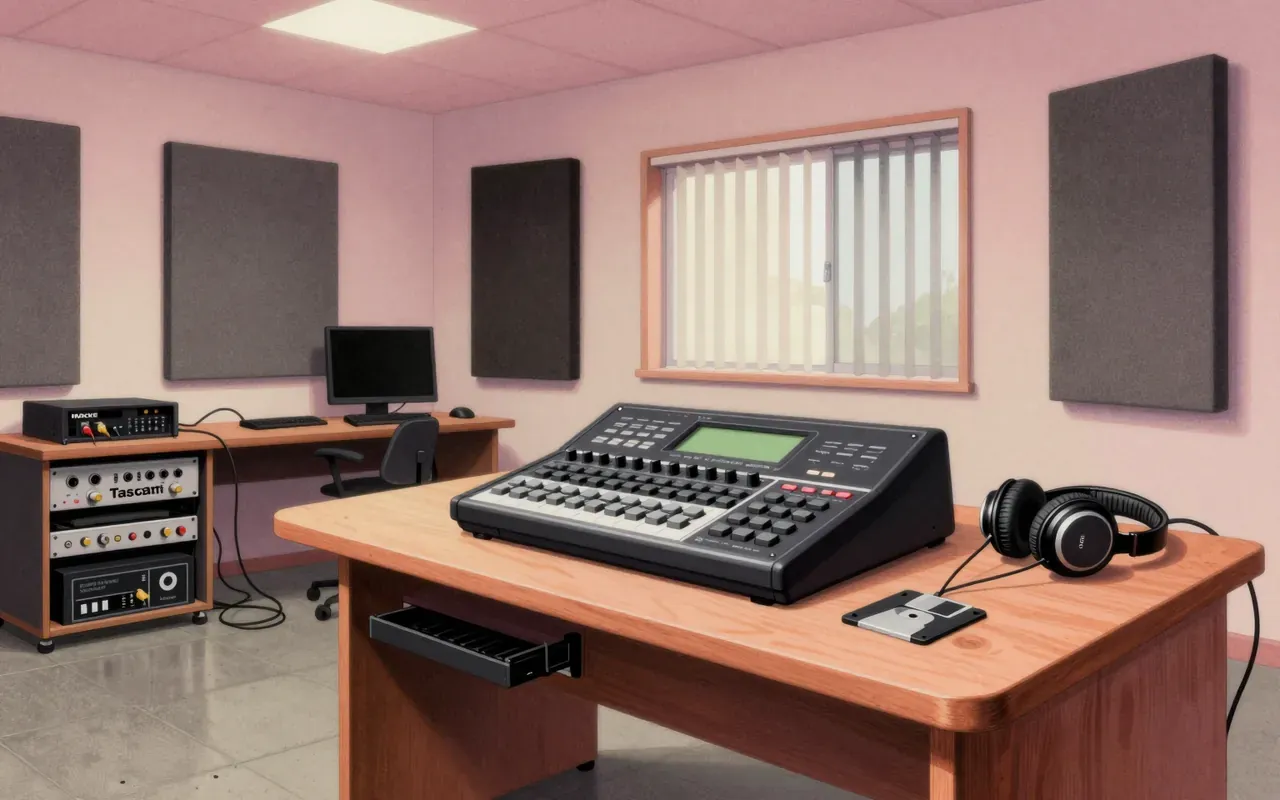
Sampling happens at 15–30 kHz, stored on 3.5-inch DSDD floppies, edited visually on an external CRT.
3:26
How much it holds
It holds only 32 samples — enough for a drum kit or a phrase bank, not a full arrangement.
4:47
The rack variant
A rack-mounted version existed with expanded memory — but no details about how much or how it changed the workflow.
Worth your time?
Yes. Use the whole thing.
3/ 5
What works
visual sample editing via CRT
floppy-based archiving and transfer
keyboard-triggered playback of 32 discrete samples
What does not
support modern file formats
offer real-time pitch or time manipulation
provide high-fidelity capture
Use it if
sound designers who value CRT-assisted waveform editing
collectors of 1980s sampling hardware
Skip it if
producers requiring long samples or high bit depth
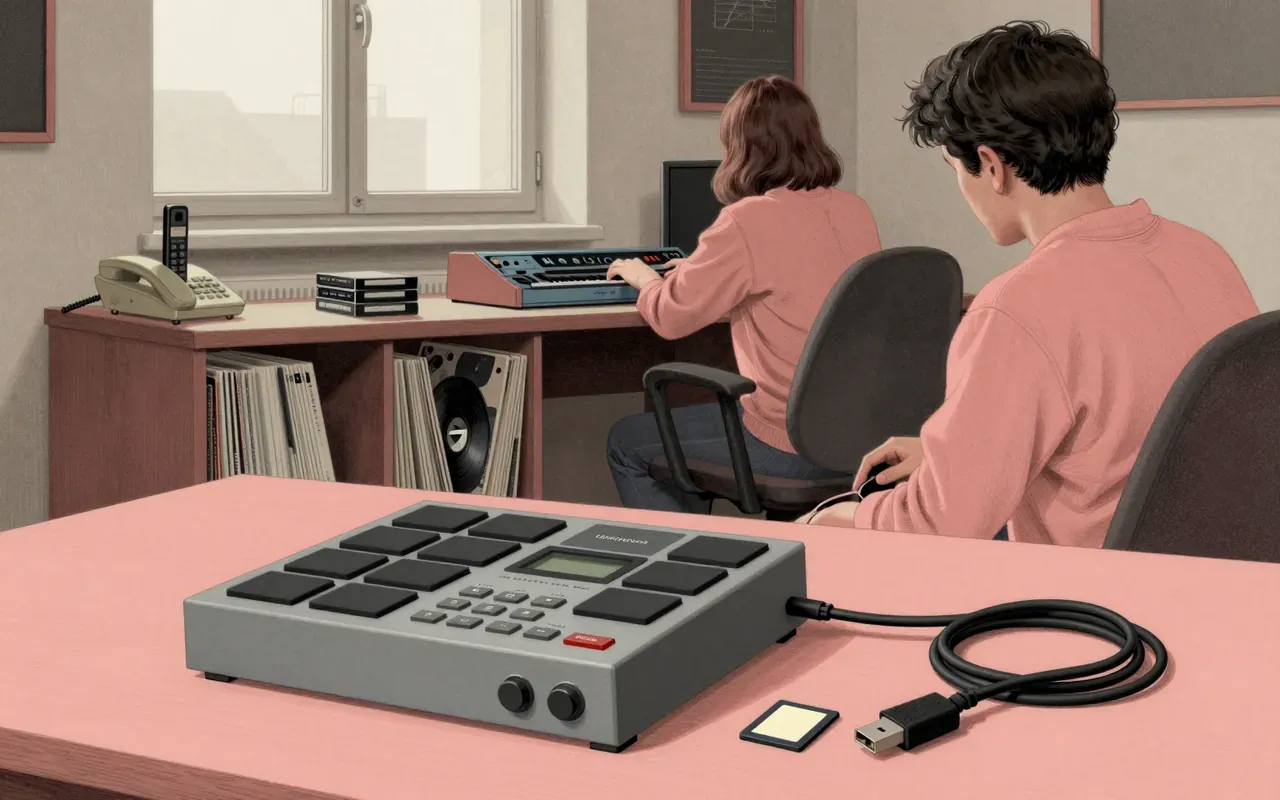
anyone reliant on USB, SD cards or DAW integration
The written brief1 min read
What it is and what it was built for
The Roland S-50 is a 61-key 12-bit sampler keyboard introduced in 1986. It was built to let musicians record, edit, and trigger short audio fragments using floppy storage and CRT-assisted waveform editing.
How it works, in terms a player would use
It records audio at 12-bit resolution and variable sampling rates between 15 kHz and 30 kHz. It stores samples on a 3.5-inch DSDD floppy disk drive. It displays sample waveforms on an external CRT monitor for editing. It holds up to 32 samples in memory.
What it does better than anything else
It gives direct visual feedback on sample shape via external CRT — a rare feature among samplers of its era. Its keyboard layout and dedicated sample editing interface make looping and truncation more immediate than menu-driven alternatives.
What it does badly
It falls short on sample duration: at 30 kHz it captures only 14.4 seconds; at 15 kHz, just 28.8 seconds. Its 12-bit resolution limits dynamic range and introduces quantisation noise. It offers no real-time pitch shifting or time-stretching.
What people made with it
The material does not state what people made with it.
Who should use it, and who should not
A hardware-focused sound designer who values hands-on waveform editing and accepts 12-bit constraints should use it. Anyone needing polyphonic layering, long samples, or modern file formats should not.
Is it worth your time
It is worth your time only if you need a tactile, CRT-assisted, floppy-based workflow for lo-fi sampling — not for speed, fidelity or integration.