Saved
Synths & drum machines

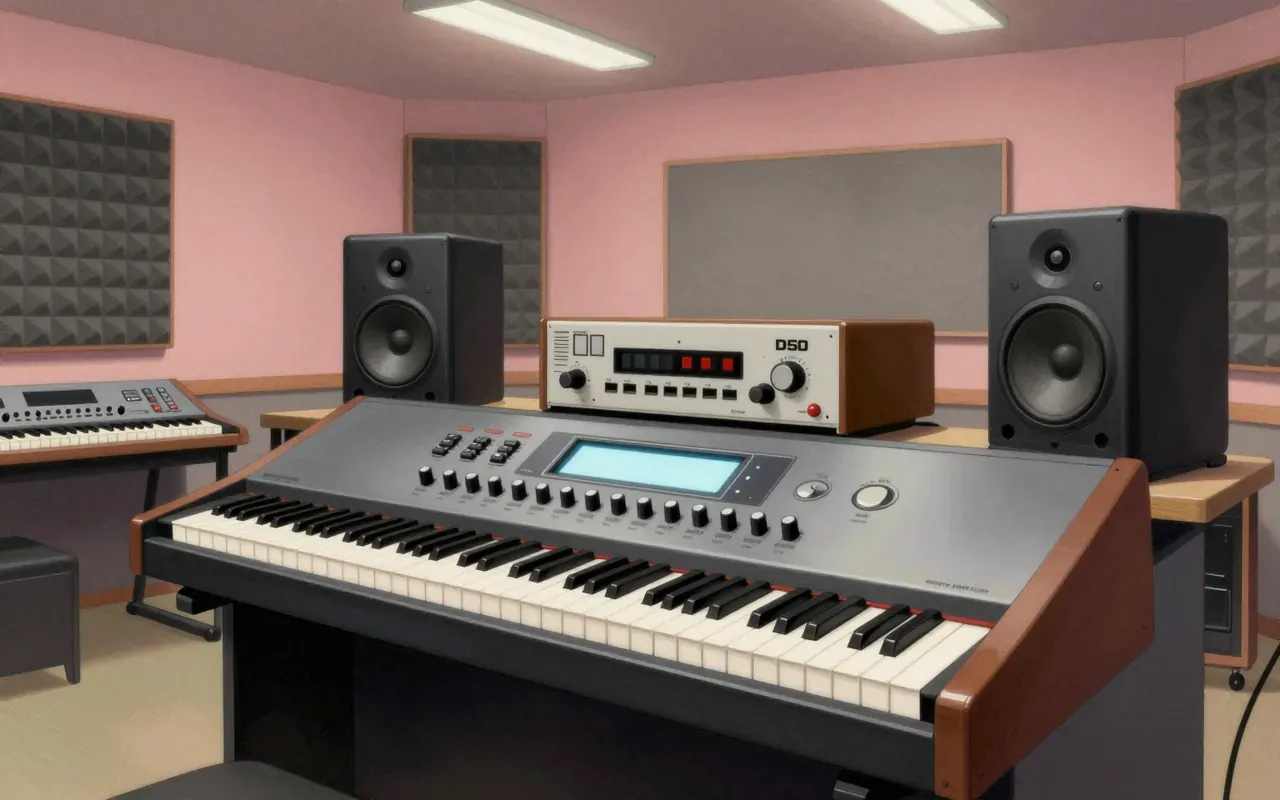
Roland D-50

It fakes realism by stitching attack samples to analog-style synthesis — and it does so with ruthless, brilliant economy.

Worth your time?4/5Yes.Use the whole thing.What works, what does not, who it is for ↓
11:15in productionCh. 1 · Why it had to be hybrid/ 11:15 · ceiling 15 min
4 chapters · 11:15Ceiling 15:00

The brief is written and checked. The video joins this page when it is cut.4 chapters · 1 min read · 11:15 planned

Read the brief

The Roland D-50 is a 1987 hybrid synthesiser that pairs 47 ROM-based PCM attack samples with subtractive synthesis to create realistic, bright, and instantly usable tones. Its architecture — two tones, each with two partials — delivers clarity and presence but imposes strict limits on timbral complexity and real-time control. It was built for affordability and immediacy, not flexibility or depth.

Chapters & takeaways4
  1. 1:02
    Why it had to be hybrid

    RAM was too expensive in 1987 — so Roland used ROM attack samples instead of full samples.

  2. 2:59
    Attack first, sustain second

    The attack is the hardest part to simulate — so Roland played back 47 PCM transients and patched them into subtractive sustain.

  3. 5:22
    Grain in the machine

    Texture samples could be mixed into the synthesized sustain — adding grain, air, or noise without increasing memory cost.

  4. 7:00
    Two tones, two partials, no exceptions

    Every patch is rigidly two tones, each with two partials — a structural limit that defines its clarity and its ceiling.

1 more chapterFewer chapters
Worth your time?

Yes. Use the whole thing.

4/ 5
What works
  • delivers punchy, vivid, transient-rich pads, bells, and electric pianos
  • cuts through mixes with glassy presence
  • offers immediate realism for plucked and struck sounds
  • uses texture samples to add grain and air without extra memory
What does not
  • demonstrate flexibility in timbral evolution
  • allow user sample loading
  • support more than two tones per patch
  • offer deep real-time modulation routing
Use it if
  • producers needing instant 1987-style digital tones
  • composers working in pop, new age, or early electronic genres
  • sample-based sound designers seeking clean transients
Skip it if
  • sound designers requiring granular control
  • performers needing expressive real-time manipulation
  • users expecting modern workflow integration
Who should use it, and who should skipHide who it is for
The written brief1 min read

What it is and what it was built for

A 1987 keyboard and rack-mount synthesiser built to deliver realistic instrument attacks at low cost. It was built for studio producers and touring players who needed polished, radio-ready digital tones without expensive RAM.

How it works, in terms a player would use

It plays back one of 47 ROM-based attack samples, then dovetails into subtractive synthesis for sustain. Each patch uses two tones — upper and lower — and each tone contains two partials. Texture samples can be mixed into the sustain part. Players shape sound with LFOs, TVFs, TVAs, ring modulator and effects.

What it does better than anything else

It delivers punchy, vivid, transient-rich pads, bells, and electric pianos better than any synth before 1987. Its hybrid architecture gives immediate realism to plucked and struck sounds where pure synthesis failed.

What it does badly

It cannot sustain complex timbral evolution across a note’s duration. The two-tone/two-partial structure limits harmonic layering. Attack samples are fixed and uneditable. There is no user sample loading or RAM expansion.

What people made with it

Producers used it for FM-adjacent leads, shimmering pads, and percussive textures in pop, new age, and early electronic production — especially where clarity and presence were prioritised over warmth or grit.

Who should use it, and who should not

Producers seeking authentic 1987 hybrid tones for retro composition or sampling. Not for sound designers needing granular control, deep modulation, or modern workflow integration.

Is it worth your time

Yes — if you need bright, glassy, instantly recognisable 1987 digital-analog hybrid tones that cut through a mix without needing deep programming. No — if you want flexible polyphony, evolving textures, or hands-on real-time control beyond the front panel.
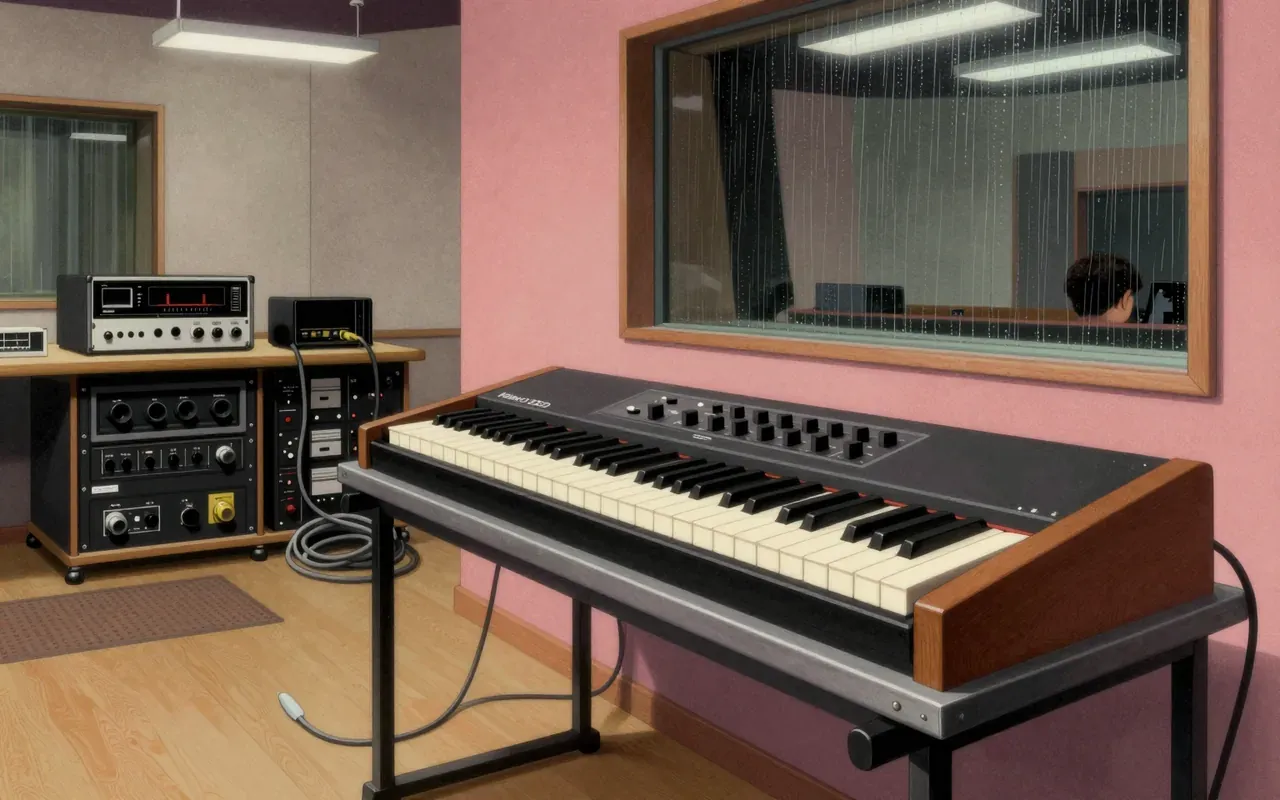
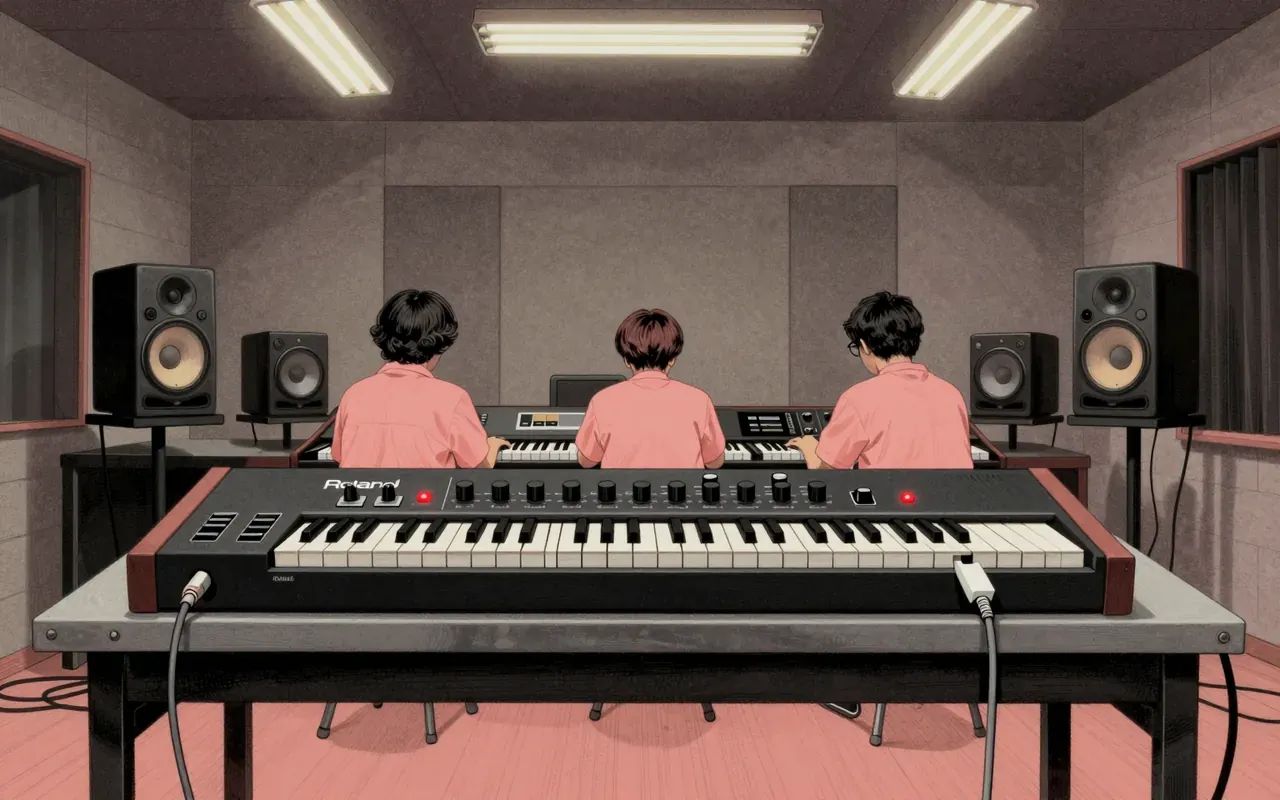
Same bench · Synths & drum machines4 of 241
9:10
Roland JX-3PRoland · 1983The Roland JX-3P is a six-note polyphonic synthesizer produced by Roland Corporation of Japan from 1983 to 1985. Its name stands for 'Programmable Preset Polyphonic'. It uses two digitally controlled oscillators with sawtooth, 50% and 10% pulse waveforms plus noise. It stores 32 factory and 32 user programs. It features a built-in 128-step polyphonic sequencer synced to external clock pulses — not MIDI clock. Its MIDI implementation supports only note on/off, pitch bend, hold, modulation and program change. The PG-200 programmer enables deeper editing but disables MIDI while connected.
9:26
Roland Juno-60RolandThe Roland Juno-60 is an analog synthesizer introduced in 1982 as a lower-cost, more stable alternative to contemporaries like the Prophet-5 and Jupiter-8. It features digitally controlled oscillators for tuning stability, a single oscillator architecture compensated by a signature chorus effect, patch memory for 54 sounds, an arpeggiator, and performance controls.
8:48
Roland D-10RolandThe Roland D-10 is a 1988 digital synthesizer using LA Synthesis. It has 61 keys and 32-voice polyphony. It is available as both a keyboard and a rack module. Factory sounds are basic and dated. Editing is required to achieve usable tones. It includes built-in sequencing and nine-part multitimbrality. Onboard effects are limited.
9:45
Roland XV-5080RolandThe Roland XV-5080 is a 2000 rack-mount sound module built for studio composers needing stereo sample playback, deep modulation via Matrix Control, and expandability through SRX and SR-JV80 boards. It reads Akai S1000 and Roland S-700 CD-ROMs via SCSI, supports up to 128MB of sample memory, and includes COSM effects and digital outputs — features the XV-3080 lacks. It offers no keyboard, no sequencer, no USB, and demands physical navigation. It belongs in a fixed studio with legacy hardware — not on a laptop stand.
Up next in Audio

Oberheim DMX

Oberheim · 9:08

The DMX doesn’t simulate a drummer—it simulates how a drummer *fails* on purpose, and that’s why it still hits.

9:08