audiobriefs
Instruments

Keyboards & organs

28
briefs
9:11
average
257 min
in total
19
people
All briefs28
8:55

Hammond A-100

Hammond · 1959

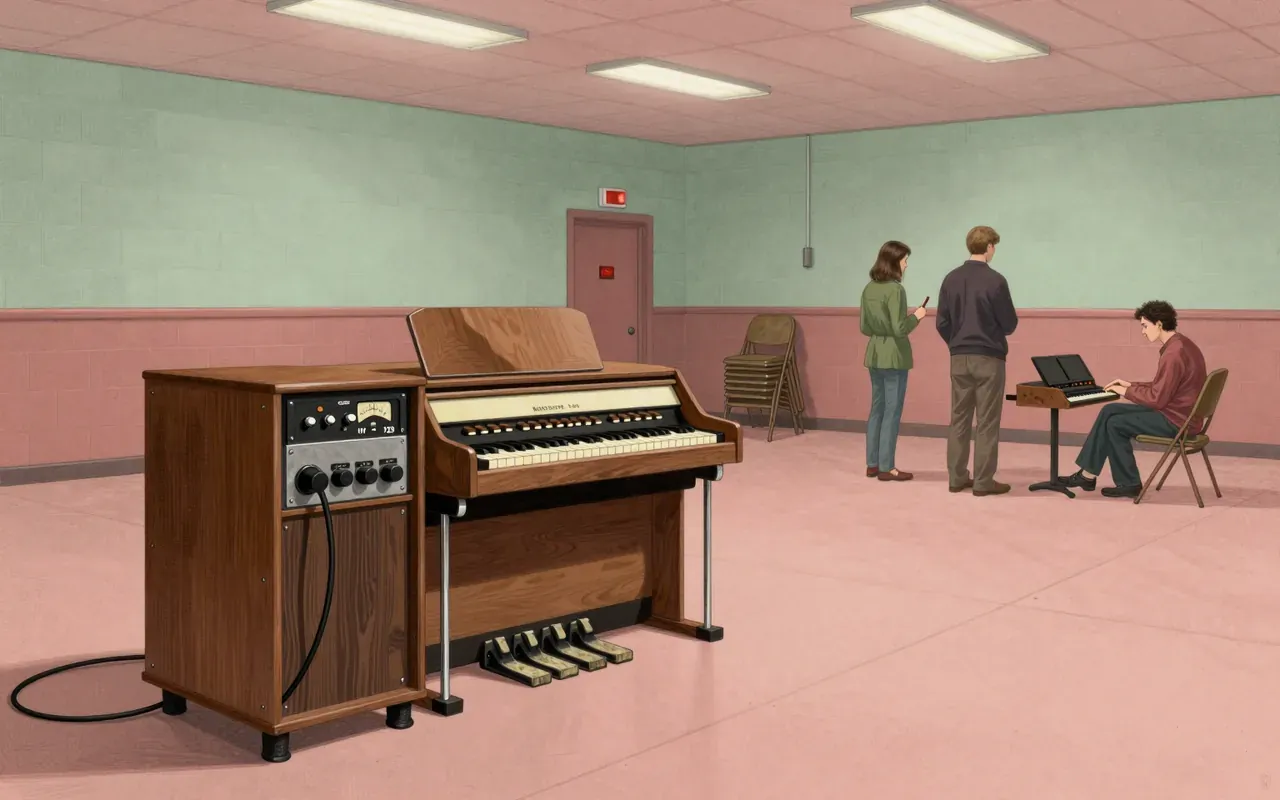
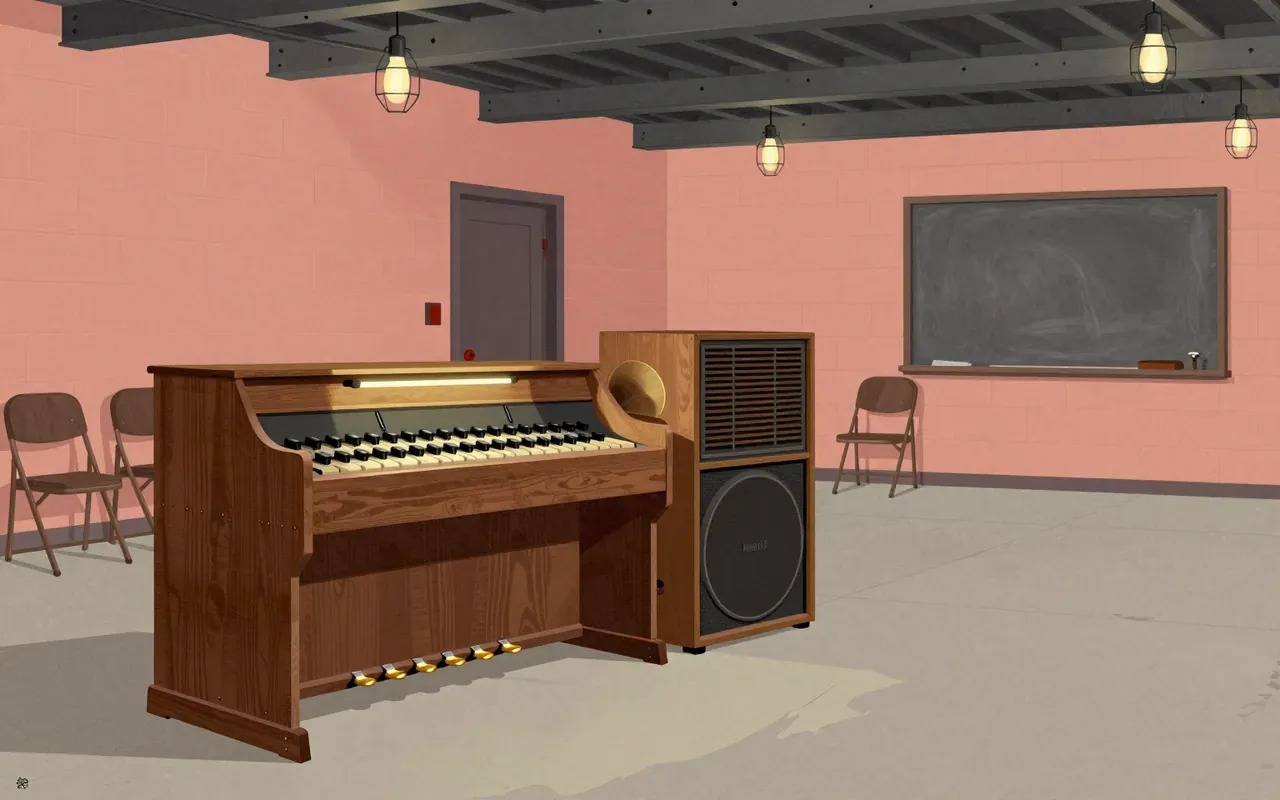
The Hammond A-100 is a console tonewheel organ introduced in 1959. It is effectively a self-contained version of the B-3 and C-3, with an internal power amplifier and speakers, and it was built in many chassis styles identified by the last two digits of the model number.

8:41

Chamberlin M1

Chamberlin · 1970

The Chamberlin M1 appeared in 1970 as a table-top, much more durable Chamberlin design. It dropped the rhythm tapes, rewound its tapes with a return-roller system and used higher-quality playback heads. About 130 were built before production ended in 1981.

9:51

Mellotron Mk II

Mellotron

The Mk II was the update to the first commercial Mellotron, released in 1964 with the full set of sounds selectable by banks and stations. About 160 were made. It has two manuals, an organ-style cabinet and two internal 12-inch speakers with an amp, and it was meant for the home rather than the road.

9:06

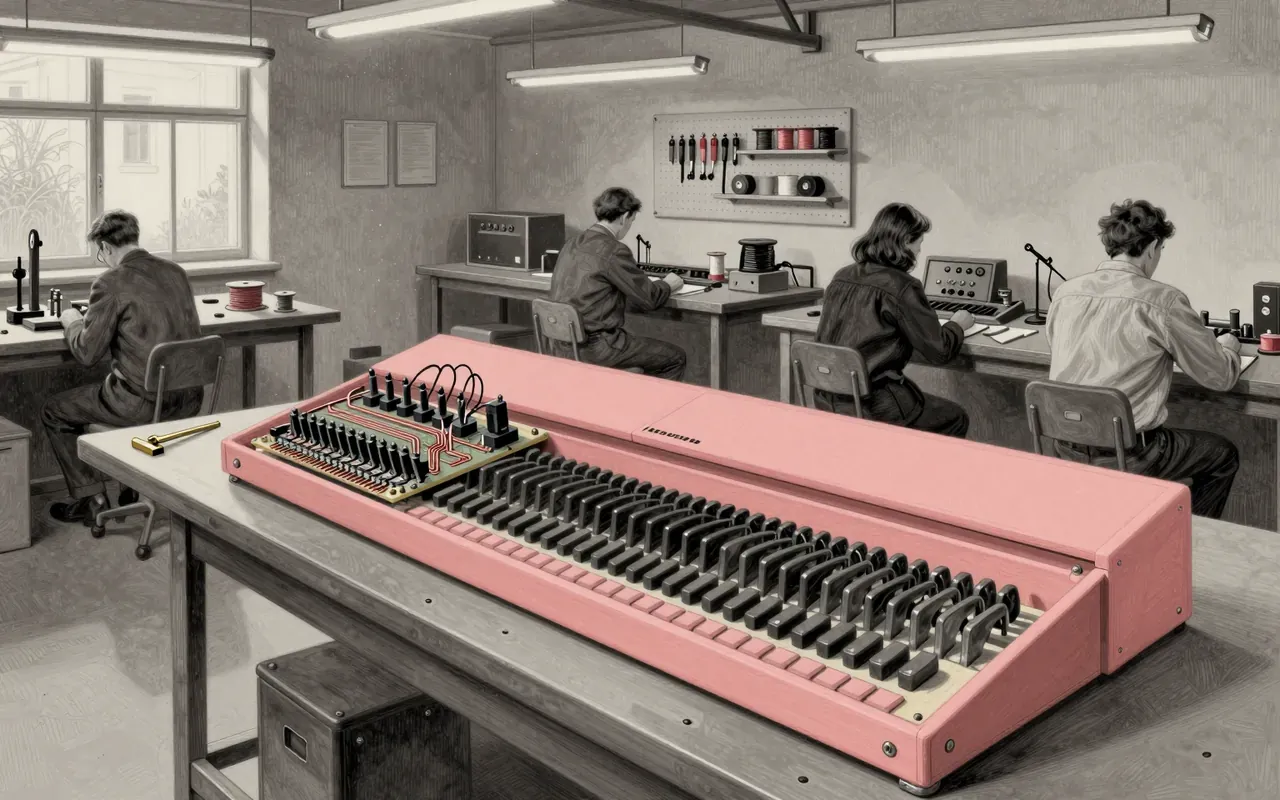
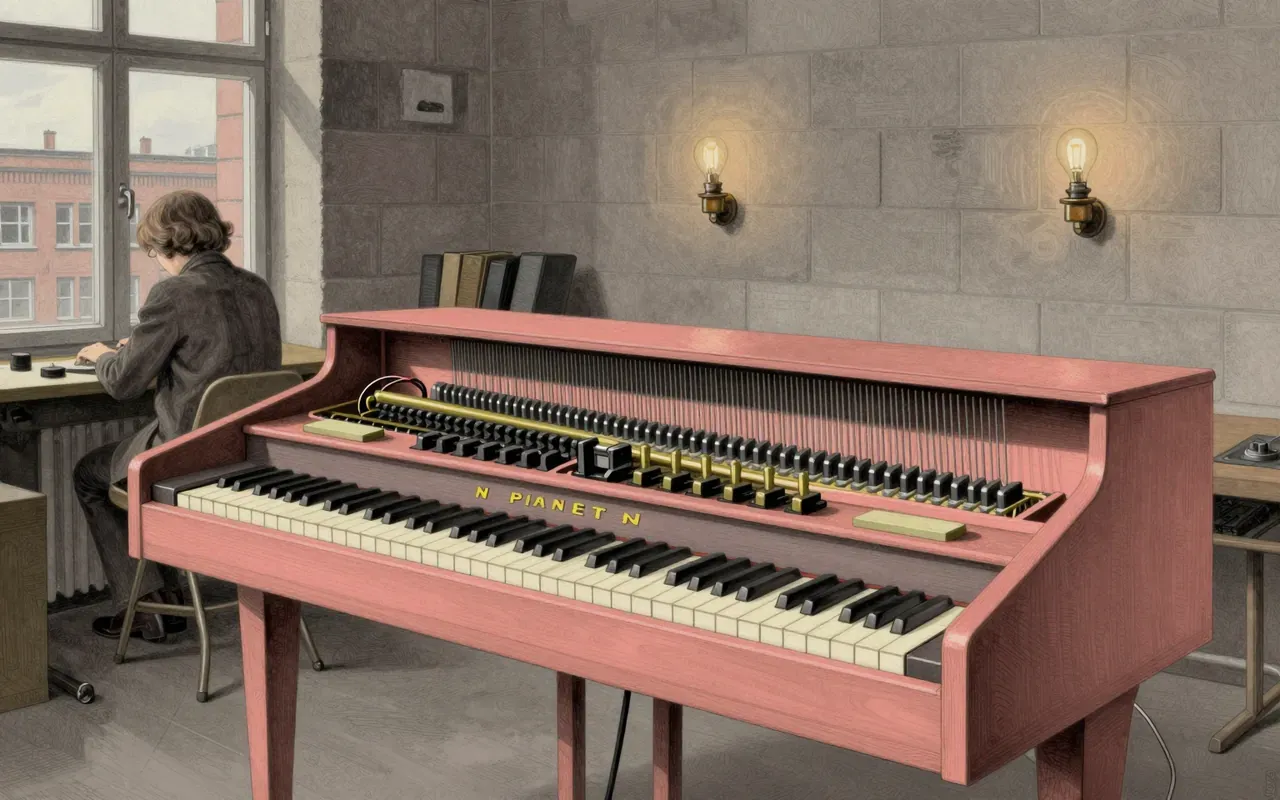
Pianet N

Hohner

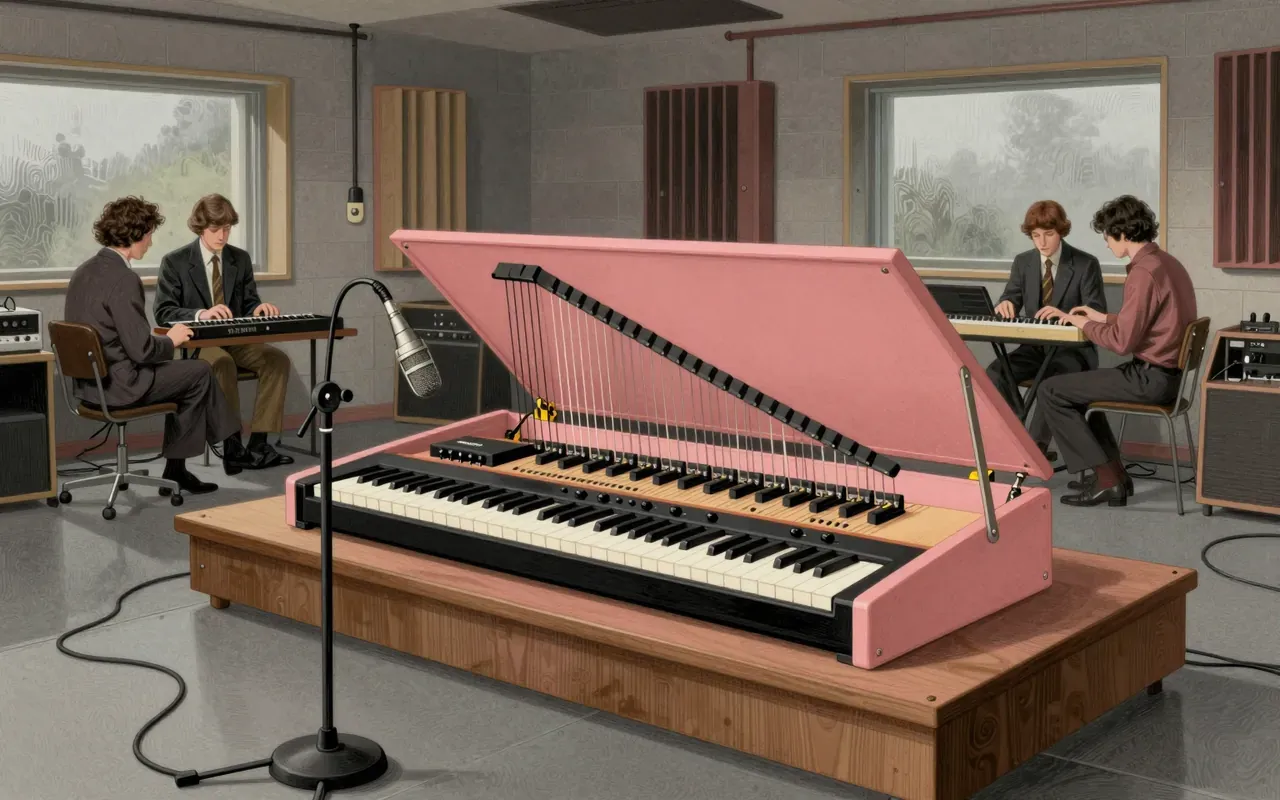
The Pianet N was Hohner's most popular Pianet, made from about 1965 to 1977 in two variants. The N stands for natural wood finish. It has inverted-V legs, a folding top that doubles as a music stand, a transistorised pre-amplifier, a floor pedal for volume and standard vibrato, and it plays through an external amplifier.

8:47

Pianet T

Hohner

The Pianet T was made from 1977 to about 1983 and headed Hohner's second group of Pianets. Plastic suction pads pluck its reeds, an electro-magnetic pick-up like the one in a Rhodes converts the vibration, and the instrument needs no electrical power of its own. Vinyl-covered, with a hinged lid, it was built for live use but has no built-in amplifier.

8:38

Wurlitzer 200A

Wurlitzer

The Wurlitzer 200A is a 73-key electro-mechanical electric piano with built-in speakers, output jacks, a sustain pedal, carrying handles, and two knobs — one for volume, one for tremolo speed. Its keyboard action is tactile and easy to play. Its tone is uniquely recognizable. It is a newer model than earlier Wurlitzer electric pianos. It offers more tonal range than those earlier models only via dedicated tremolo and volume controls.

7:56

Farfisa Compact Duo

Farfisa

The Farfisa Compact Duo MK1 is a portable electronic organ with drawbars and vibrato. It delivers a distinctive, aggressive organ tone. No technical specifications are available. Its design prioritises immediacy over documentation or expandability.

9:56

Roland D-20

Roland

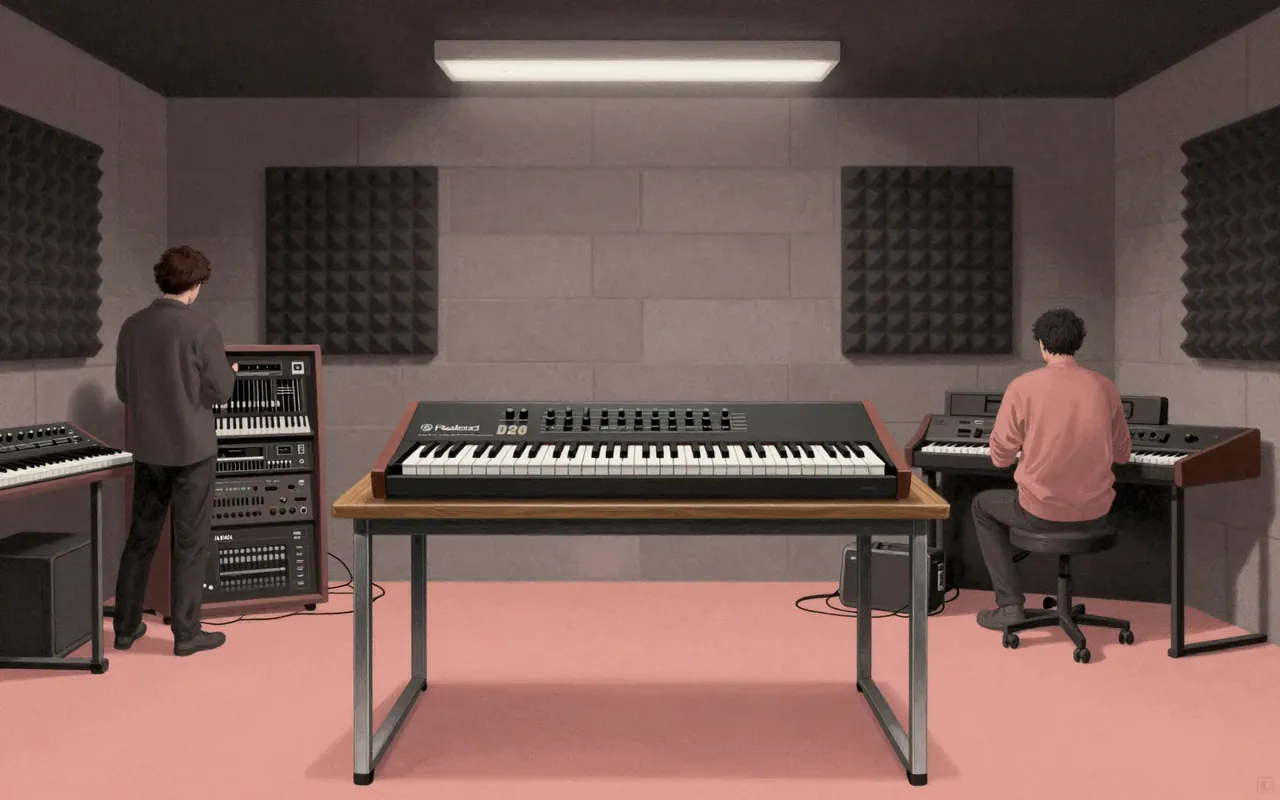
The Roland D-20 is a 1988 digital synthesizer using Linear Arithmetic synthesis. It offers 32-voice polyphony, 8-part multitimbrality, a 61-key velocity-sensitive keyboard, an 8-voice sequencer with rhythm track, a built-in arpeggiator, reverb effects, and internal/external memory storage. LAS programming revolves around tones, partials, and timbres—a method that is difficult to learn but capable of unique results when mastered. It was produced from 1988 to 1992.

7:54

Leslie Leslie 122

Leslie

The Leslie 122 is a rotating speaker cabinet designed for organs—not a preamp, not an effects unit, not a standalone amplifier. Its entire function depends on connection to a compatible organ like the Hammond M3. It offers no user controls. Its effect is purely mechanical: rotation creates tremolo and vibrato through air displacement. It cannot be used without modification for guitar or other instruments. It belongs only where an organ lives—and nowhere else.

10:20

Neumann M 50

Neumann

The Korg M50 61 is a 2008 sampling workstation built for real-time layering and editing. It delivers 80-voice polyphony, 1077 samples across 608 editable programs, and up to 896 combinations — all controlled via an angled panel and full-size TouchView interface. It includes one GM2-compatible sound bank. It was reviewed as industry-ready but criticised for weak electro/lead sounds and lack of built-in sampler compared to the M3.

9:27

Hammond M3

Hammond

The Korg M3 88 is a workstation belonging to the M3 series. It features a dynamic 88-note RH3 keyboard with aftertouch. It supports expansion via an EXB-Radias card to reach nearly 1700 sounds across HD-1, EDS, and optional MMT synthesis. KARMA functions as a highly sophisticated and flexible live arpeggiator. A Kaos Pad is accessible via the touchscreen. The onboard sampler is size-limited despite memory expansion. The instrument is modular: the module can be separated from the keyboard or added to a RADIAS rack. Its six pads are less accurate than those on an MPC.

9:01

Rhodes Rhodes Mark II

Rhodes

The Rhodes Mark II Stage Piano is a Fender-built electric piano in the Rhodes series. No technical specifications are available. Its value is $900. That is all that is known.

9:34

Rhodes piano

Fender Rhodes

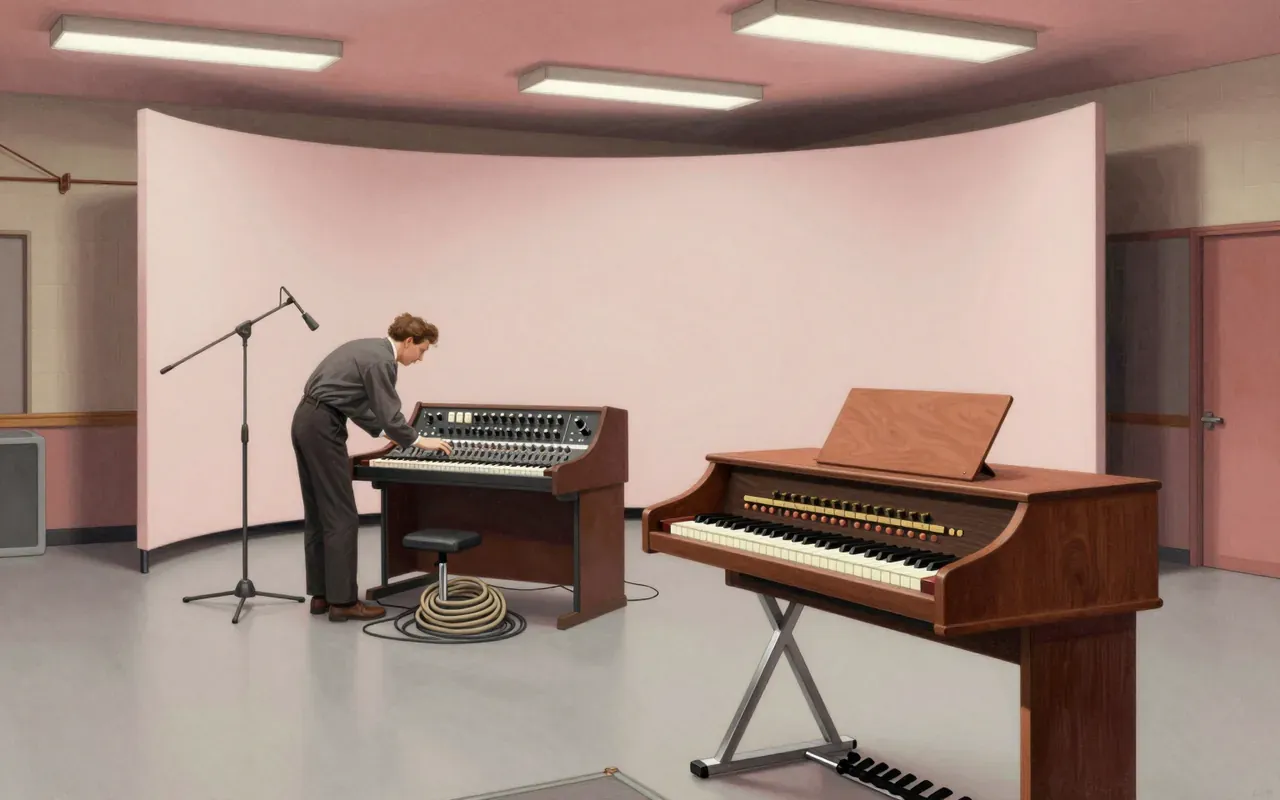
The Rhodes piano is an electromechanical electric piano invented by Harold Rhodes. It uses hammers to strike metal tines whose vibrations are captured by electromagnetic pickups. It outputs an electrical signal requiring external amplification for full fidelity. It makes audible sound unplugged — quieter and thinner — and features a vocal-range frequency gap that supports singing without masking.

9:04

Technics SL-1100

Technics

The Technics SL-1100 is an 88-key MIDI controller keyboard built for studio and stage use by performers who need precise, multi-channel keyboard zoning without onboard synthesis.

9:51

Yamaha YC-45D

Yamaha

The Yamaha YC-45D is a 1976–1980 hybrid organ-synthesizer. It combines drawbar organ, transistor organ, piano, harpsichord, distortion and a 3-octave ribbon synth. Its lateral per-note vibrato/bend is unmatched for its time. Its preset system is rudimentary. Its ribbon lacks visual pitch reference. Its emulations are shallow. It belongs in a room where articulation matters more than fidelity.

8:56

Roland S-50

Roland

The Roland S-50 is a 61-key 12-bit sampler keyboard introduced in 1986. It uses variable sampling rates (15–30 kHz), stores samples on a 3.5-inch DSDD floppy disk drive, supports external CRT monitor editing, and holds up to 32 samples. A rack-mounted version with expanded memory was also available.

9:49

ARP String Ensemble

Solina

The ARP String Ensemble is a fixed-architecture string machine. Twelve tone generators feed 49 keys via divide-down. Its triple BBD chorus — driven by two LFOs — defines the sound. No envelopes. No filters. No expression. Just one lush, unchanging texture.

10:39

Korg Trinity

Korg

The Korg Trinity is a 1995 music workstation. It was Korg's first modern workstation. It introduced a large touchscreen for advanced control and editing functions. It became the flagship successor to the M1. It introduced resonant filters to Korg's workstation line. It offered built-in digital audio recording, 32-note polyphony, an extensive internal sound library, and assignable effects.

7:56

Clavinet

Hohner

The Clavinet is a 60-key electromechanical keyboard made by Hohner from 1964 to 1982. It uses rubber pads to strike tensioned steel strings, with electromagnetic pickups capturing the vibration. Its weighted action enables dynamic volume and aftertouch via string stretch. It excels at percussive, expressive, midrange-heavy articulation—but offers no sustain, limited range, or tonal flexibility beyond its fixed pickup response.

9:25

Vox Continental

Vox

A portable transistor organ designed for touring musicians as a lightweight alternative to the Hammond organ.

10:48

Yamaha CP-70

Yamaha

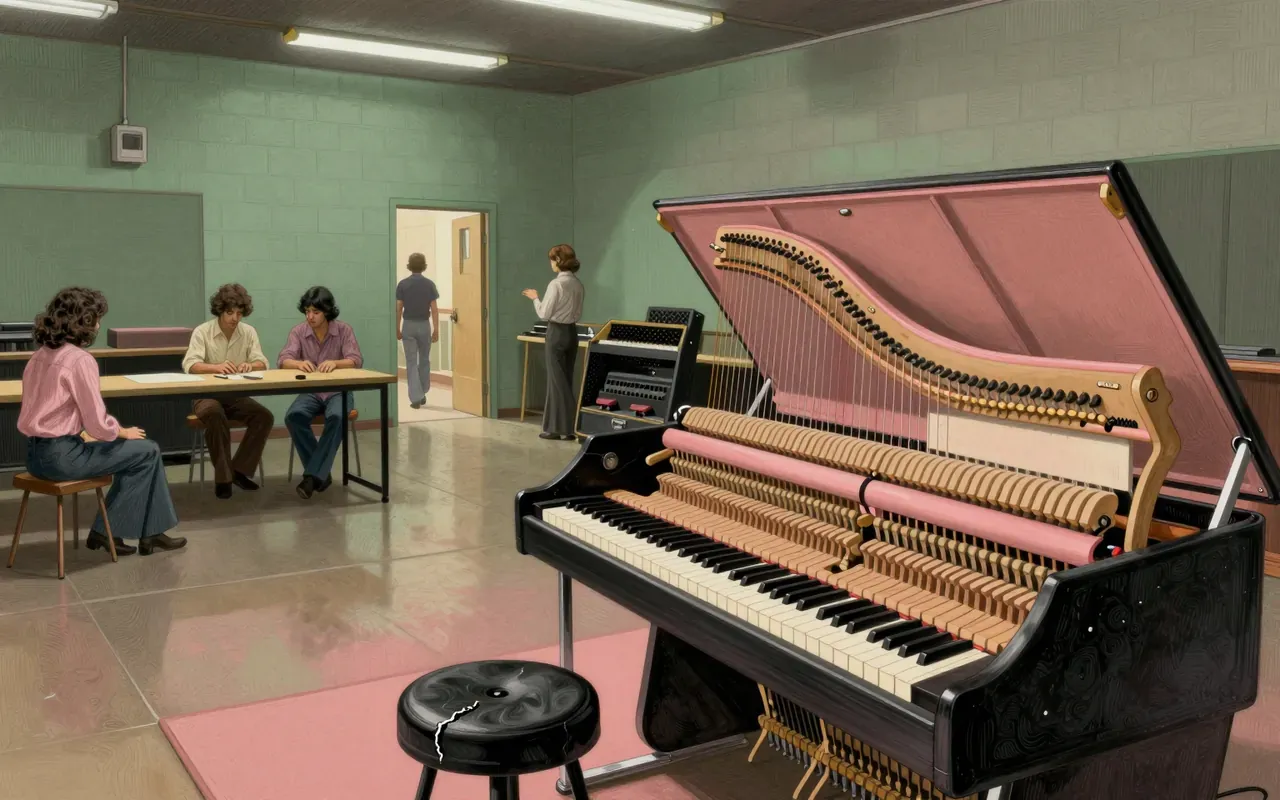
The CP-70 is a mechanically faithful grand piano stripped of its soundboard and fitted with piezo pickups for touring. It delivers unmatched keybed realism and feedback resistance—but at the cost of acoustic presence, convenience, and tonal flexibility.

9:17

Kurzweil K250

Kurzweil

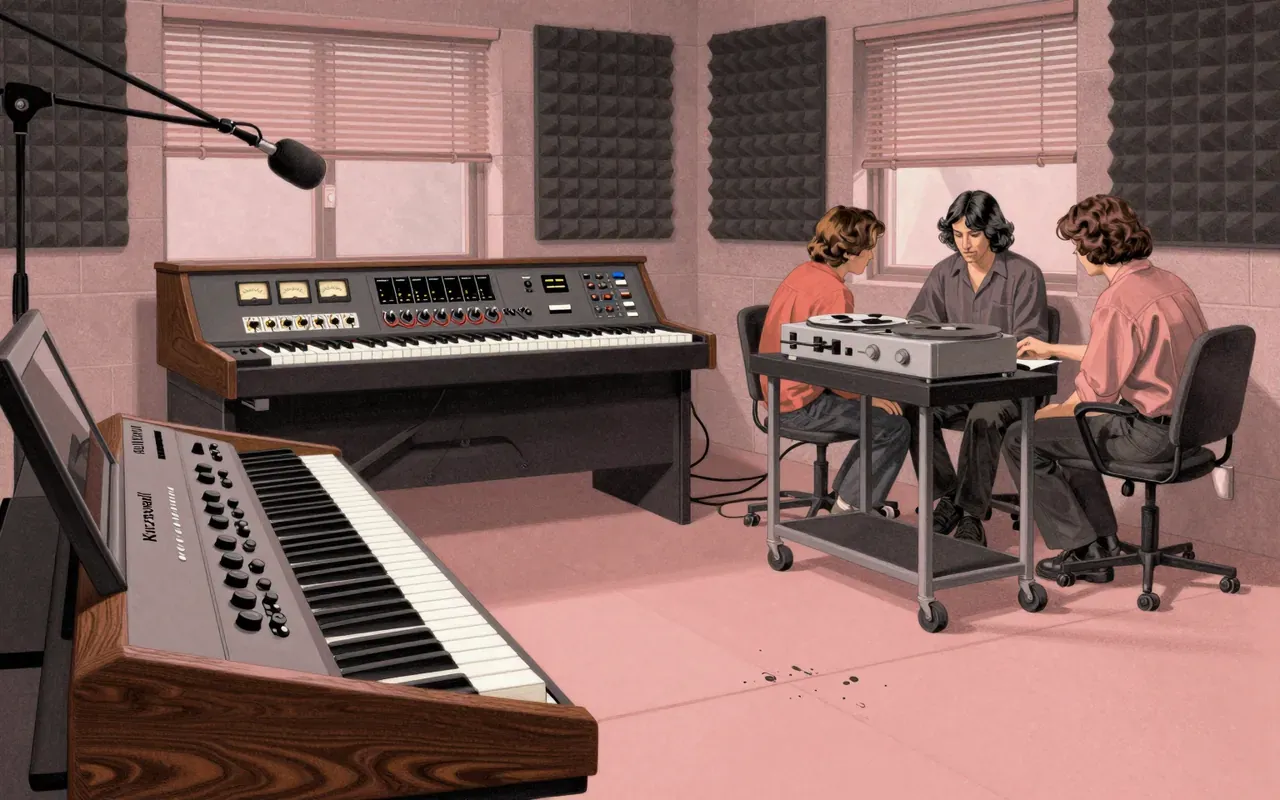
The Kurzweil K250 was an 88-key, ROM-based sampling keyboard introduced in 1984. It used proprietary 'contoured modelling' compression to store acoustic instrument and oscillator waveform samples. Twelve separate DACs converted the data to analog. CEM 3335 analog envelopes restored dynamics lost in compression. It delivered 12-note polyphony and was the first electronic instrument to faithfully reproduce an acoustic grand piano.

8:52

Korg miniKORG 700

Korg

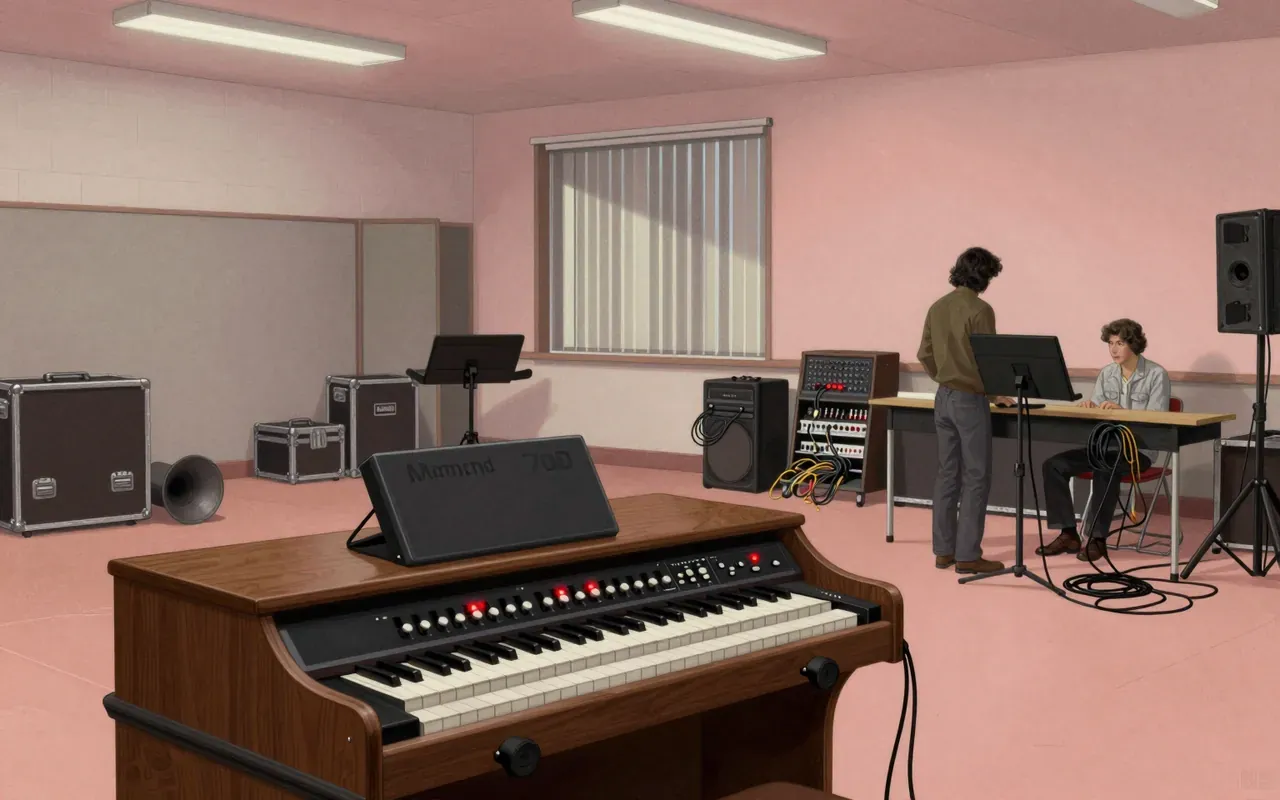
The miniKORG 700 is Korg’s first monophonic analog synthesizer, released in 1973. Designed for organists, it sits atop an organ with controls facing upward. It features five oscillator waveforms including two pulse-width modulation variants, an envelope with attack and 'singing' (decay/release), a 'sustain' toggle that functions only as release, and a dual-filter 'Traveler' system with a safety constraint preventing silence. Its filters produce vocal-like sounds.

8:40

Prophet 2000

Sequential Circuits

The Prophet 2000 is Sequential Circuits’ first sampler — released in 1985. It uses 12-bit sampling at up to 41.667 kHz, with 256 kilowords of memory. It offers 8-voice polyphony and early multitimbral operation via MIDI channels. Its analog VCFs and VCAs give it warmth absent in later samplers. It was relatively affordable at £2,000.

7:34

Roland U-20

Roland

The Roland U-20 is a 1989 PCM-sample keyboard that plays back stored sounds with no filtering. It uses ADSR envelopes and DSP effects like reverb and chorus for limited modification. It supports expansion via the M-256E RAM card and two ROM PCM-card slots. Its lack of filters and impractical aftertouch are documented drawbacks.

9:10

Roland XP-80

Roland

The Roland XP-80 is a 1996 76-key workstation using digital PCM subtractive synthesis, delivering 64-voice polyphony and 16-part multi-timbrality via a semi-weighted keyboard. It merges the JV-1080 engine with the MRC-Pro sequencer for tight internal composition—but offers no aftertouch, limited real-time sound control, and no modern connectivity.

10:14

Korg M1

Korg

The Korg M1 is a 1988 sampling-based music workstation with 16-note polyphony, 16-bit PCM sample playback, built-in effects including reverb, delay, chorus, tremolo, EQ, distortion and Leslie simulation, and an eight-track MIDI sequencer. It uses sampled attack transients, loops, sustained waveforms and percussive samples. It was the bestselling synthesizer ever at that time, selling over 250,000 units. None of its features was unique, but their integration was unprecedented.

8:49

Polymoog

Moog · 1975

The Polymoog is a 1975 Moog keyboard that gives unlimited polyphony through divide-down oscillator architecture — but sacrifices per-voice synthesis, programmability, and filter control entirely.