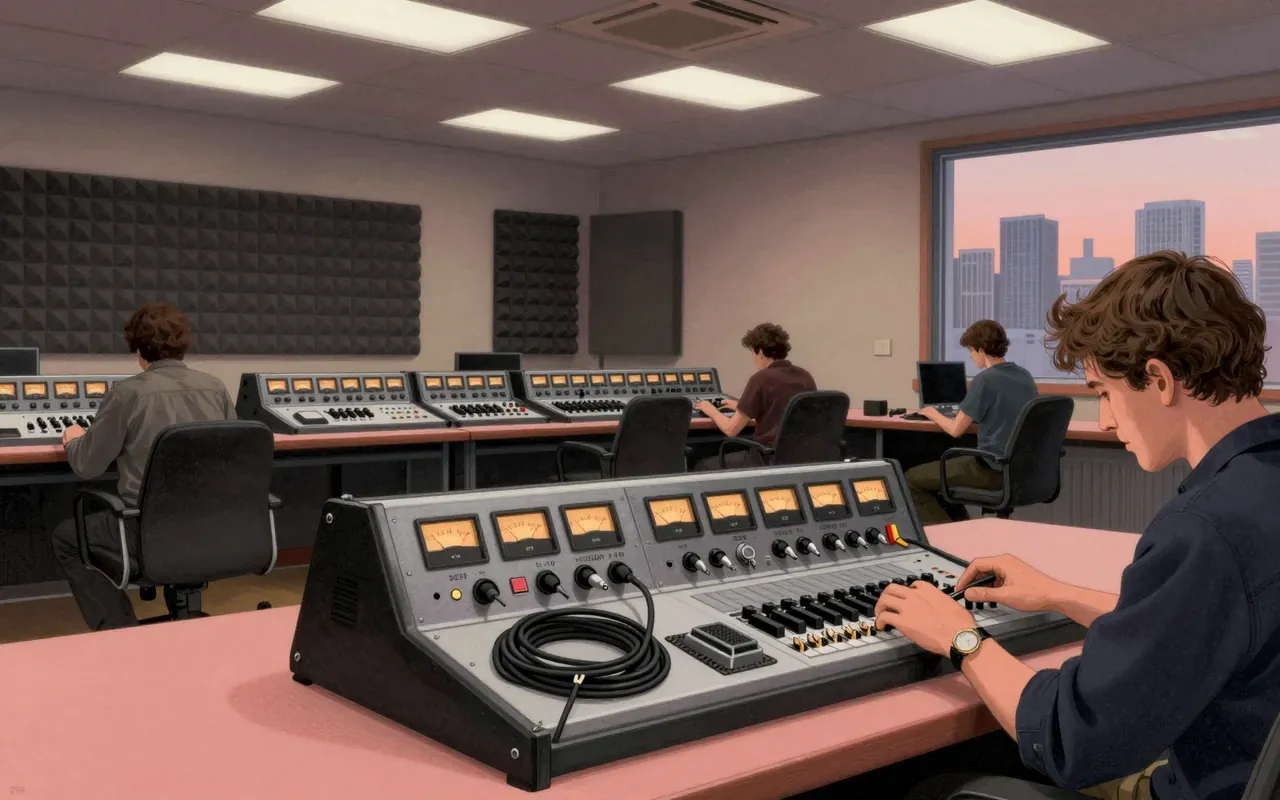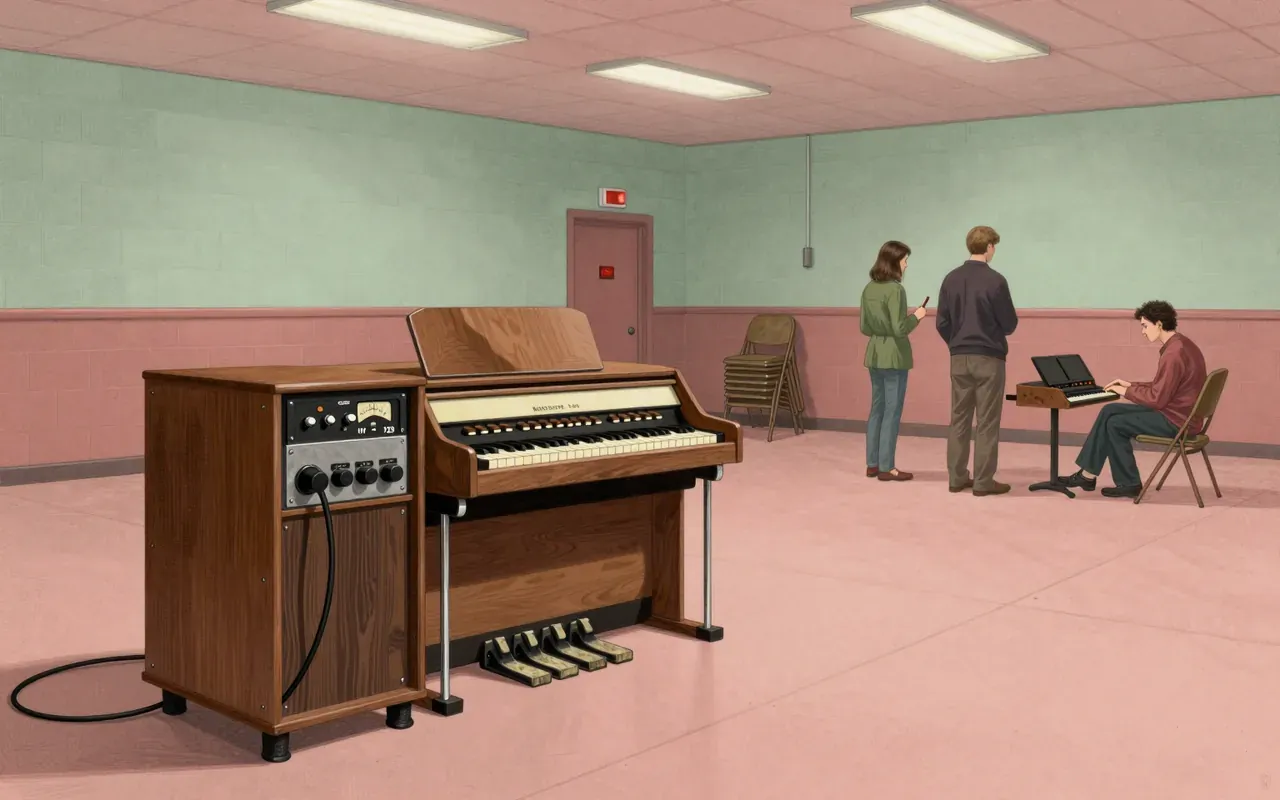
What it is and what it was built for
The Leslie 122 is a rotating speaker cabinet built exclusively for organs—demonstrated with the Hammond M3—not a standalone amplifier or effects unit.
How it works, in terms a player would use
It connects directly to an organ—no preamp, no controls on the cabinet. Rotation speed (slow/fast) and on/off are triggered by the organ’s footswitch or control panel. You plug it in and play.
What it does better than anything else
It delivers a physically rotating speaker effect—tremolo and vibrato arising from Doppler shift and amplitude modulation—that no fixed speaker or digital emulation replicates with the same spatial unpredictability and organic pitch wobble.
What it does badly
It does nothing with signal processing. No EQ, no volume control, no input gain staging, no isolation from organ-level output. It cannot be used without an organ unless modified.
What people made with it
Players used it to shape the tonal identity of Hammond organ performances, embedding its swirling, three-dimensional motion into jazz, gospel, soul, and rock organ parts.
Who should use it, and who should not
Hammond organ players seeking authentic vintage tone. Not for guitarists, synth players, or producers who need plug-and-play flexibility or signal control.
Is it worth your time
Yes—if you own or regularly play a vintage Hammond organ and want the original mechanical rotary effect. No—if you need standalone operation, guitar compatibility out of the box, or sound-shaping options.