audiobriefs
9:10in productionCh. 1 · 1996: Built for its moment/ 9:10 · ceiling 15 min
Keyboards & organs · Synths & drum machines

Roland XP-80

A sequencer-first workstation that puts the JV-1080 engine in command—not your fingers.

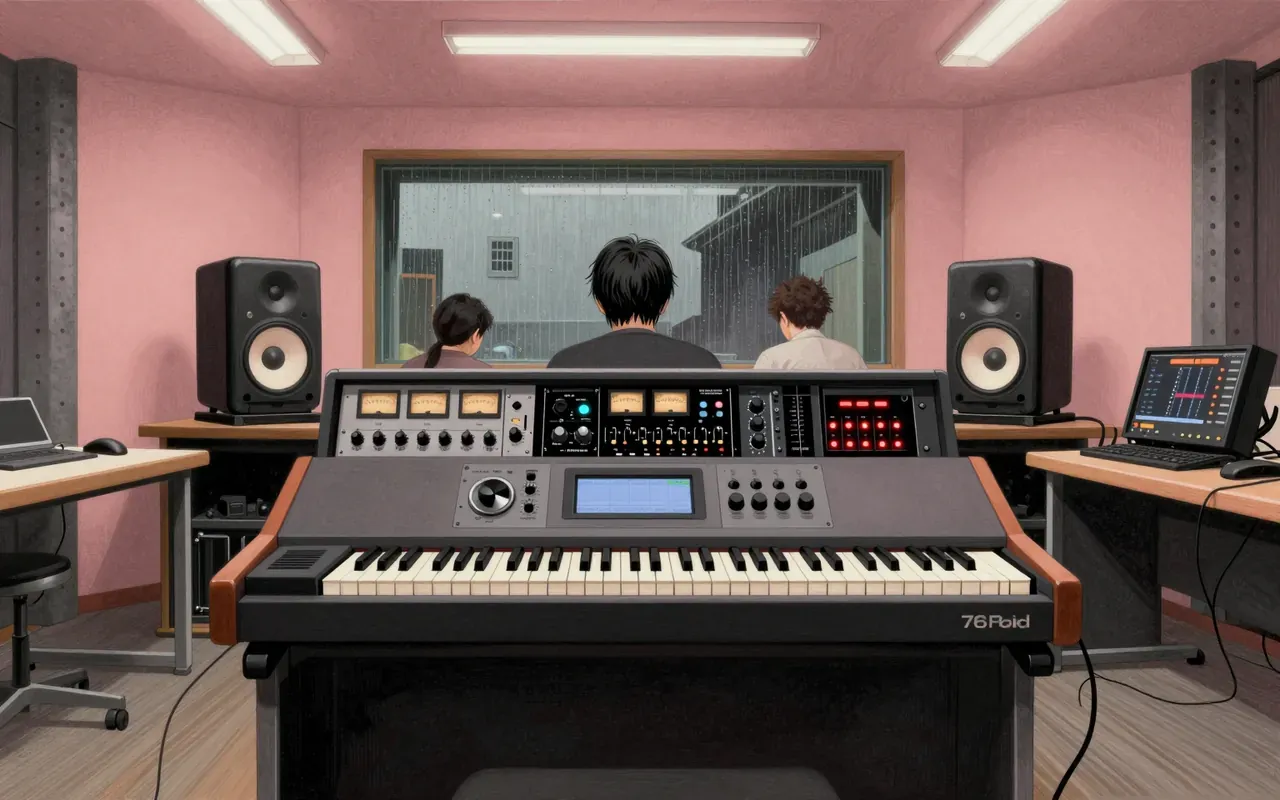
The Roland XP-80 is a 1996 76-key workstation using digital PCM subtractive synthesis, delivering 64-voice polyphony and 16-part multi-timbrality via a semi-weighted keyboard. It merges the JV-1080 engine with the MRC-Pro sequencer for tight internal composition—but offers no aftertouch, limited real-time sound control, and no modern connectivity.

Chapters & takeaways4
  1. 0:42
    1996: Built for its moment

    Released in 1996, it arrived at the peak of the workstation era—fully formed, fully dated.

  2. 2:26
    How the sound is made

    PCM subtractive synthesis powers 64 voices across 16 parts—no oscillators to tune, no filters to modulate beyond preset curves.

  3. 4:23
    What your hands feel

    Its 76-key semi-weighted keyboard gives firm feedback but no aftertouch—playability stops at keybed response.

  4. 5:55
    The sequencer is the core

    It combines the JV-1080 engine with the MRC-Pro sequencer—making sequencing native, not bolted on.

Worth your time?

Yes. Use the whole thing.

3.5/ 5
What works
  • as a self-contained composition station
  • with its integrated sequencer and JV-derived sound set
  • for recallable multi-timbral arrangements
What does not
  • support expressive real-time control
  • integrate with modern DAWs
  • offer aftertouch or advanced modulation
Use it if
  • studio composers needing an all-in-one 1996-era sequencer-synth
  • collectors seeking functional JV-series lineage
Skip it if
  • live performers
  • sound designers requiring deep parameter access
  • producers reliant on USB or plugin workflows
The written brief1 min read

What it is and what it was built for

The Roland XP-80 is a 1996-released, 76-key keyboard workstation built to function as an all-in-one composition and production tool for studio-based musicians.

How it works, in terms a player would use

It uses digital PCM subtractive synthesis. It has a 76-key semi-weighted keyboard. Its synthesis engine delivers 64-voice polyphony and 16-part multi-timbrality.

What it does better than anything else

It integrates sequencing and synthesis more tightly than most contemporaries—its onboard MRC-Pro-derived sequencer runs alongside the JV-1080-derived engine without external sync or MIDI clock dependency.

What it does badly

It falls short as a live performance instrument: no real-time filter or envelope manipulation beyond basic sliders, no aftertouch, and no built-in effects routing that supports dynamic sound shaping during play.

What people made with it

The sources do not specify any music, artists, albums, or productions made with the XP-80.

Who should use it, and who should not

A producer or composer who values tactile, integrated sequencing and PCM-based orchestral, pad, and rhythm sounds—and who accepts dated navigation, no USB, and no modern file handling—should use it. Anyone needing plug-in integration, velocity-sensitive articulation, or expressive real-time control should not.

Is it worth your time

Yes—if you need a self-contained, sequencer-equipped workstation from the mid-90s with JV-series sound architecture and no desire for modern workflow integrations.
Same bench · Keyboards & organs4 of 17
Up next in Audio

Oberheim Xpander

Oberheim · 9:06

Six voices. Zero keyboard. Total control — if you’re willing to lose your place in the menu.

9:06