audiobriefs
8:55in productionCh. 1 · Built for replacement, not revolution/ 8:55 · ceiling 15 min
Keyboards & organs · Instruments

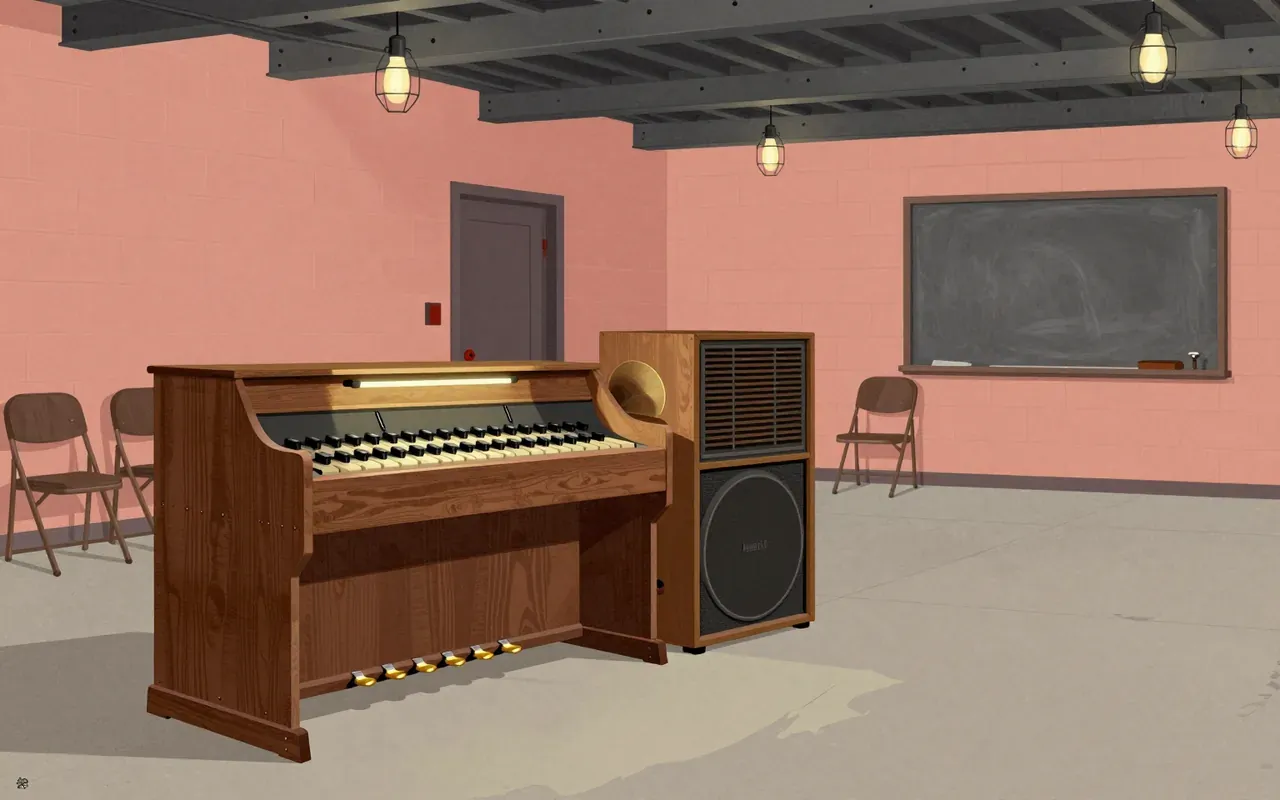
Hammond organ

It fakes harmony with spinning metal—and sounds alive because it cannot be precise.

The Hammond organ is a mechanical additive instrument built for practicality, not precision. It trades tuning accuracy and silence for texture, presence, and hands-on harmonic mixing.

Chapters & takeaways4
  1. 0:54
    Built for replacement, not revolution

    It was built to replace pipe organs—not to invent new sound.

  2. 2:17
    Sine waves from spinning steel

    Its tone comes from rotating metal, not oscillators or samples.

  3. 3:50
    Imperfection is hardwired

    Tuning is approximate. Leakage is built-in.

  4. 5:18
    A click before the chord

    Some models announce every note with a pop.

Worth your time?

Yes. Use the whole thing.

4/ 5
What works
  • layered harmonic blending via drawbars
  • organic vibrato from metal scanner
  • continuous tonewheel swell
What does not
  • offer equal temperament
  • eliminate crosstalk
  • suppress key-click
Use it if
  • players who want additive control without digital abstraction
  • those who accept mechanical compromise as character
Skip it if
  • anyone needing silent triggers or stable intonation
  • users without space or budget for heavy hardware
The written brief1 min read

What it is and what it was built for

An electric organ built for churches and theatres. Invented by Laurens Hammond and John M. Hanert. First manufactured in 1935.

How it works, in terms a player would use

It spins metal tonewheels past electromagnetic pickups. Each wheel generates a signal like a sine wave. All active keys and pedals feed into a vibrato system driven by a metal scanner. The signal path is mechanical, not electronic synthesis.

What it does better than anything else

It delivers rich, intermodulating additive tones no other 1930s instrument matches. Its tonewheel rotation gives a continuous, organic swell—not stepped or sampled.

What it does badly

It cannot produce exact harmonic multiples. It leaks crosstalk from unselected tonewheels. Some models click sharply on key press.

What people made with it

Jazz, gospel, and rock players used it to build layered, swirling textures—often with drawbars to mix tonewheel harmonics live.

Who should use it, and who should not

Players who value hands-on additive control and tolerate mechanical quirks. Not for those needing clean starts, stable pitch, or compact setup.

Is it worth your time

Yes—if you need additive texture with inherent imperfection, and accept its physical demands and sonic compromises. No—if you require precise tuning, silence on key press, or modern signal flexibility.

Same bench · Keyboards & organs4 of 15
10:39
Korg TrinityKorgThe Korg Trinity is a 1995 music workstation. It was Korg's first modern workstation. It introduced a large touchscreen for advanced control and editing functions. It became the flagship successor to the M1. It introduced resonant filters to Korg's workstation line. It offered built-in digital audio recording, 32-note polyphony, an extensive internal sound library, and assignable effects.
8:33
ARP String EnsembleARP/SolinaThe ARP String Ensemble is a fixed-architecture ensemble generator: twelve tone sources, divide-down polyphony, and a BBD-based triple chorus that defines its sound. It offers no synthesis, no dynamics, no articulation—only one lush, unchanging, instantly deployable string texture.
8:41
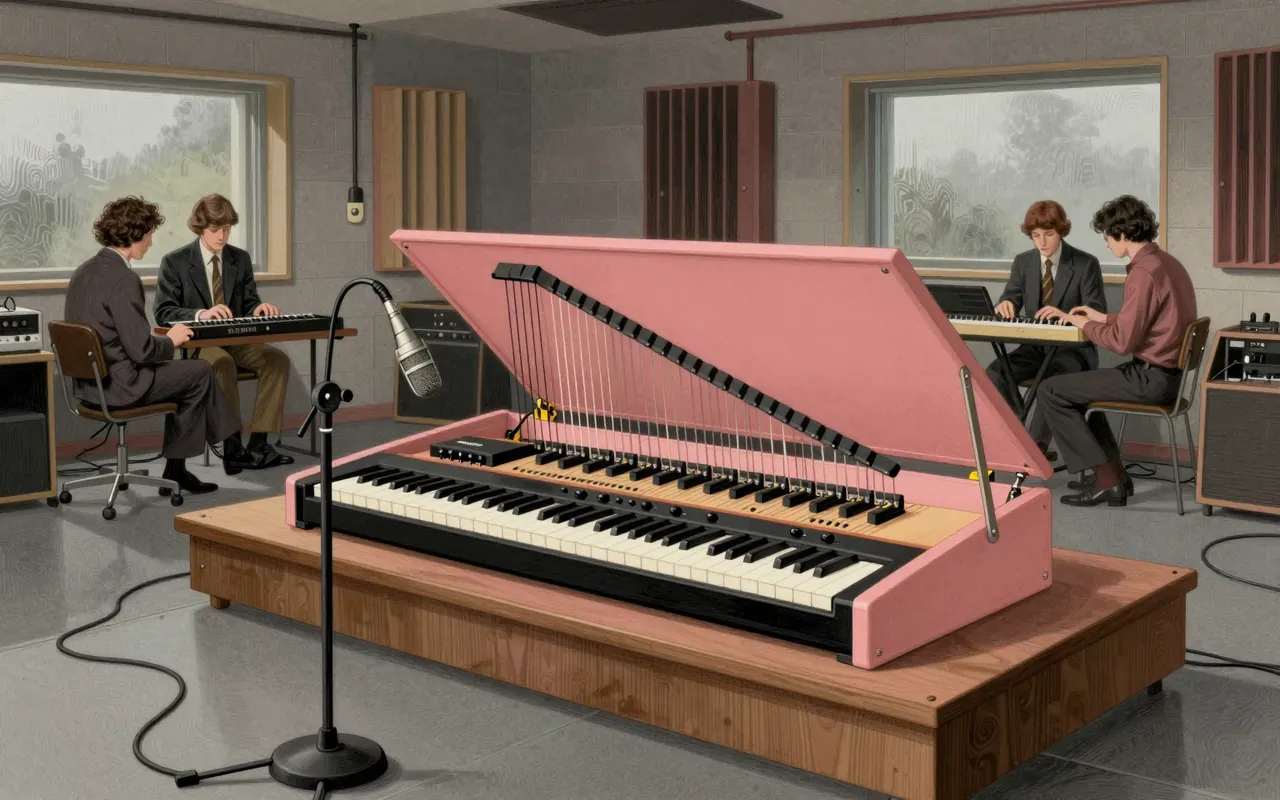
ChamberlinChamberlinThe Chamberlin is a tape-based electro-mechanical keyboard introduced in 1956. Each key triggers a dedicated prerecorded tape of an instrument or effect. Pressing the key engages a tape head and pinch roller; releasing it stops playback and rewinds the tape mechanically. It was developed by Harry Chamberlin from 1949 to 1956. Its use in rock music was not considered — Chamberlin disliked rock music and rock musicians.
7:56
ClavinetHohnerThe Clavinet is a 60-key electromechanical keyboard made by Hohner from 1964 to 1982. It uses rubber pads to strike tensioned steel strings, with electromagnetic pickups capturing the vibration. Its weighted action enables dynamic volume and aftertouch via string stretch. It excels at percussive, expressive, midrange-heavy articulation—but offers no sustain, limited range, or tonal flexibility beyond its fixed pickup response.
Up next in Audio

Vox AC15

Vox · 9:15

The AC15 doesn’t amplify guitars — it reframes them.

9:15