audiobriefs
9:04in productionCh. 1 · Touch and tilt/ 9:04 · ceiling 15 min
Keyboards & organs · Instruments

Technics SL-1100

Four zones. One keyboard. Zero USB.

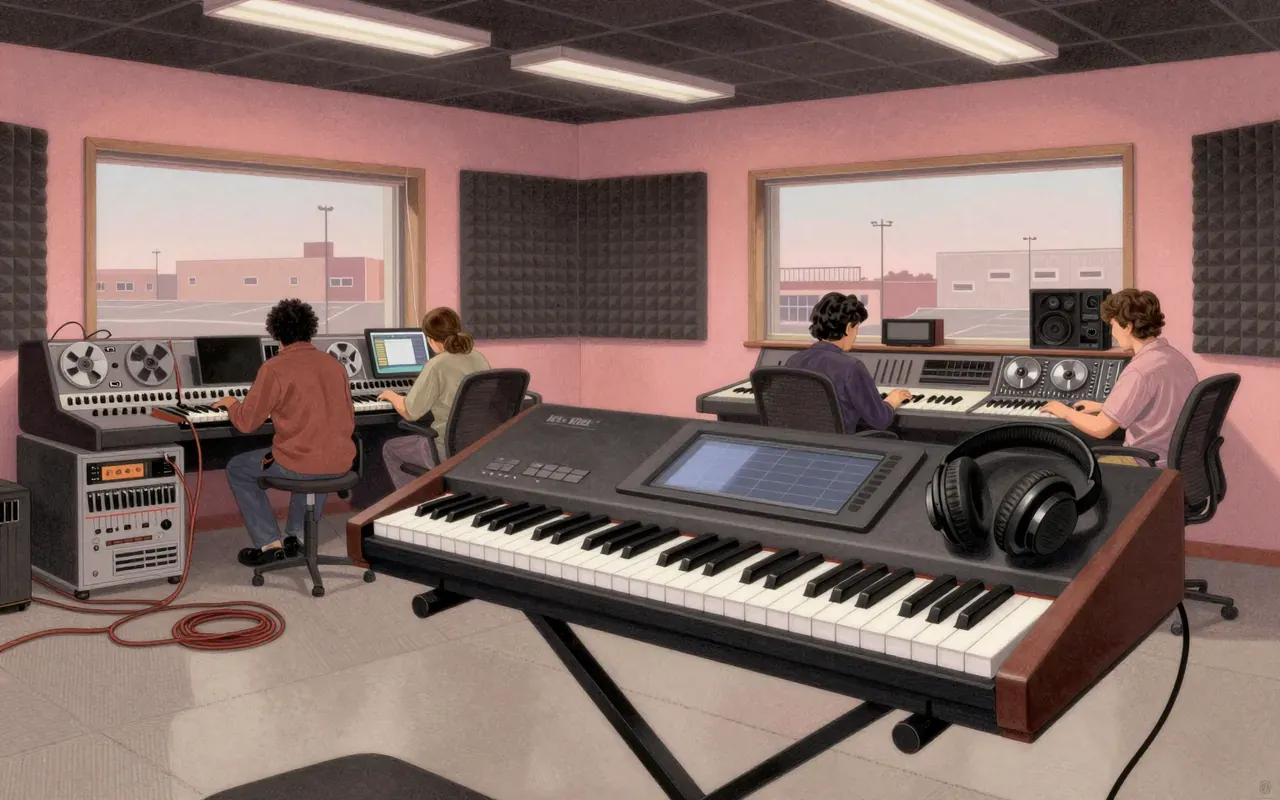
The Technics SL-1100 is an 88-key MIDI controller keyboard built for studio and stage use by performers who need precise, multi-channel keyboard zoning without onboard synthesis.

Chapters & takeaways4
  1. 0:53
    Touch and tilt

    Aftertouch and per-zone wheel control make it expressive—but only if your synth responds.

  2. 2:50
    Zone control

    Four full-width zones, each on any MIDI channel—unmatched for hardware synth stacks.

  3. 4:33
    Routing and memory

    Two parallel MIDI outs and 32 SysEx presets give it muscle—but no undo, no recall screen.

  4. 6:04
    The bare display

    A three-character green LCD is all the feedback you get—no menus, no labels, no context.

Worth your time?

Yes. Use the whole thing.

3.5/ 5
What works
  • four full-width zones
  • per-zone wheel enable/disable
  • two parallel MIDI outs
  • 32 SysEx presets
What does not
  • support USB-MIDI
  • include velocity-mappable controls
  • allow zone crossfading
  • display parameter names on screen
Use it if
  • multi-synth studio operators
  • keyboardists needing aftertouch and hammer action
Skip it if
  • laptop-first users
  • beginners
  • DAW-focused performers
The written brief1 min read

What it is and what it was built for

The Technics SL-1100 is an 88-key MIDI controller keyboard built for studio and stage use by performers who need precise, multi-channel keyboard zoning without onboard synthesis.

How it works, in terms a player would use

It gives players four full-width keyboard zones, each assignable to any MIDI channel and each with independent pitch and modulation wheel enable/disable control. It stores 32 SysEx-saveable presets. Two parallel MIDI outputs let you route different zones to separate devices. A three-character green LCD shows preset numbers and parameter changes.

What it does better than anything else

It delivers four fully width, independently channel-assigned, wheel-enabled zones on an 88-key hammer-action keyboard—more than any contemporary controller at its release.

What it does badly

It has no USB connection. It offers no visual feedback beyond a three-character LCD. It cannot layer zones or crossfade between them. It provides no velocity- or aftertouch-mappable parameters beyond the global aftertouch response.

What people made with it

The sources do not state what people made with it.

Who should use it, and who should not

Studio producers routing to multiple hardware synths. Keyboardists needing four distinct instrument layers across one keyboard. Anyone who values aftertouch and hammer action over modern connectivity. It is not for beginners, laptop-only users, or those relying on USB plug-and-play.

Is it worth your time

Yes—if you need deep zone-based MIDI routing and hammer-action control in a single 88-key unit. No—if you need onboard sound, touch-sensitive pads, DAW integration, or modern USB-MIDI reliability.
Same bench · Keyboards & organs4 of 28
10:39
Korg TrinityKorgThe Korg Trinity is a 1995 music workstation. It was Korg's first modern workstation. It introduced a large touchscreen for advanced control and editing functions. It became the flagship successor to the M1. It introduced resonant filters to Korg's workstation line. It offered built-in digital audio recording, 32-note polyphony, an extensive internal sound library, and assignable effects.
9:56
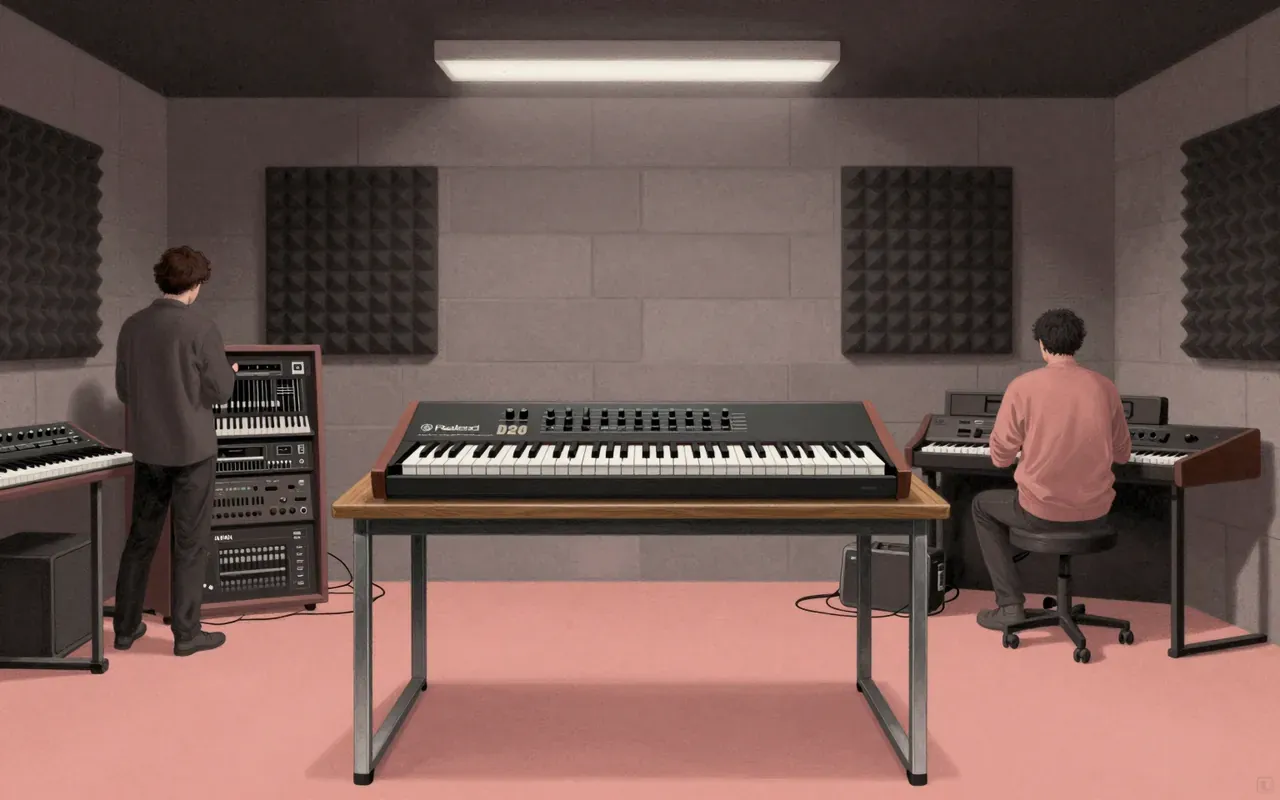
Roland D-20RolandThe Roland D-20 is a 1988 digital synthesizer using Linear Arithmetic synthesis. It offers 32-voice polyphony, 8-part multitimbrality, a 61-key velocity-sensitive keyboard, an 8-voice sequencer with rhythm track, a built-in arpeggiator, reverb effects, and internal/external memory storage. LAS programming revolves around tones, partials, and timbres—a method that is difficult to learn but capable of unique results when mastered. It was produced from 1988 to 1992.
7:56
ClavinetHohnerThe Clavinet is a 60-key electromechanical keyboard made by Hohner from 1964 to 1982. It uses rubber pads to strike tensioned steel strings, with electromagnetic pickups capturing the vibration. Its weighted action enables dynamic volume and aftertouch via string stretch. It excels at percussive, expressive, midrange-heavy articulation—but offers no sustain, limited range, or tonal flexibility beyond its fixed pickup response.
8:55
Hammond organHammond · 1930The Hammond organ is a mechanical additive instrument built for practicality, not precision. It trades tuning accuracy and silence for texture, presence, and hands-on harmonic mixing.
Up next in Audio

Technics SL-1300

Technics · 8:03

This is not a DJ tool — it is a Hi-Fi turntable that refuses to pretend otherwise.

8:03