audiobriefs
7:56in productionCh. 1 · Not electronic. Electromechanical./ 7:56 · ceiling 15 min
Keyboards & organs · Instruments

Clavinet

It doesn’t sing—it bites, bends, and bleeds string noise on purpose.

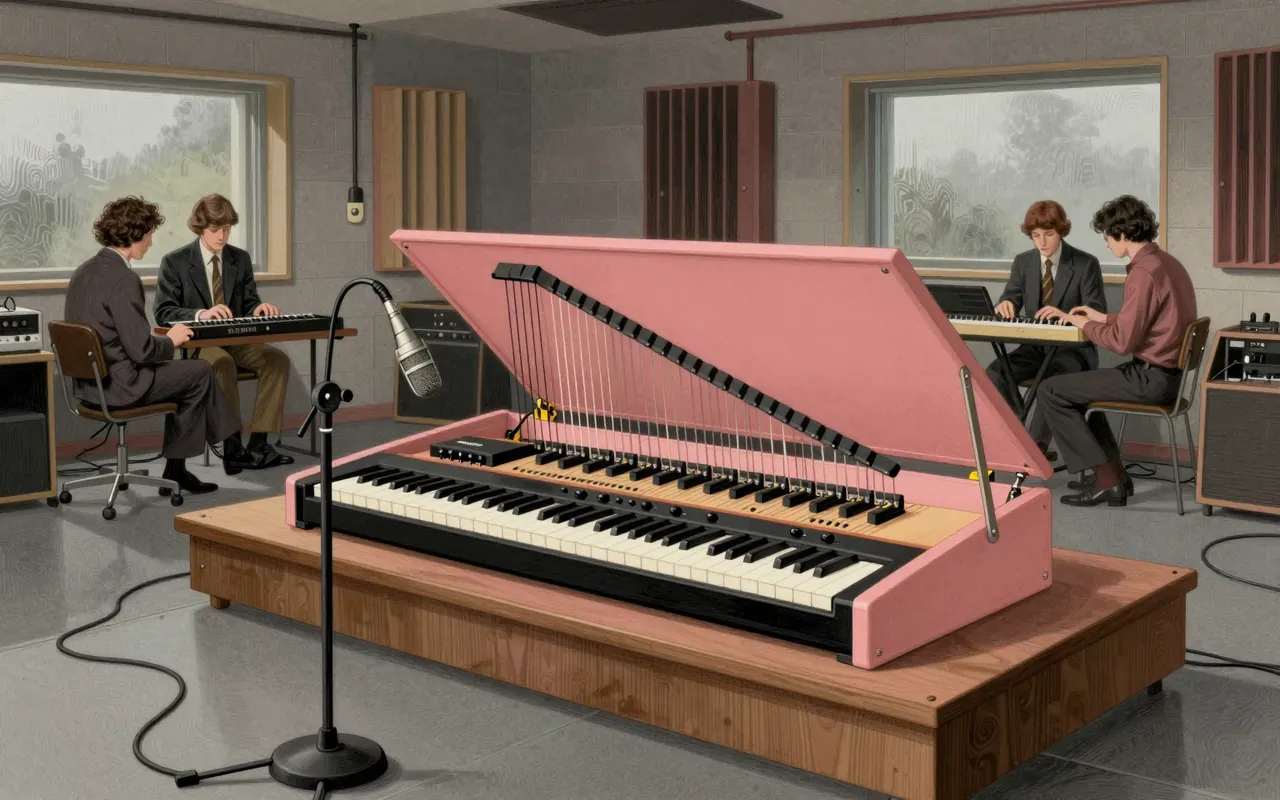
The Clavinet is a 60-key electromechanical keyboard made by Hohner from 1964 to 1982. It uses rubber pads to strike tensioned steel strings, with electromagnetic pickups capturing the vibration. Its weighted action enables dynamic volume and aftertouch via string stretch. It excels at percussive, expressive, midrange-heavy articulation—but offers no sustain, limited range, or tonal flexibility beyond its fixed pickup response.

Chapters & takeaways4
  1. 0:55
    Not electronic. Electromechanical.

    Hohner built it as a deliberate alternative to pianos and organs—not a synth, not a sampler, but a string-struck keyboard.

  2. 2:16
    How it hits

    Sound comes from impact: rubber pad → steel string → anvil point → electromagnetic pickup.

  3. 3:30
    How it feels

    Weighted keys give piano-like dynamics and aftertouch via string stretch—not voltage control, but physics.

  4. 4:37
    Where it stops

    60 keys (F1–E6) mean no sub-bass rumble and no shimmering top octave—just focused midrange aggression.

Worth your time?

Yes. Use the whole thing.

4/ 5
What works
  • percussive rhythmic articulation
  • aftertouch-induced pitch bend
  • clavichord-like expressiveness
  • guitar-like string noise and bite
What does not
  • offer polyphonic stability
  • support silent practice
  • provide extended bass or treble range
  • include built-in tone shaping
Use it if
  • players who value tactile feedback
  • funk and soul performers
  • studio musicians seeking organic string attack
Skip it if
  • producers needing clean, editable tones
  • players requiring consistent tuning across sessions
  • anyone without space for a heavy, cable-dependent instrument
The written brief1 min read

What it is and what it was built for

An electromechanical keyboard invented by Ernst Zacharias and manufactured by Hohner from 1964 to 1982. Built to emulate the clavichord’s expressiveness using rubber pads, steel strings, and electromagnetic pickups.

How it works, in terms a player would use

Pressing a key forces a rubber pad to fret and strike a tensioned steel string at an anvil point. An electromagnetic pickup converts the vibration into electric current. The keyboard is weighted, delivering dynamic volume per note and aftertouch from string stretch.

What it does better than anything else

Nothing else delivers that immediate, clattering, fretted-string attack with aftertouch-induced pitch bend—like a clavichord crossed with a guitar played through a fuzz box.

What it does badly

It lacks sustain and harmonic depth. Notes decay quickly. The 60-key range (F1–E6) cuts off bass below F1 and treble above E6. No built-in tone shaping beyond the pickup’s fixed response.

What people made with it

Funk, soul, and gospel players used it for staccato rhythmic hooks and biting lead lines. Its sound became inseparable from mid-1970s groove-based music.

Who should use it, and who should not

Players who prioritise physical feedback, dynamic nuance, and raw timbral character over tuning stability or quiet operation. Not for studio composers needing clean, editable, long-decay tones.

Is it worth your time

Yes—if you need a percussive, tactile, string-driven keyboard that responds to finger pressure and invites aggressive articulation. No—if you need polyphonic stability, tonal consistency across registers, or silent practice capability.

Same bench · Keyboards & organs4 of 17
Up next in Audio

Vox Continental

Vox · 9:25

It doesn’t stay in tune—but it always gets heard.

9:25