The first digital reverb wasn’t clean, flexible or modern — and this plug-in refuses to pretend it was.
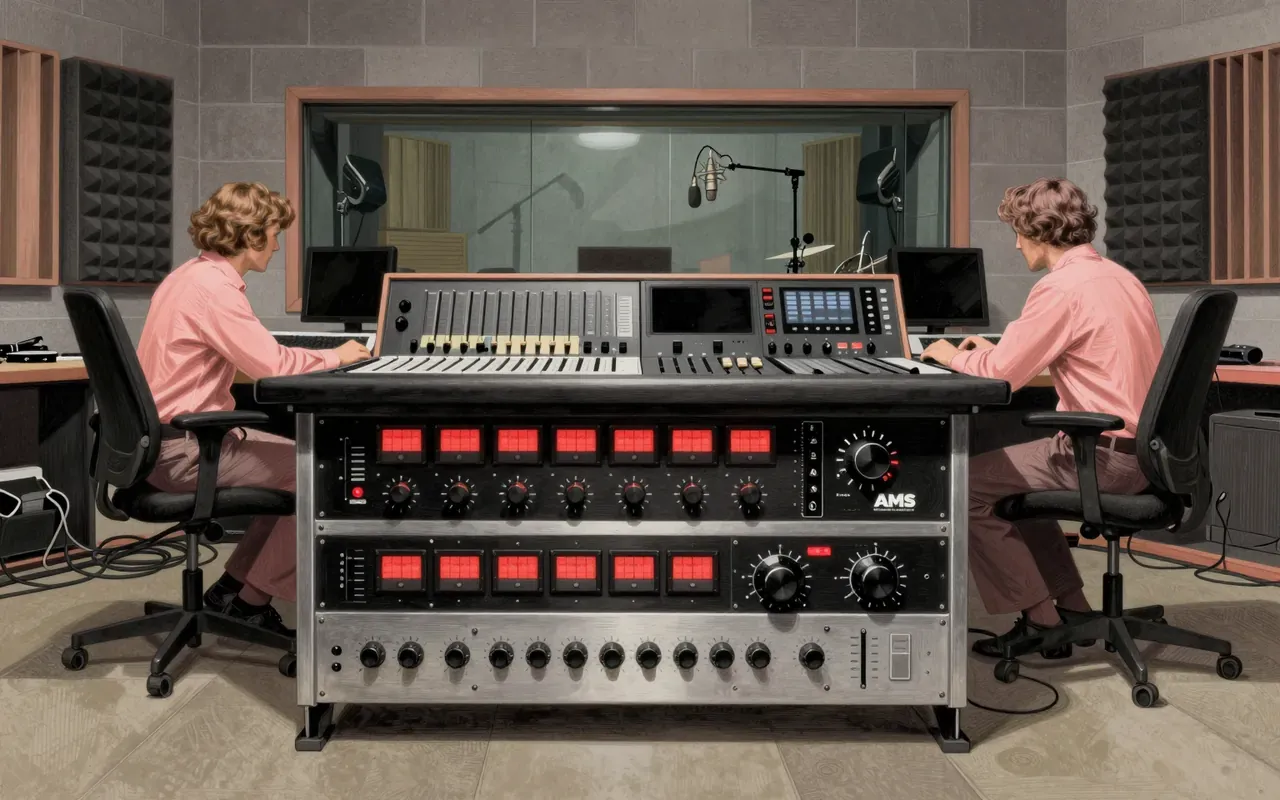
The EMT 250 was the first digital reverberation device to create ambience through a purely electronic system. The Universal Audio plug-in models that hardware exactly — including its single reverb program, five additional effects (Delay, Phasing, Chorus, Echo, Space), lever-driven interface and all its limitations: non-linear-phase anti-aliasing filters, system latency, input clipping and limited frequency response. It uses the exact same algorithm as the original, captured from Allen Sides’ unit and re-engineered by Dr. Barry Blesser.
It was the first digital reverb to generate ambience without springs, plates or chambers.
1:52
More Than Just Reverb
It offers five extra effects — Delay, Phasing, Chorus, Echo and Space — alongside its signature reverb.
2:42
Faithful, Not Flexible
Its sound comes from strict emulation — not reinterpretation — of the original hardware’s limits and behaviour.
4:38
A Landmark With Limits
Its legacy is defined by being first — not by being versatile or high-fidelity.
Worth your time?
Yes. Use the whole thing.
4/ 5
What works
as a precise historical recreation
as a source of distinctive, constrained ambience
within DAW-based mixing chains where character matters more than flexibility
What does not
offer editable parameters
support multiple algorithms
provide transparent signal processing
Use it if
studio engineers needing the original EMT 250’s character
mixers working in high-end analogue-style workflows
Skip it if
producers requiring real-time parameter control
sound designers building custom spaces
The written brief1 min read
What it is and what it was built for
The EMT 250 was the first digital reverberation device to create ambience through a purely electronic system. The Universal Audio version is a software plug-in that models that hardware.
How it works, in terms a player would use
It runs one reverb algorithm and five extra effects — Delay, Phasing, Chorus, Echo, Space — selected via levers. Input clipping, non-linear-phase anti-aliasing filters, system latency and limited frequency response are all modelled faithfully.
What it does better than anything else
It reproduces the original EMT 250’s ambience better than any other reverb plug-in — because it uses the exact same algorithm, captured from Allen Sides’ unit and re-engineered by Dr. Barry Blesser.
What it does badly
It does not adapt. Its single reverb program cannot be edited. Its frequency response is limited. Its latency and input clipping are baked in, not optional.
What people made with it
People made professional studio recordings with the original EMT 250. The plug-in replicates the unit used by Allen Sides.
Who should use it, and who should not
Studio engineers and mixers who want the specific colour and constraints of the original EMT 250 should use it. Producers who need editable parameters, multiple algorithms or transparent processing should not.
Is it worth your time
It is worth your time if you need the exact sonic character of the first digital reverb unit — with its quirks intact — in a modern DAW. It is not worth your time if you need flexibility, clean signal paths or contemporary resolution.