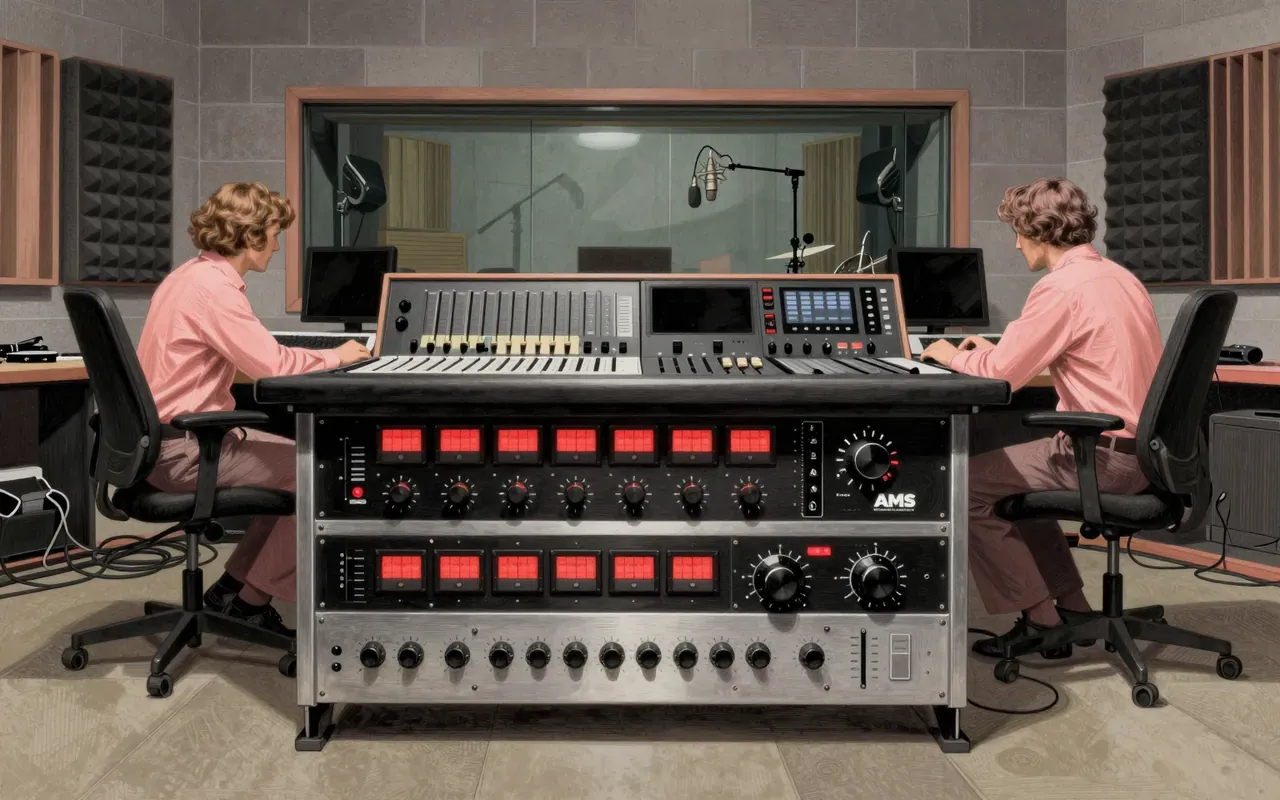
AMS AMS RMX16
AMS
The AMS RMX16 is a UAD-only reverb plug-in. It requires UA hardware. It costs $349. It arrived in UA Software 1.7. It gives one sound — nothing more.
Procedures that decide things, increasingly without being asked.
The AMS RMX16 is a UAD-only reverb plug-in. It requires UA hardware. It costs $349. It arrived in UA Software 1.7. It gives one sound — nothing more.
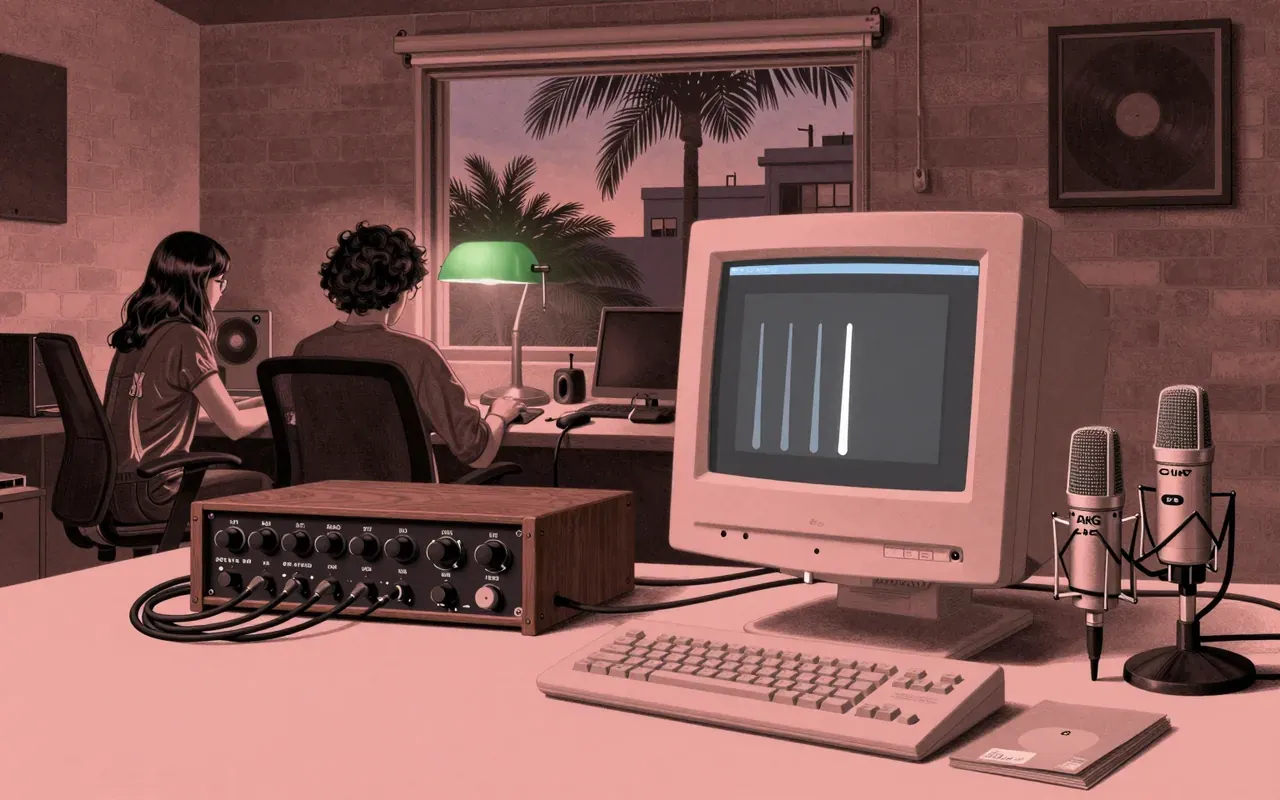
The EMT 250 was the first digital reverberation device to create ambience through a purely electronic system. The Universal Audio plug-in models that hardware exactly — including its single reverb program, five additional effects (Delay, Phasing, Chorus, Echo, Space), lever-driven interface and all its limitations: non-linear-phase anti-aliasing filters, system latency, input clipping and limited frequency response. It uses the exact same algorithm as the original, captured from Allen Sides’ unit and re-engineered by Dr. Barry Blesser.
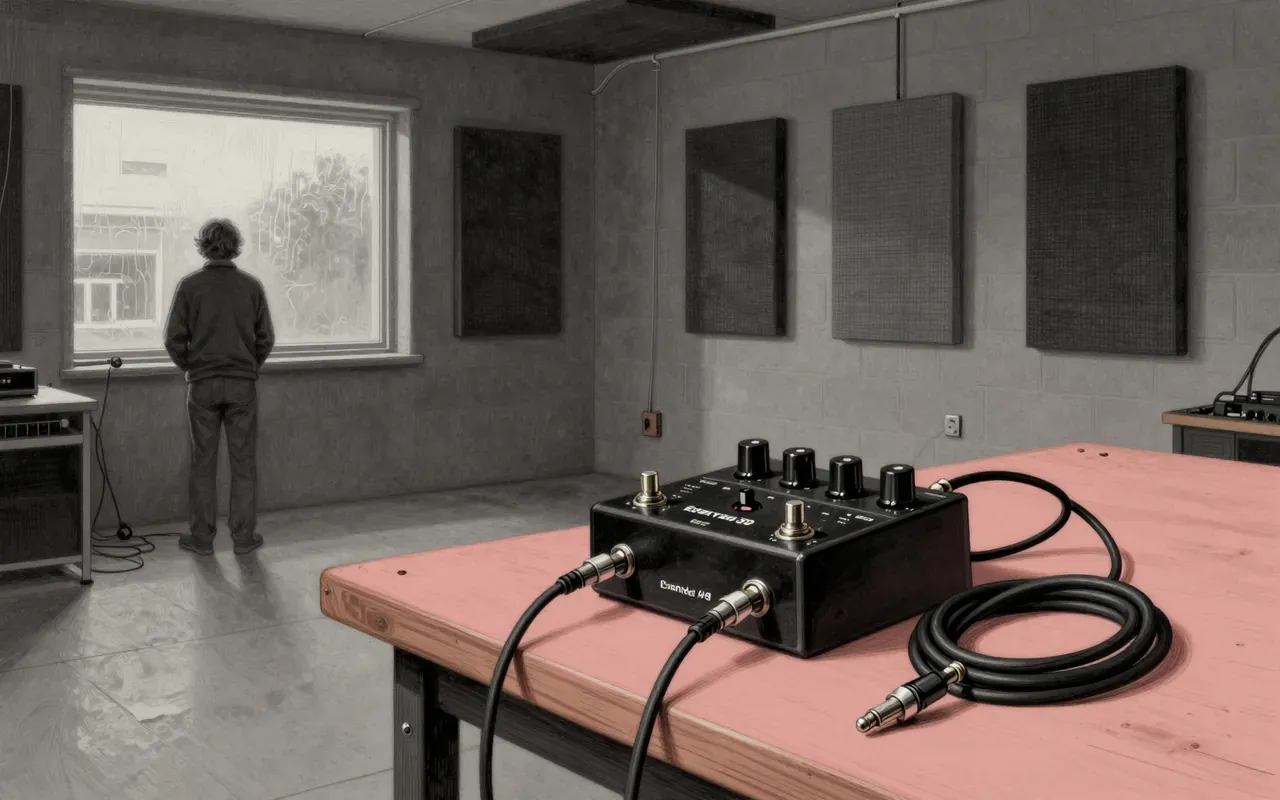
The Eventide H9 Harmonizer is a pedal-format multi-effects unit built to consolidate four Eventide Factor-series stompboxes into one device.
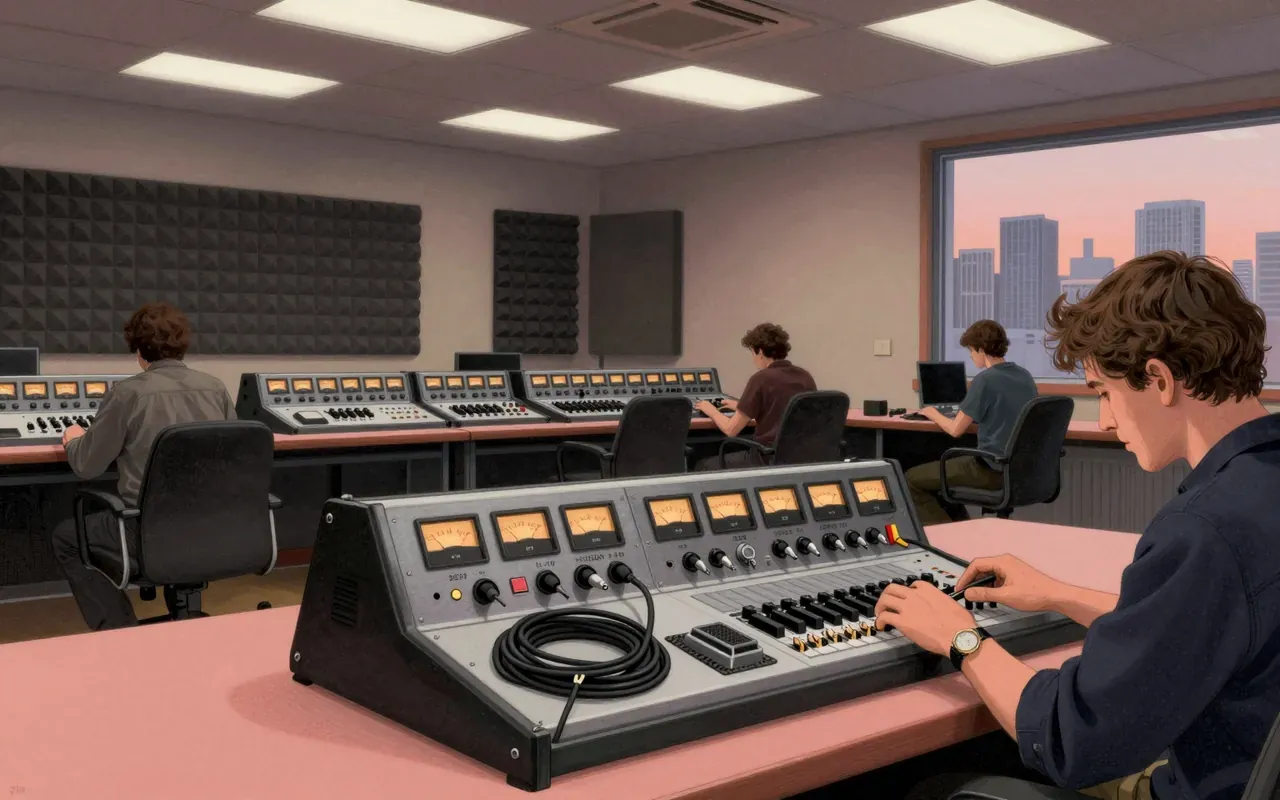
The Universal Audio Lexicon 224 Digital Reverb is a UAD plug-in that models the 1978 hardware unit using its exact algorithms, firmware version 4.4, input transformers, and 12-bit AD/DA gain stepping converters. It exposes all eight reverb programs and every tunable parameter as dedicated fader-style controls. It adds Input/Output gain, Pitch Shift, and a selectable Bug Fix mode. It belongs to the UAD Plug-In series and is categorised as a software algorithmic reverb.
The Eventide SP2016 Reverb plug-in is a faithful software recreation of the 1982 hardware unit. It gives users six algorithmic reverbs — Room, Stereo Room, and Hi-Density Plate, each in Vintage and Modern variants — with authentic early reflections, evolving echo density, and smooth decay. It prioritises immediacy and character over flexibility or physical accuracy.
A professional-grade digital effects processor with dual independent effects blocks, nearly 100 algorithms—including 11 reverbs—and 24-bit/96kHz conversion. Supports true stereo reverb I/O and extensive looping (up to 20 seconds per block). Firmware updates require Compact Flash and strict version dependencies; bootloader corruption requires factory reprogramming.
Mutable Instruments Marbles is a Eurorack module for generative timing and control voltage. It uses hardware randomness, memory-based reuse (DEJA VU), and adaptive quantization (STEPS) to produce rhythm and pitch that respond to player input. It has no audio output, no presets, no MIDI, and no visual interface beyond LEDs. Its strength is in linking decision-making across domains—timing, pitch, and memory—in real time.

The Eventide Space is a reverb-and-delay pedal offering 12 algorithmic spatial effects—including Hall, Plate, Blackhole®, and Shimmer—controlled via 10 knobs, MIDI, expression pedal, or HotSwitch. It features 100 presets (some artist-designed), true analog bypass, tap tempo/MIDI clock sync, and mono/stereo I/O in a rugged metal pedal format. Software tools FactorLib and H9 Control manage presets; the SpaceTime algorithm combines modulation, two delays, and reverb.

The DigiTech Whammy is a treadle-controlled digital pitch shifter pedal introduced in 1989. It uses a licensed IVL Technologies algorithm to shift pitch up to two octaves. Early models were monophonic and produced artificial, wobbly artifacts on chords. Later models improved chord tracking accuracy. It was developed by DOD Electronics (branded as DigiTech), a company founded in 1974.