What it is and what it was built for
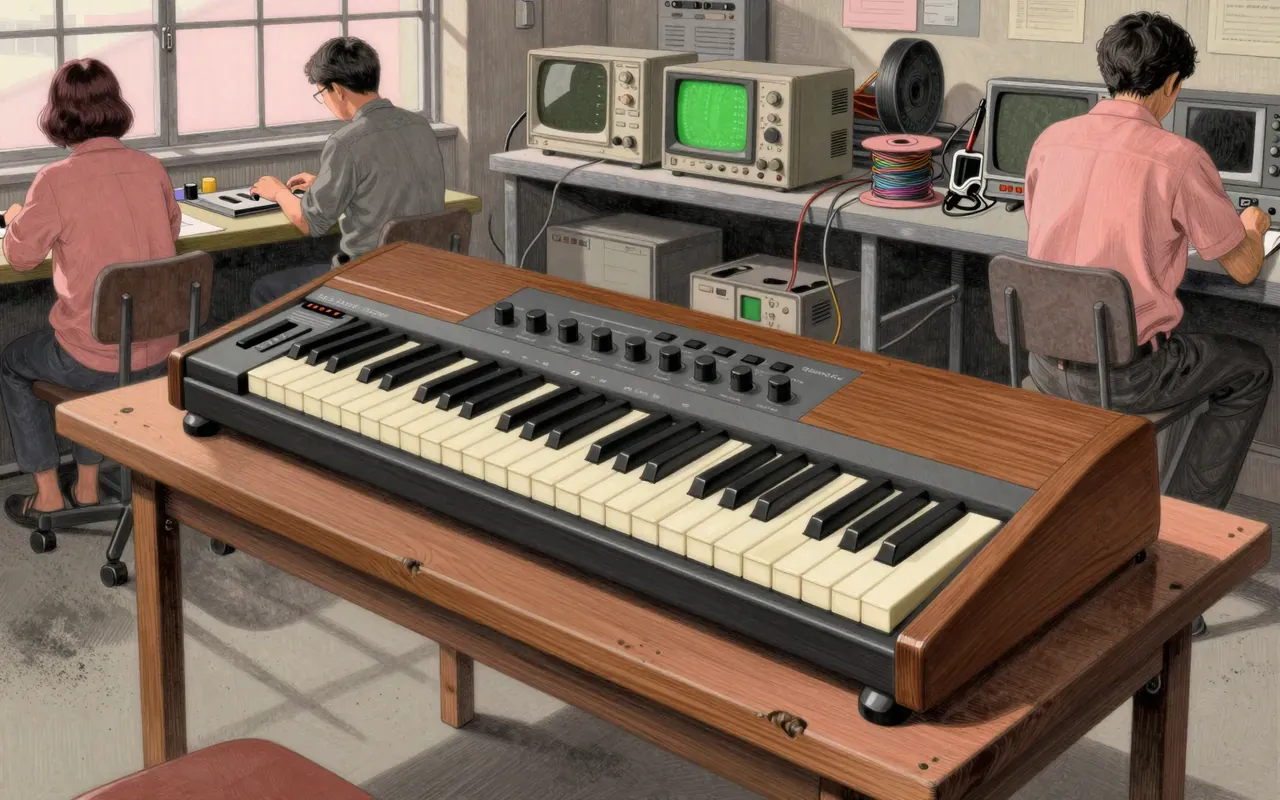
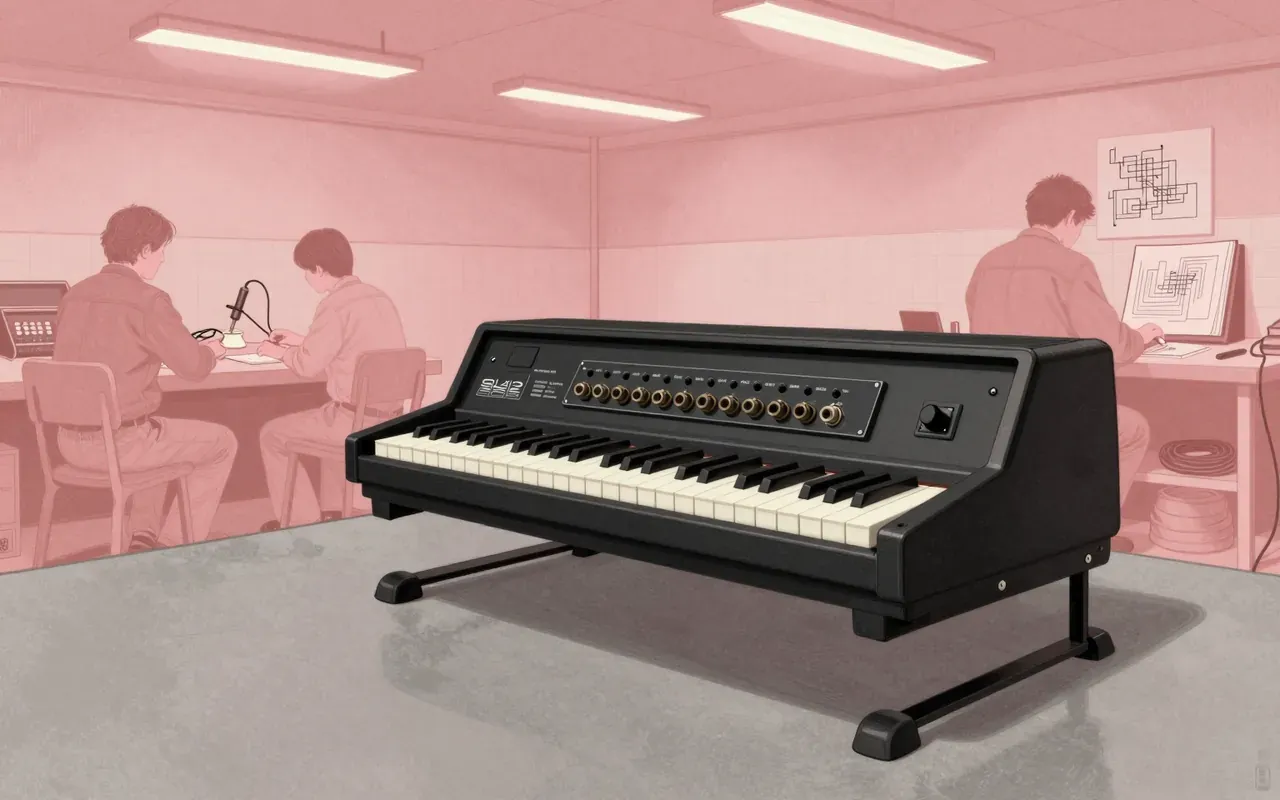
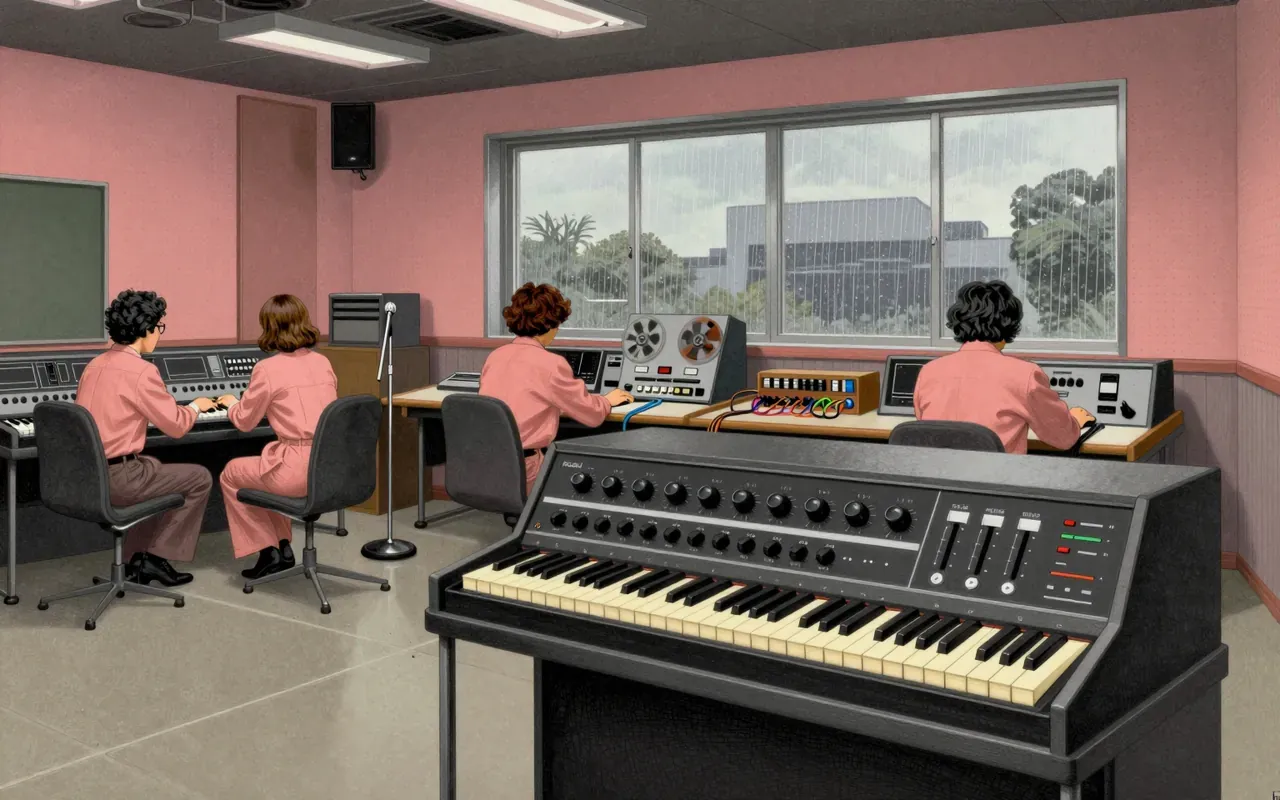
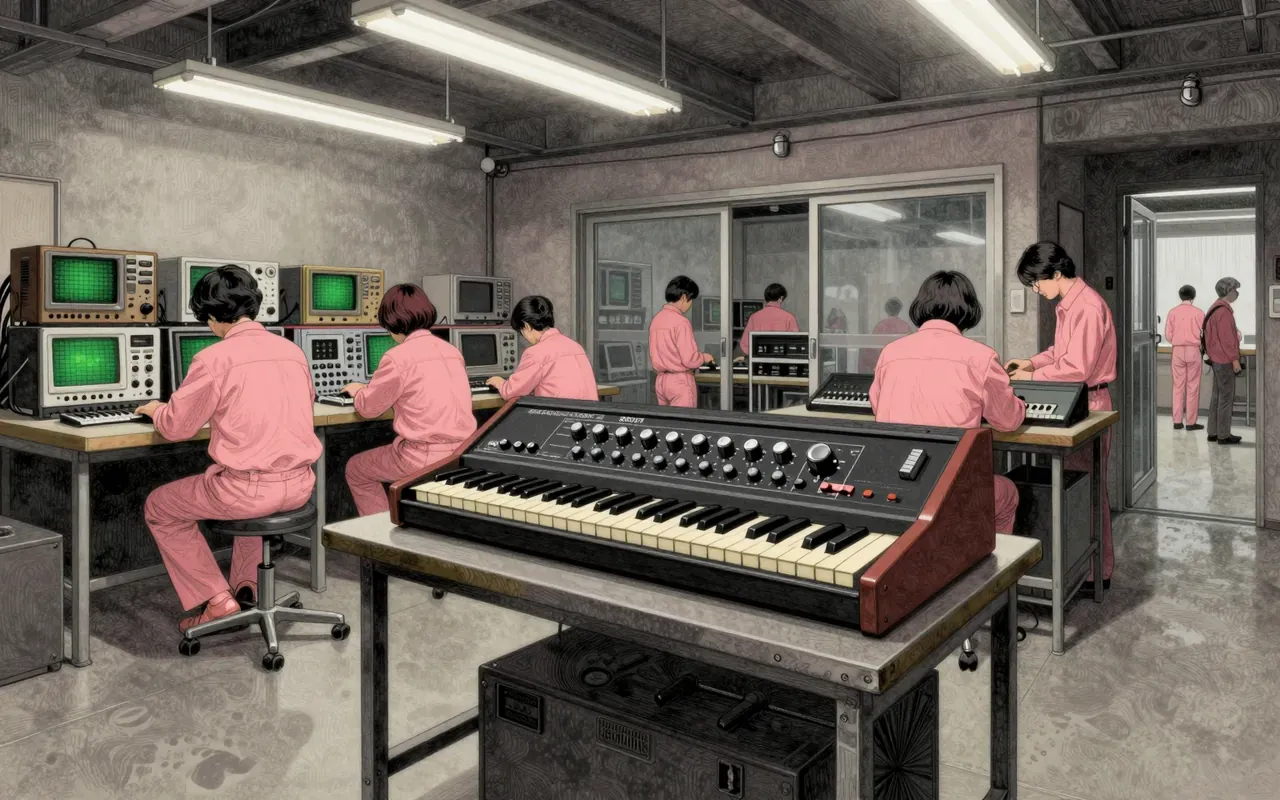
The Roland SH-5 is a monophonic analog subtractive synthesizer introduced in 1976. It was built for electronic and dance music production requiring layered timbral control, stereo movement, and complex modulation without modular patching.
How it works, in terms a player would use
Two VCOs feed a 5-source mixer: VCO1, VCO2, noise (white or pink), ring mod, and external input. Each source routes independently to either or both of two multi-mode filters — low-pass, high-pass, band-pass — or to the dedicated band-pass-only filter. Two LFOs with six waveshapes plus Sample + Hold modulate oscillators, filters, or VCAs. Two VCAs accept ADSR or Attack/Release envelopes, triggered by S+H, LFO2, or external audio. Stereo panning sits in the VCA section. Portamento is present.
What it does better than anything else
It gives more simultaneous modulation routing than any other monophonic Roland synth of its era: dual LFOs with full waveshape control, dual independent filters with keyboard tracking and envelope sensitivity, and a mixer that lets every signal path through every filter stage.
What it does badly
It offers no polyphony. It has no built-in sequencer, no MIDI, no patch memory, and no documented specs — making calibration, replication, and integration unreliable.
What people made with it
The sources do not state what people made with it.
Who should use it, and who should not
A studio owner restoring a 1970s electronic setup should use it. A modern producer needing stable tuning, recallable patches, or USB connectivity should not.
Is it worth your time
It is worth your time only if you need monophonic analog flexibility in a single rack or desktop unit and can source, maintain, and calibrate a 1976 instrument with no available technical specifications.