What it is and what it was built for
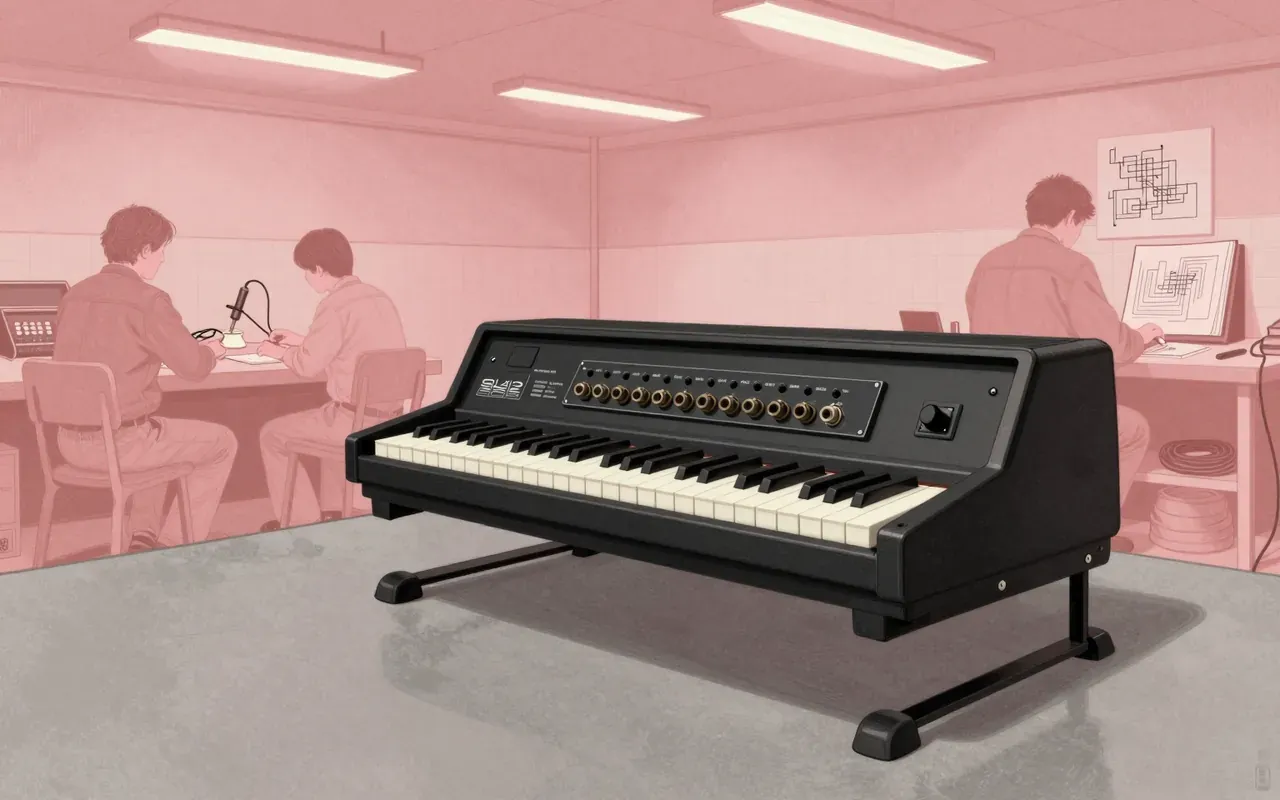
The Roland SH-2 is a monophonic analog subtractive synthesizer from 1978. It was built for punchy basslines, aggressive leads, and squelchy effects in live and studio settings.
How it works, in terms a player would use
It has a 3-octave keyboard, two detunable VCOs, one envelope, one LFO, and a self-oscillating 24dB lowpass filter. Every button does one thing. No menus. No presets beyond simple programmability.
What it does better than anything else
It delivers fatter, bolder analog tones than the SH-101 by virtue of detunable dual VCOs—and does so with simpler, more direct controls than higher-end SH-series synths.
What it does badly
It offers no polyphony, no second envelope, no ring modulator, no noise generator, and no patch memory beyond basic programmability. It cannot layer tones or evolve sounds over time.
What people made with it
Every sound—including drums—on at least one documented release was made on the SH-2, with only external effects used to modernise the output.
Who should use it, and who should not
Players who value immediacy, fat analog character, and minimal interface should use it. Anyone needing multitimbrality, complex modulation routing, or modern workflow integration should not.
Is it worth your time
Yes—if you want bold monophonic basses, leads or squelchy sounds with immediate hands-on control. No—if you need polyphony, modulation depth, or sound-shaping beyond what two oscillators and one filter provide.