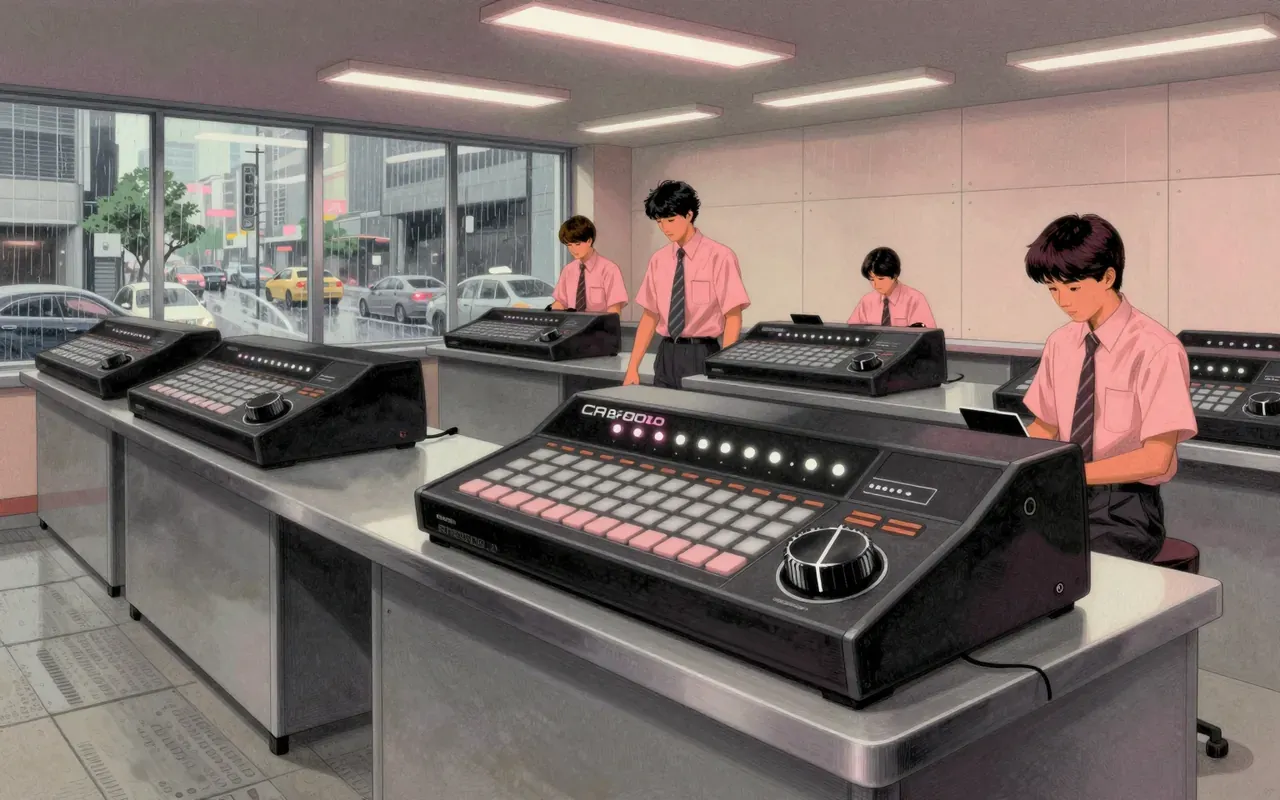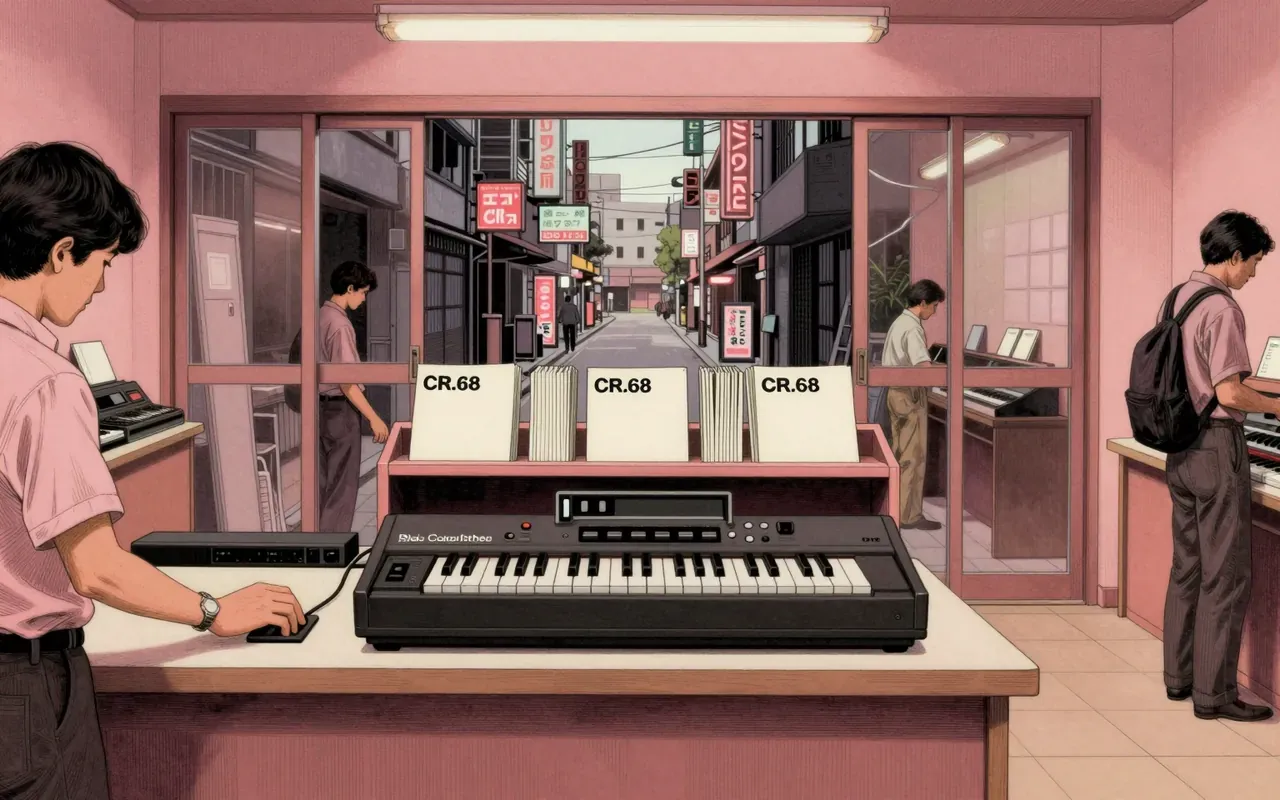
What it is and what it was built for
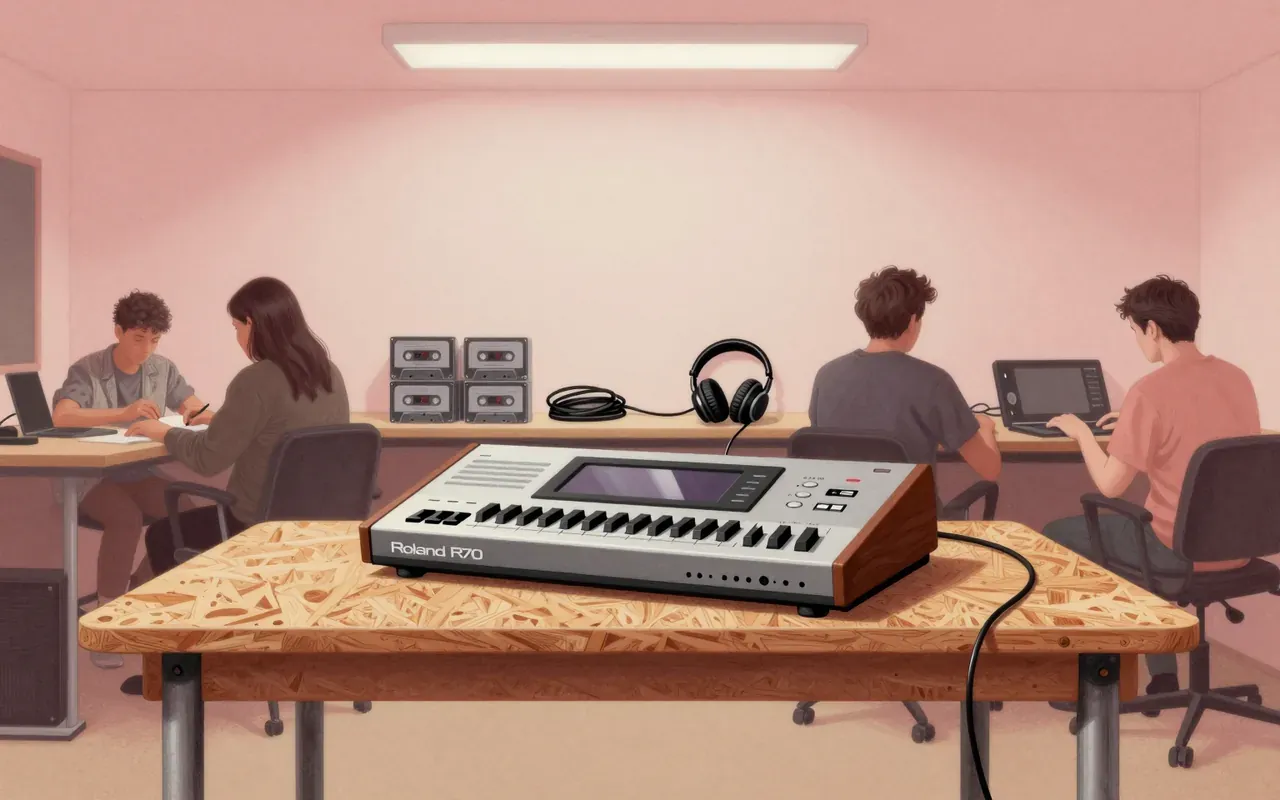
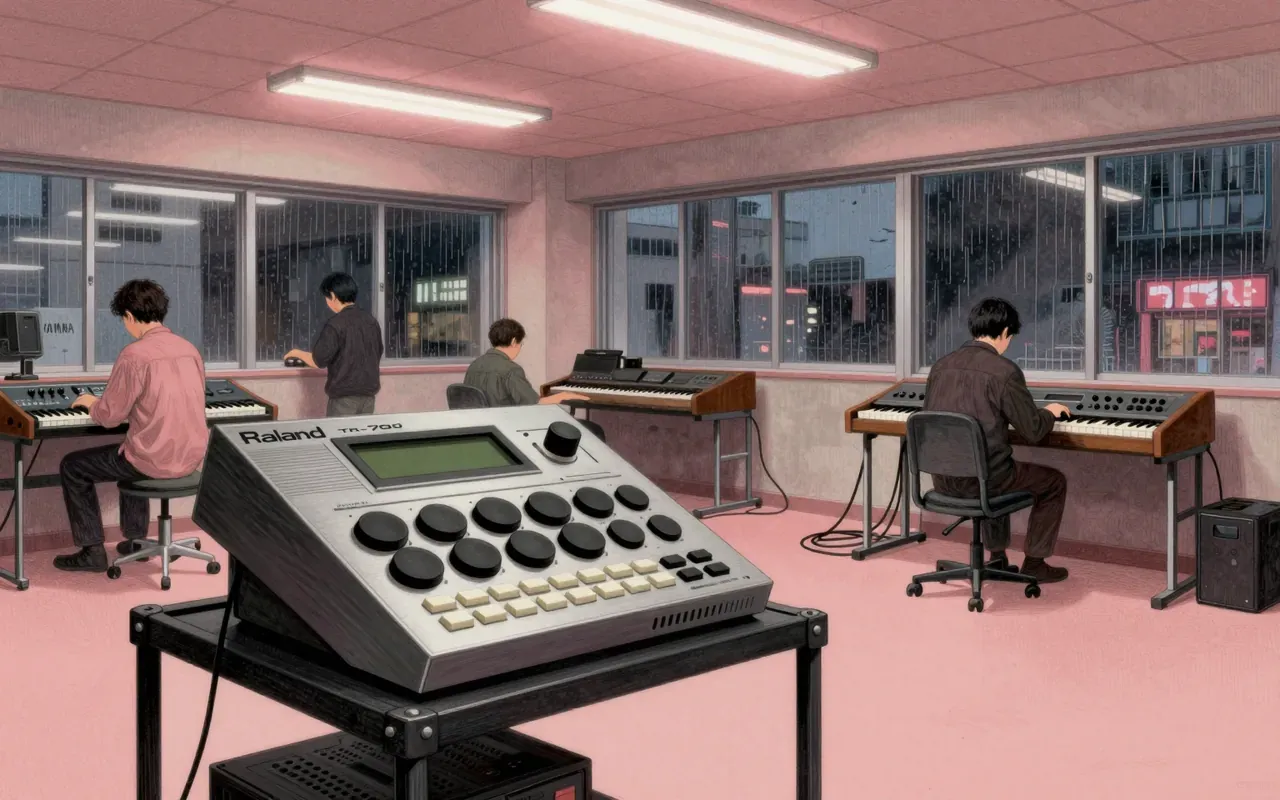
A mono analog rhythm machine introduced in the late 1970s. Built to play fixed patterns across Rock, Disco, Tango and other genres — not to be programmed, but to be turned on and played alongside.
How it works, in terms a player would use
It plays 54 preset rhythms selected with Start/Stop. It triggers automatic fills every 2, 4, 8, 12 or 16 measures — or manually with a dedicated button. Tempo, level, accent and balance knobs shape the beat in real time. No keyboard. No user memory. No MIDI.
What it does better than anything else
It delivers the CR-78’s analog sound set — kick, snare, rim, hi-hat, cymbal, maracas, claves, cowbell, congas — in a simpler, cheaper, more immediate box. Its accent control adds punch. Its balance knob warps the mix in ways the CR-78 does not allow.
What it does badly
It cannot be programmed. It offers no custom beat creation. It has no stereo output. It lacks the CR-78’s advanced features — including user memory, pattern chaining and more nuanced control over individual voices.
What people made with it
Add N To (X) used it. Its sounds are now more often sampled than played live — after which the unit itself may serve as a paperweight or book-end.
Who should use it, and who should not
A producer who wants vintage Roland analog percussion without decision fatigue. Not for anyone needing flexibility, polyphony, sync options or modern integration.
Is it worth your time
Only if you want analog percussion sounds from 1978 with zero programming overhead — and are comfortable treating the unit as a sound source, not an instrument.