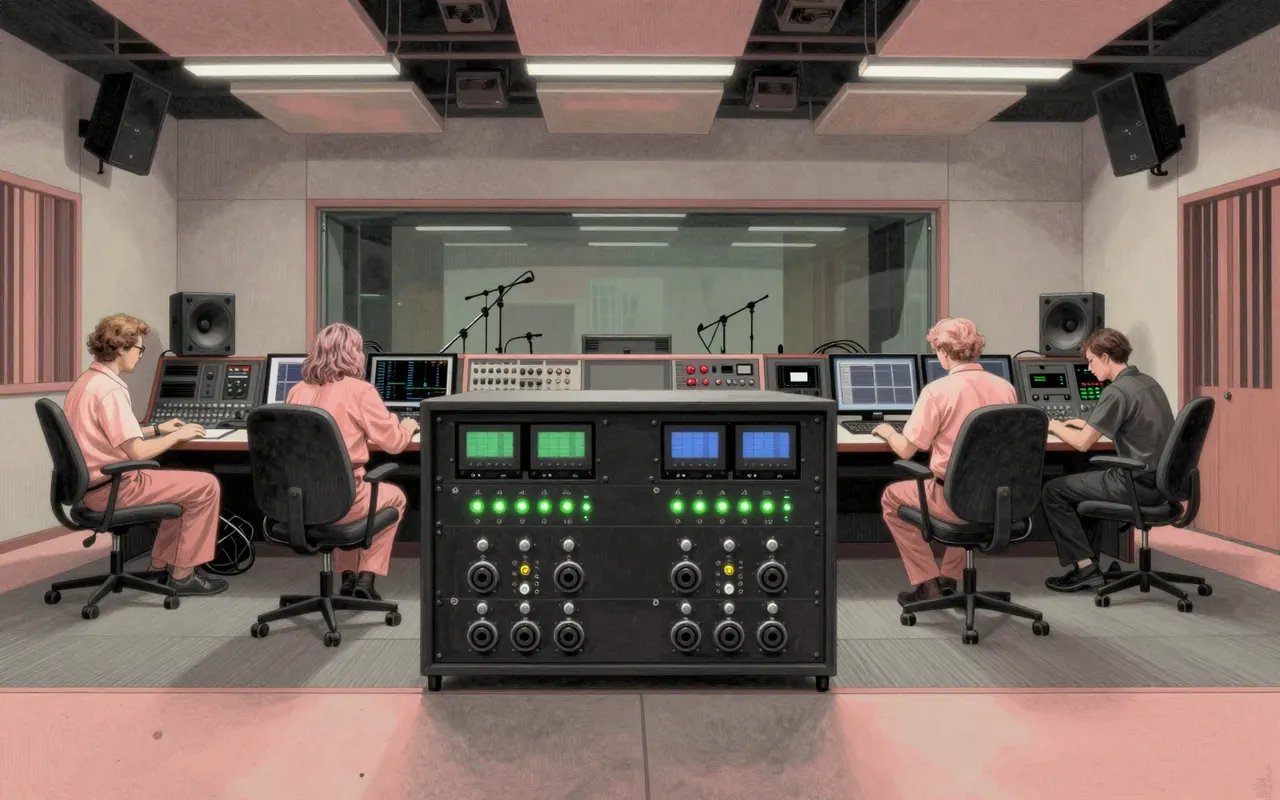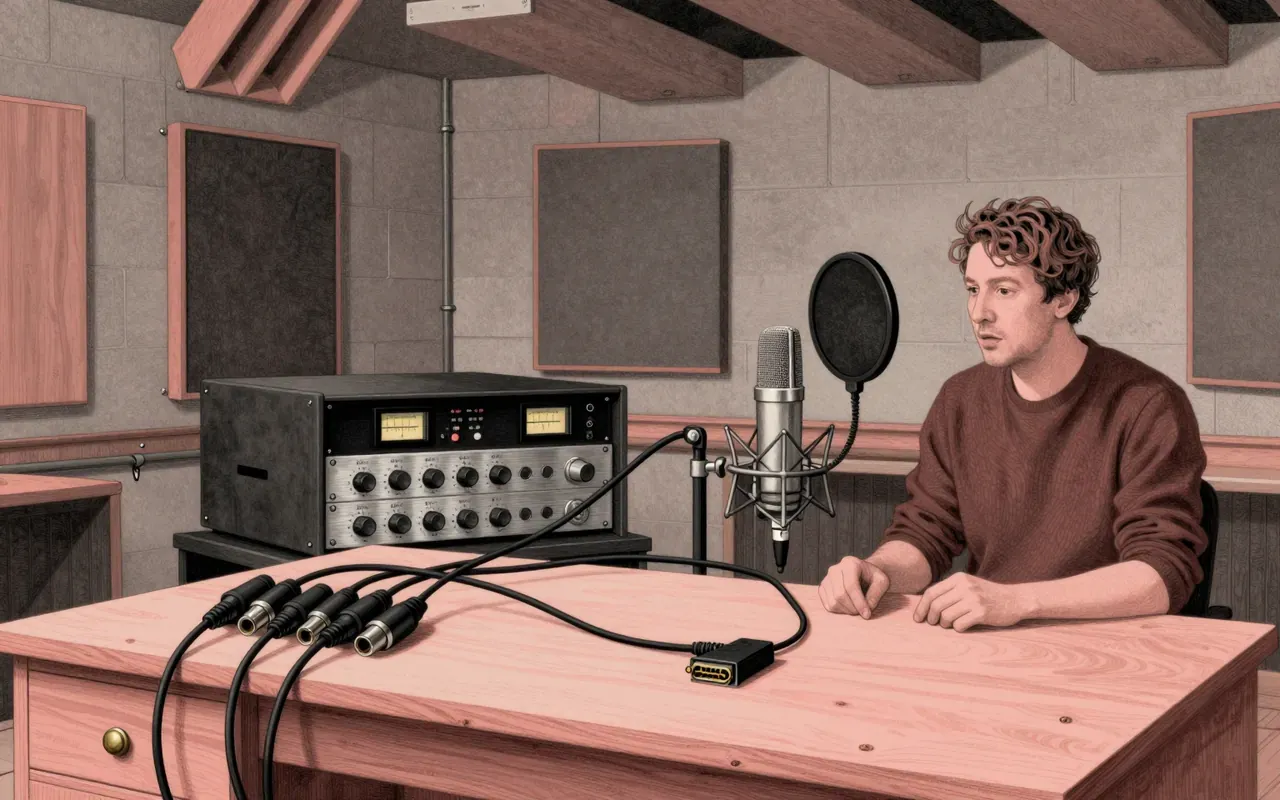
What it is and what it was built for
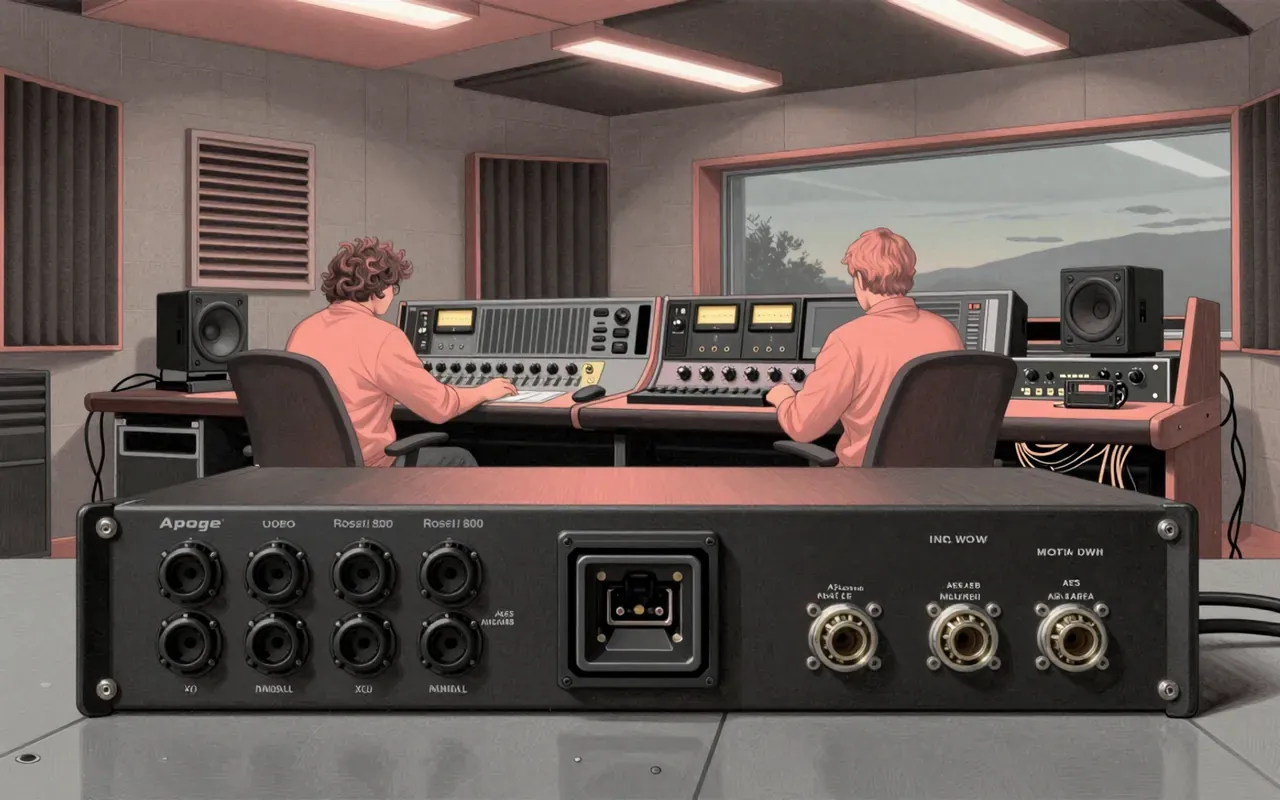
The Apogee AD-8000 is an 8-channel analog-to-digital converter built for recording studios. It was introduced circa 1996.
How it works, in terms a player would use
It converts eight analog signals to digital via XLR inputs. Front-panel meters show all eight channel levels in real time. Controls adjust input gain, clock source, and digital output format. A 1/4-inch headphone jack lets you monitor the converted signal directly. Optional cards add ADAT, TDIF or Pro Tools connectivity.
What it does better than anything else
It delivers stable, consistent 24-bit 8-channel conversion in a single rack unit with immediate front-panel metering and monitoring. The dedicated hardware design avoids driver latency or OS dependency.
What it does badly
It cannot record above 48 kHz. It lacks native USB, Thunderbolt or FireWire. No built-in preamps — it expects line-level sources. No software control or DAW integration beyond optional card-dependent routing.
What people made with it
No specific recordings, artists or albums are named in the source material.
Who should use it, and who should not
A studio engineer maintaining legacy gear who needs reliable 8-channel AD conversion at 48 kHz and has AES/EBU or S/PDIF infrastructure. Not for home recordists, laptop-based producers, or anyone needing rates above 48 kHz.
Is it worth your time
Only if you need eight-channel 24-bit conversion at up to 48 kHz and already own a compatible studio setup. Its age limits sample rate flexibility and modern workflow integration.