It doesn’t impress—it routes, it blends, it lasts. If your set needs more than that, look elsewhere.
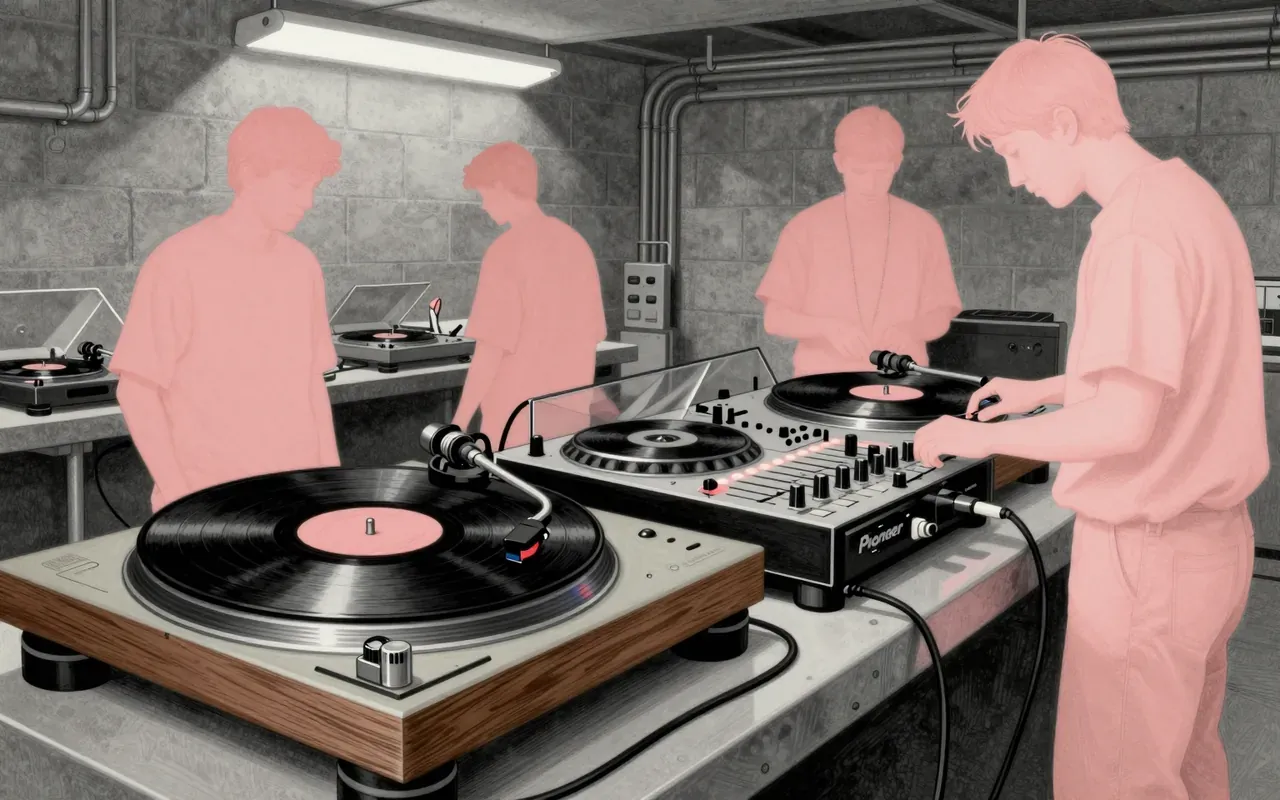
The Pioneer DJM-500 is a 4-channel DJ mixer with RCA, 1/4" jack and XLR connectors. Its EQ is adequate. Its effects section is limited but sufficient. It can be rack-mounted—with a modification. Some users doubt its rack-mountability. Its signal path is transparent. Its build invites daily use—but demands maintenance as it ages.
Four channels—no more, no less—designed for two decks and two aux sources.
1:18
Inputs That Just Work
RCA, 1/4" jack and XLR inputs let you plug in anything without adapters.
2:19
EQ That Gets Out of the Way
The EQ is adequate—not surgical, not musical, but stable and predictable.
3:38
Effects Without Options
Effects are limited to what’s labelled on the front panel—no menus, no parameters.
4:36
Mountable, But Not Ready
Rack-mounting is possible—but only if you’re willing to modify it.
Worth your time?
Yes. Use the whole thing.
3.5/ 5
What works
clean signal routing
immediate channel switching
stable EQ response
What does not
replace modern digital mixers
offer silent operation
include editable effects
Use it if
mobile DJs
vinyl purists
beginners needing tactile clarity
Skip it if
studio engineers
producers needing recall
anyone avoiding maintenance
The written brief1 min read
What it is and what it was built for
A 4-channel DJ mixer built for club and mobile DJs who needed reliability, clarity and simplicity over features.
How it works, in terms a player would use
It routes four audio sources through RCA, 1/4” jack and XLR inputs. It gives each channel a three-band EQ and a limited but functional effects section. Its faders and knobs respond directly, with no digital layer or menu diving.
What it does better than anything else
It delivers transparent, uncoloured signal routing with immediate tactile feedback. Its layout puts every control within thumb’s reach. Its four-channel count remains practical for vinyl or CDJ setups today.
What it does badly
Its noise floor rises with age. Capacitors degrade. Faders collect grime. Its rack-mountability is inconsistent without modification. Its effects are basic and non-editable.
What people made with it
DJs used it to blend records, trigger effects during live sets and route signals to sound systems without colouration or latency.
Who should use it, and who should not
Mobile DJs, crate-diggers, educators and beginners who value physical immediacy over flexibility. Not for studio engineers needing low-noise summing or producers requiring assignable effects.
Is it worth your time
Yes—if you need a simple, hands-on mixer that fits in a bag and still works cleanly after decades. No—if you need silent operation, rack-mounting out of the box, or surgical EQ control.