audiobriefs
6:50in productionCh. 1 · Three bands. Two rack spaces. One signal path./ 6:50 · ceiling 15 min
Mixing & mastering · Studio & recording

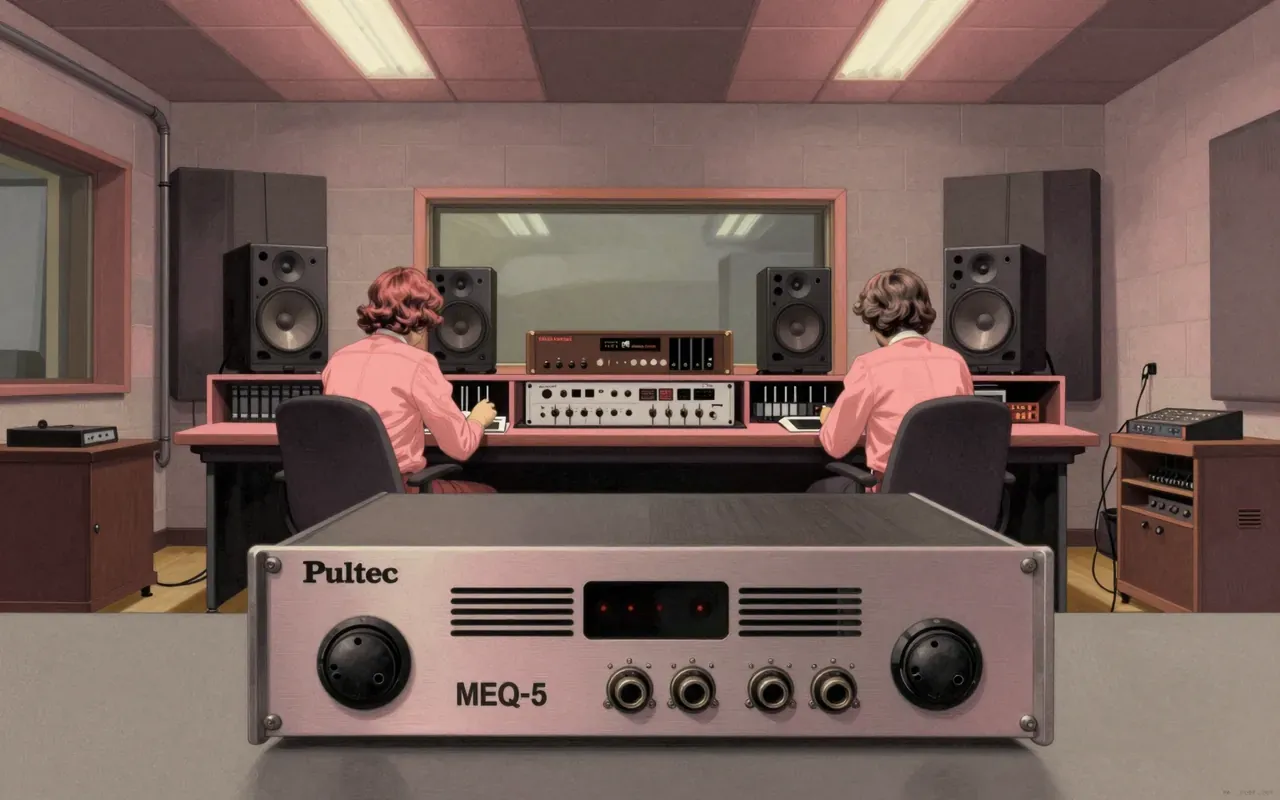
Pultec MEQ-5

It doesn’t shape tone—it removes interference. Nothing else does that so cleanly.

The Pultec MEQ-5 is a clean, transparent, three-band analog EQ. It occupies two rack spaces. Each band uses a frequency switch and a gain knob. It covers nearly the full frequency spectrum. It alters sound cleanly—nothing more, nothing less.

Chapters & takeaways4
  1. 0:41
    Three bands. Two rack spaces. One signal path.

    A two-space analog unit with three fixed-frequency bands.

  2. 1:43
    Switches and knobs only

    Each band is set by switch and adjusted by knob—no sweep, no Q, no fine-tuning.

  3. 2:37
    Broad coverage, narrow choices

    It covers nearly the full frequency spectrum—but with only nine total frequencies across three bands.

  4. 3:51
    No colour. No compromise. No surprises.

    It changes nothing except what you ask it to change.

Worth your time?

Yes. Use the whole thing.

4/ 5
What works
  • clean tonal correction
  • full-spectrum coverage with minimal controls
  • repeatable, neutral results
What does not
  • add colour
  • offer parametric control
  • interact between bands
  • provide dynamic processing
Use it if
  • engineers prioritising transparency over flexibility
  • mixers who trust their ears over presets
Skip it if
  • producers seeking harmonic saturation
  • sound designers needing surgical EQ
The written brief1 min read

What it is and what it was built for

The Pultec MEQ-5 is a rack-mountable, analog, three-band equalizer built for precise but uncoloured tonal adjustment in professional audio environments.

How it works, in terms a player would use

It has three bands. Each band has a switch to choose the frequency and a knob for the gain. You select a frequency, then dial in how much boost or cut you want.

What it does better than anything else

It alters sound cleanly without unintended colouration. It covers nearly the full frequency spectrum using only three bands with fixed-frequency switches and simple gain knobs.

What it does badly

It does not add character. It does not compress, saturate, or interact between bands. It offers no Q control, no shelving vs peaking distinction, no bypass per band.

What people made with it

The sources do not state what people made with it.

Who should use it, and who should not

Engineers who value transparency and simplicity over flexibility or colour should use it. Anyone needing parametric control, mid-scoop precision, or harmonic texture should not.

Is it worth your time

Yes—if you need clean, transparent EQ with no unintended colouration and full-spectrum coverage. No—if you need surgical control, dynamic response, or harmonic shaping.

Same bench · Mixing & mastering4 of 110
7:18
Neve 2254NeveThe Neve 2254 is an all-analog compressor/limiter from the late 1960s, revived as the 2254-R with identical circuitry and only a new casing. It delivers thick, heavy compression — especially on vocals — via straightforward controls: ratio, attack, recovery, limit level, gain makeup and mode. Its unique meter and lack of digital elements make it tactile and immediate. It offers no stereo linking, no variable knee, no recall — just weight, simplicity and a singular sonic character.
9:51
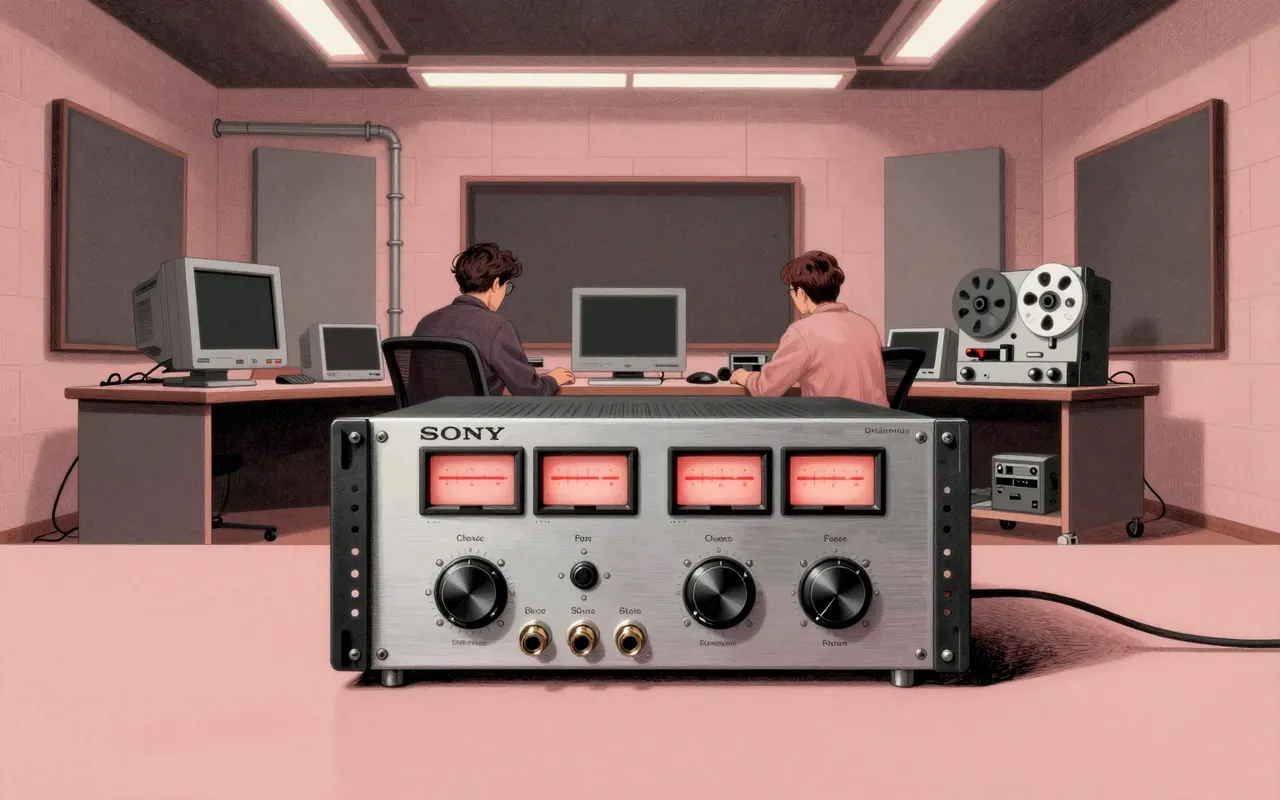
PCM adaptorSonyThe PCM adaptor is a transitional artifact: a hardware hack that made digital audio portable and recordable using 1970s video infrastructure. It solved one problem — getting 16-bit audio onto physical media for CD mastering — and introduced many others: tape instability, video sync dependency, and zero interoperability with later digital standards.
9:14
Vestax PMC-25VestaxThe Vestax PMC-25 is a 2-channel DJ mixer designed for house music. It is 3U tall and rack mountable. It features PGM vs. Master LED VU metering, split cue, a third cueable aux input, and EQ kill switches implemented as mini faders to avoid clicks and achieve -85 dB attenuation. The crossfader has a fixed curve. Faders and crossfader are replaceable. Sound quality is perceived as superior to a cheap Numark mixer.
9:49
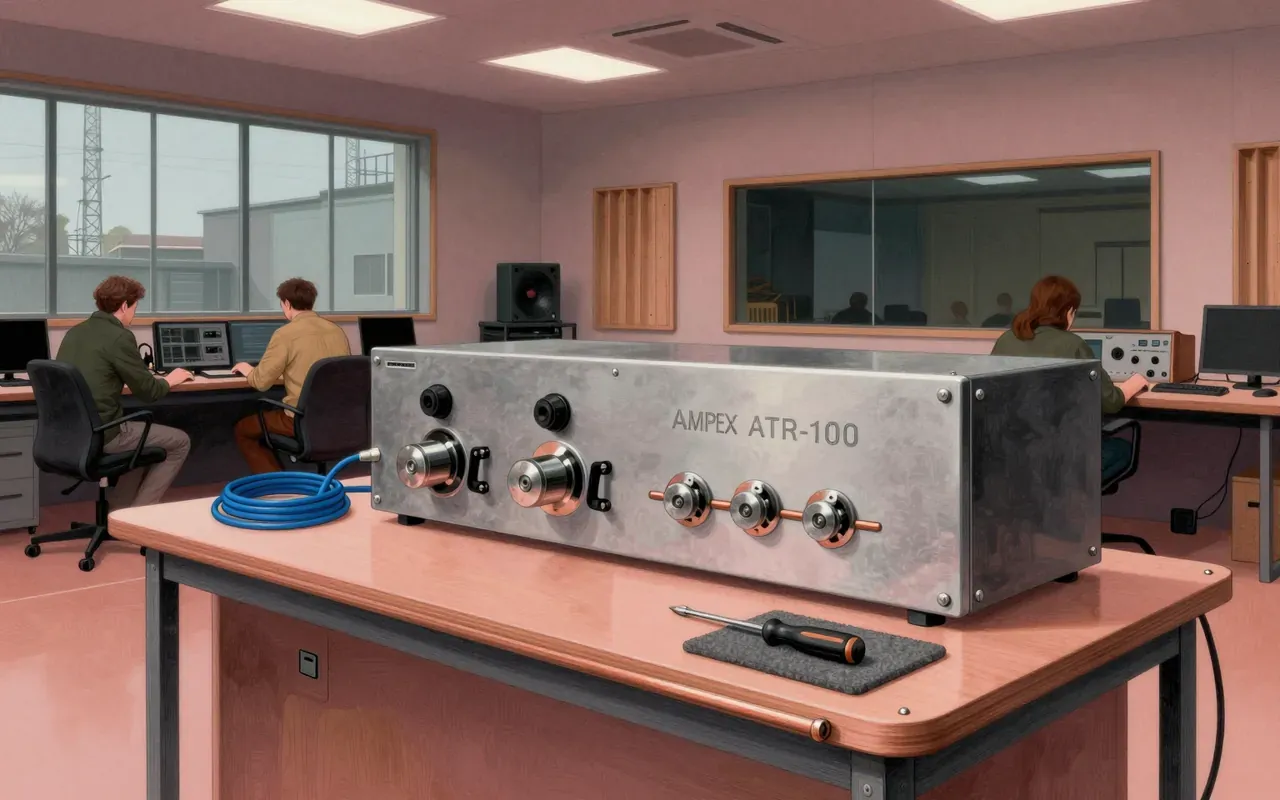
Ampex ATR-100AmpexThe Ampex ATR-100 is a mastering-grade analogue tape recorder introduced in Spring 1976 at the AES Conference in Los Angeles. Designed exclusively for stereo or quadraphonic mixdown and mastering, it features a servo-controlled direct-drive-capstan transport and interchangeable headblocks for quarter-inch or half-inch tape. Its wow and flutter performance set a new standard for analogue accuracy. It does not support multitrack recording. No verified claims exist about recordings made on it, its users, or its sonic signature beyond accuracy.
Up next in Audio

List of distortion pedals

MXR · 8:52

It doesn’t shape your tone—it smears it, reliably, in yellow plastic.

8:52