Saved
Effects & pedals · Sound design & sampling

Oberheim/Gibson Echoplex Digital Pro

It loops longer and cleaner than any 1990s hardware looper — but gives you nothing else.

Worth your time?3.5/5Yes.Use the whole thing.What works, what does not, who it is for ↓
7:37in productionCh. 1 · For the stage, not the rack/ 7:37 · ceiling 15 min
5 chapters · 7:37Ceiling 15:00

The brief is written and checked. The video joins this page when it is cut.5 chapters · 1 min read · 7:37 planned

Read the brief

The Oberheim/Gibson Echoplex Digital Pro is a 1994 hardware looper built for live performance. It records 16-bit/44.1kHz audio to RAM, ships with 50 seconds of memory (expandable to 200), supports unlimited overdubs per loop, stores up to nine loops, and offers MIDI sync, reverse looping, and multiplay. It has no filtering, time stretching, pitch shifting, stereo effects, or resampling.

Chapters & takeaways5
  1. 0:40
    For the stage, not the rack

    Built for performers, not studios.

  2. 1:42
    Real-time looping, no latency

    Record, stop, loop — instantly.

  3. 2:26
    RAM is the ruler

    Memory defines everything: loop length, overdubs, and capacity.

  4. 3:18
    Unlimited layers, one limit

    Overdub until the memory runs out — no artificial cap.

  5. 4:17
    A precursor to the Repeater

    It shares DNA with the Electrix Pro Repeater — not a coincidence.

2 more chaptersFewer chapters
Worth your time?

Yes. Use the whole thing.

3.5/ 5
What works
  • real-time-looping
  • overdubbing
  • long-memory-recording
What does not
  • filter
  • time-stretch
  • pitch-shift
  • resample
Use it if
  • performing-artists
Skip it if
  • editors
  • producers-needing-effects
Who should use it, and who should skipHide who it is for
The written brief1 min read

What it is and what it was built for

The Oberheim/Gibson Echoplex Digital Pro is a 1994 digital delay instrument built for performing artists. It is a real-time loop recorder and sampler, not a general-purpose effects processor or DAW.

How it works, in terms a player would use

It records in real time at 16-bit/44.1kHz to RAM. Stop recording, and the material loops immediately. Overdub freely — each new layer stacks onto the loop. Memory size sets the only hard limit on loop length and overdub count. It stores up to nine loops. MIDI sync, reverse looping, and multiplay are built in.

What it does better than anything else

It delivers longer, higher-fidelity looping than most 1990s hardware loopers — 50 seconds standard, expandable to 200 seconds using standard RAM SIMM chips. It enables unlimited overdubs per loop in real time, with immediate playback on record stop.

What it does badly

It does not filter, time-stretch, pitch-shift, resample, or process in stereo. It offers no onboard effects beyond delay and looping. There is no sample editing, trimming, or scrubbing interface.

What people made with it

The sources do not specify what people made with it.

Who should use it, and who should not

A live guitarist, keyboardist, or vocalist who needs hands-on, reliable, RAM-based looping without a computer. Not for producers needing editing, effects, or integration with modern DAW workflows.

Is it worth your time

Yes — if you need a dedicated, hardware-based looper with long memory, live overdubbing, and no software dependency. No — if you require filtering, pitch shifting, stereo effects, or time stretching.
Same bench · Effects & pedals4 of 121
8:36
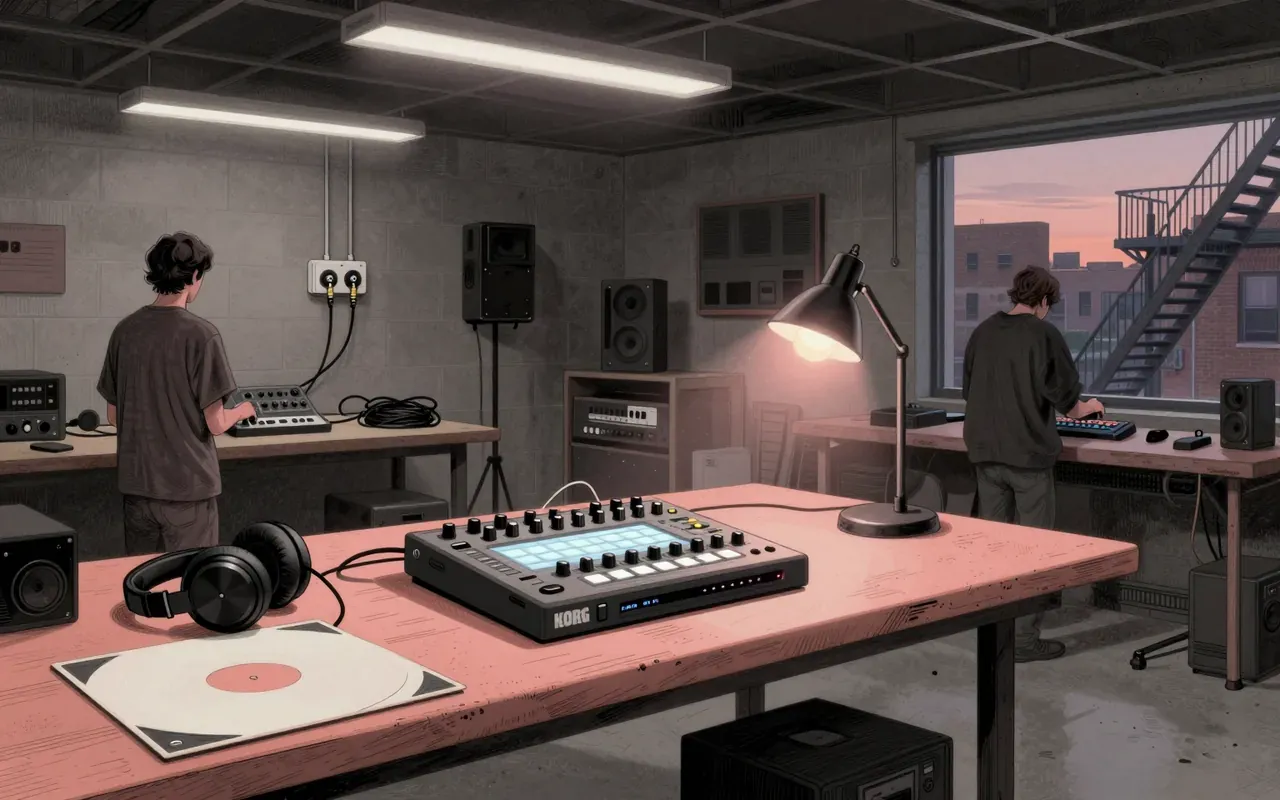
Korg Kaoss Pad KP3KorgThe Korg Kaoss Pad 3 is a live-performance effects unit. It uses an X/Y touchpad for real-time control of 128 built-in programs—including reverb, delay, flanger, analog filter, drive circuit, and a vocoder. It samples onboard. Some effects sync to tempo. It functions as a MIDI controller. Connections are RCA only.
9:12
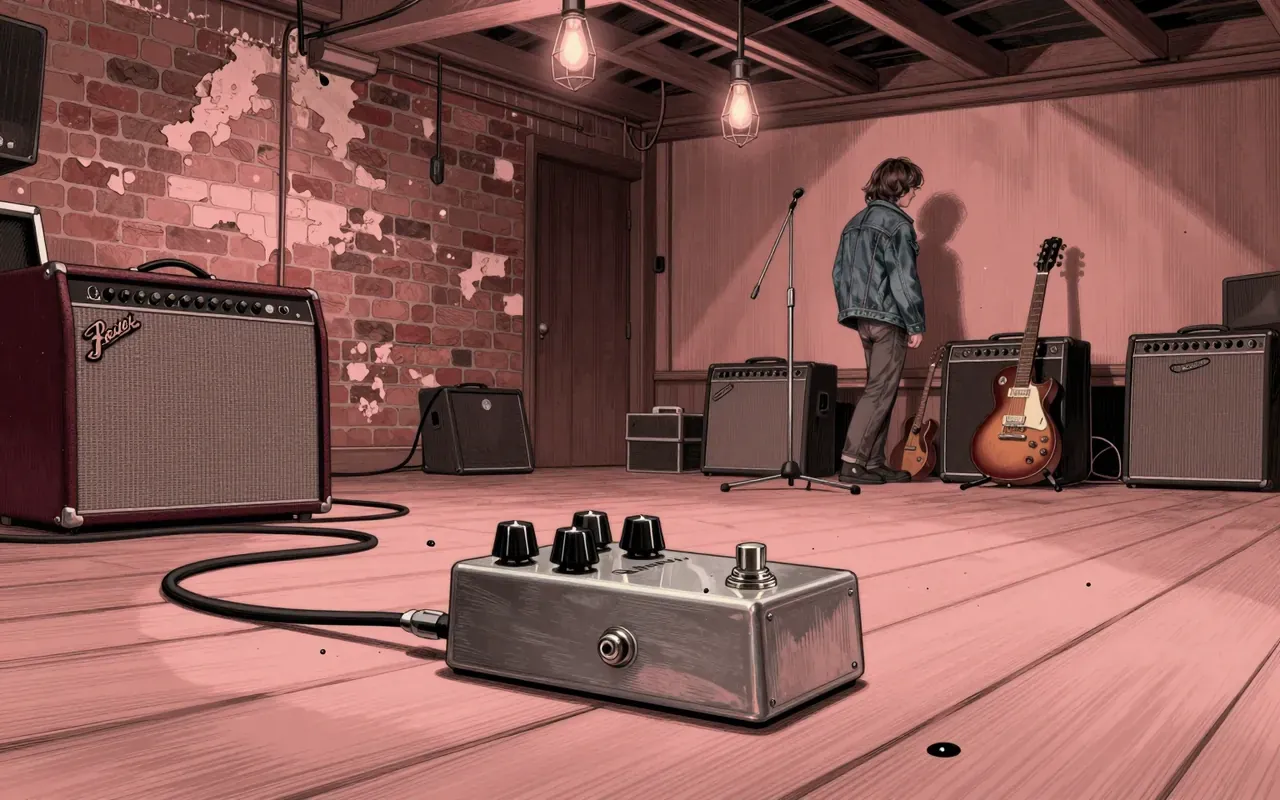
ShredMasterMarshall · 1991The ShredMaster is the high-gain pedal in the trio Marshall released in 1991 with the Bluesbreaker and Drivemaster. It is a conventional distortion pedal with Gain, Bass, Contour, Treble and Volume controls in a black, wedge-shaped metal case. Poor sales ended the run within a few years, and Marshall reissued it in 2023.
9:25
Boss SD-1Boss · 1981The Boss SD-1 is a 1981 overdrive pedal. It is the second overdrive made by Boss. It adds a tone control and refines the OD-1’s circuit for more gain and aggression. Its asymmetrical soft-clipping uses two diodes on the positive waveform peak and one on the negative—producing both even and odd harmonics. It is midrange-focused at 800Hz and rolls off less bass than the OD-1. Its circuit has remained unchanged since release.
8:17
MXR Dyna CompMXRThe MXR Dyna Comp is a guitar compressor pedal introduced in the 1970s. It has two controls: Sensitivity and Output. It produces a non-tone-neutral, colour-rich compression effect. It became a Nashville standard. It smooths out volume differences between notes, especially in chicken picking. It was one of the six original pedals in the MXR Series 2000 line.
Up next in Audio

Strymon El Capistan

Strymon · 10:17

It’s the best tape echo emulator—but it doesn’t sample phrases, despite the name.

10:17