audiobriefs
9:13in productionCh. 1 · Same Engine, Smaller Box/ 9:13 · ceiling 15 min
Synths & drum machines · Sound design & sampling

Oberheim Matrix-1000

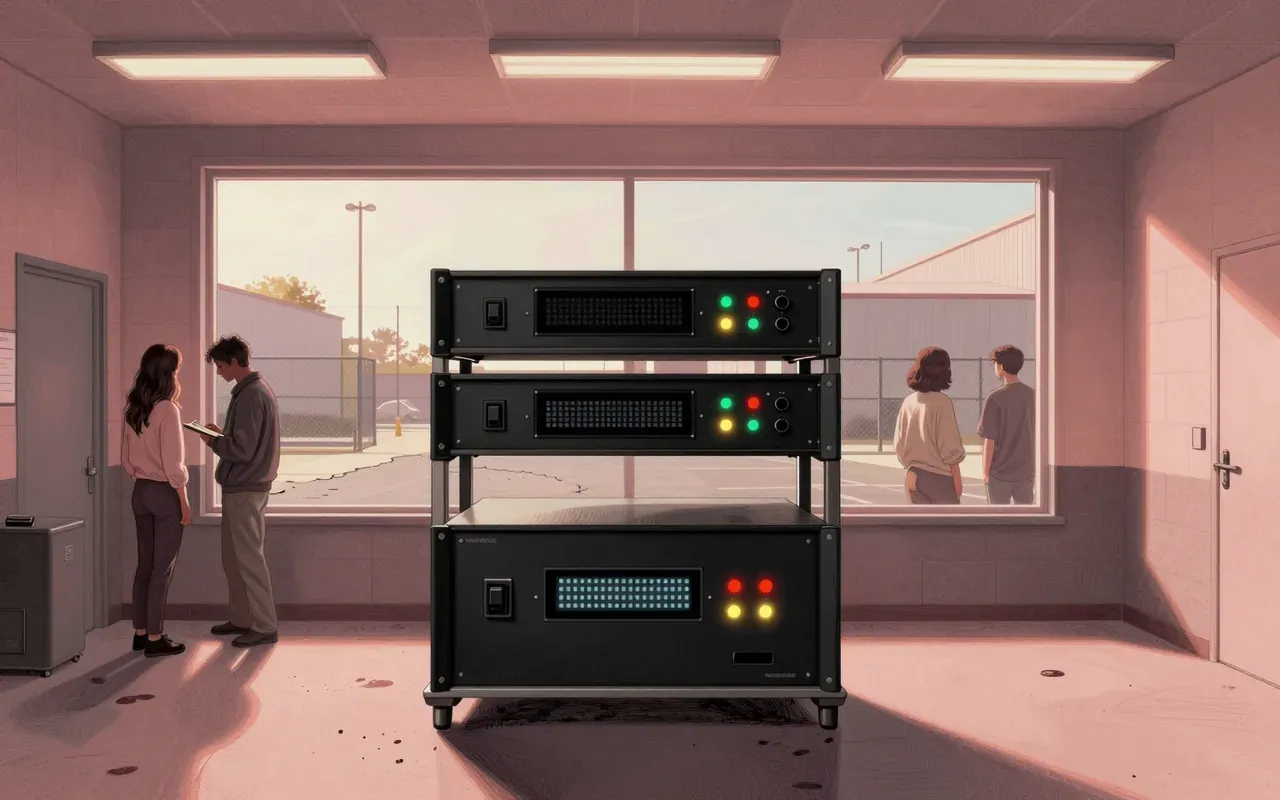
A rack full of Oberheim’s best ambient voices — and zero knobs to touch them.

The Oberheim Matrix-1000 is a 1987 rackmount analog synthesizer. It contains 1,000 Matrix 6 patches. Each voice has two DCOs, one low-pass filter, two VCAs, three envelope generators, two LFOs and two ramp generators. Editing requires external MIDI tools. It is optimised for pads, textures and ambient sound design.

Chapters & takeaways4
  1. 1:10
    Same Engine, Smaller Box

    It is 1,000 Matrix 6 patches in a single rack space — same architecture, same voice design.

  2. 2:35
    Six Voices, Fully Specified

    Each voice gives two DCOs, one low-pass filter, two VCAs, three envelopes, two LFOs and two ramp generators — no more, no less.

  3. 3:37
    No Knobs, No Exceptions

    Editing requires an external MIDI editor. You cannot change a parameter without software or SysEx.

  4. 5:02
    Built for Atmosphere, Not Attack

    It excels at pads, textures and ambient sounds — not leads, bass or percussion.

Worth your time?

Yes. Use the whole thing.

3.5/ 5
What works
  • as a preset-rich ambient tone source
  • as a compact carrier of Oberheim’s analog voice architecture
  • as a cost-effective way to access Matrix 6 sounds without the keyboard
What does not
  • deliver real-time control
  • support onboard editing
  • produce sharp leads or tight bass
Use it if
  • ambient producers
  • textural sound designers
  • Oberheim collectors seeking density over immediacy
Skip it if
  • live performers
  • modular integrators needing CV/Gate
  • editors who avoid MIDI software
The written brief1 min read

What it is and what it was built for

The Oberheim Matrix-1000 is a 1987 rackmount analog synthesizer built for pads, textures and ambient sound design.

How it works, in terms a player would use

It runs six voices, each with two DCOs, one low-pass filter, two VCAs, three envelope generators, two LFOs and two ramp generators. Editing happens only via external MIDI tools — no onboard controls exist. Patches load from the Matrix 6 using SysEx or software.

What it does better than anything else

It packs 1,000 genuine Matrix 6 patches into a single-space rack module. No other device delivers this density of Oberheim’s analog voice architecture at this size or price.

What it does badly

It cannot be edited without external MIDI tools. It has no real-time front-panel control. Its preset categories — bass, lead, effects — rarely deliver convincing results outside ambient or textural roles.

What people made with it

People used it for atmospheric layers, evolving backgrounds and soft-edged synth tones — not leads, basslines or percussive articulation.

Who should use it, and who should not

Producers who want authentic Oberheim analog texture without keyboard bulk or cost. Not for performers needing real-time control or sound designers who rely on immediate parameter access.

Is it worth your time

Yes — if you need dense, warm, analog Oberheim pads and textures in a compact rack unit and are willing to route editing through external software.
Same bench · Synths & drum machines4 of 243
9:06
Oberheim XpanderOberheimA keyboardless, six-voice analog synthesizer launched in 1984 and discontinued in 1988. Rack-mounted. Uses Matrix Modulation to route digital control to analog VCOs, multi-mode VCF, and two sequential VCAs. Each voice is independently configurable — including FM via VCO-to-VCO modulation — via multi-patch mode.
11:30
Oberheim OB-XaOberheimThe OB-Xa is a pragmatic evolution: layering and splitting built in, filter envelope replacing cross modulation, Curtis ICs for stability, and Serial Buss for closed-system integration. It delivers thick, reliable polyphony — but sacrifices the OB-X’s discrete-circuit idiosyncrasy and FM flexibility.
9:59
Oberheim Matrix-12OberheimThe Oberheim Matrix-12 is a 12-voice, 61-key, fully analog synthesizer introduced in 1985. It uses Matrix Modulation for virtual patching. Every control can affect another parameter. It provides 15 LFO types and VCAs per voice. It is more programmable and sonically fatter than the Matrix-6 and Xpander. It is not intended for beginners. It is renowned for thick analog pads, sweeps, buzzes, basses and textures—and was called the 'king of analog sounds' in the mid-eighties.
9:06
Oberheim Polyphonic SynthesizerOberheimThe Oberheim Polyphonic Synthesizer is a series of analog music synthesizers produced from 1975 to 1979. It was the first production synthesizer capable of playing chords. It works by combining multiple SEM modules — each generating one voice — under shared keyboard control and a two-channel sequencer. Its sonic thickness and depth arise partly from random variance between SEM modules. It has no patch memory, suffers tuning drift, and demands high maintenance. Musicians used it for unstable, breathing chordal textures. It suits players who prioritise tactile, variable analog polyphony over stability or recall.
Up next in Audio

Oberheim Matrix-12

Oberheim · 9:59

The Matrix-12 isn’t fat—it’s dense. Every knob bends another parameter, and every patch costs hours.

9:59