audiobriefs
9:06in productionCh. 1 · The First Chordal Synth/ 9:06 · ceiling 15 min
Synths & drum machines

Oberheim Polyphonic Synthesizer

Chords sound thick because the synth can’t stay in tune — and that’s why it still matters.

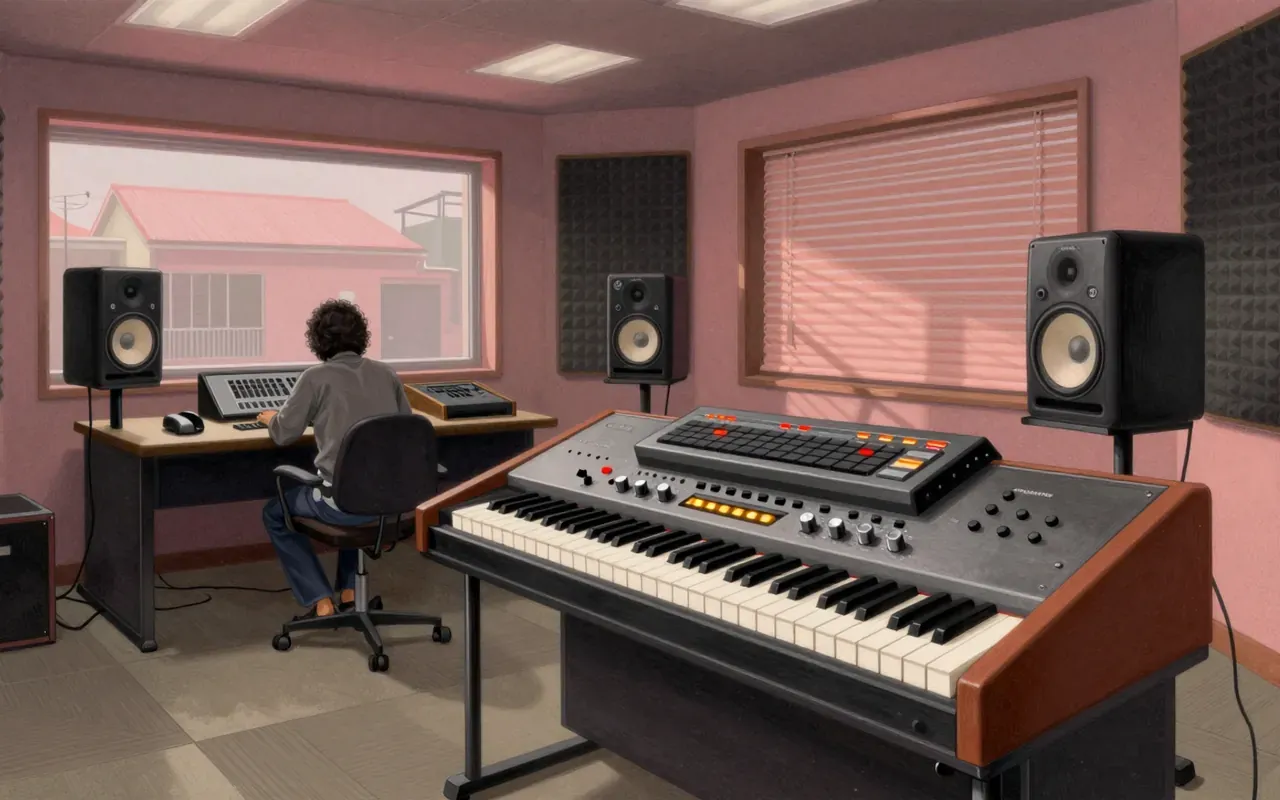
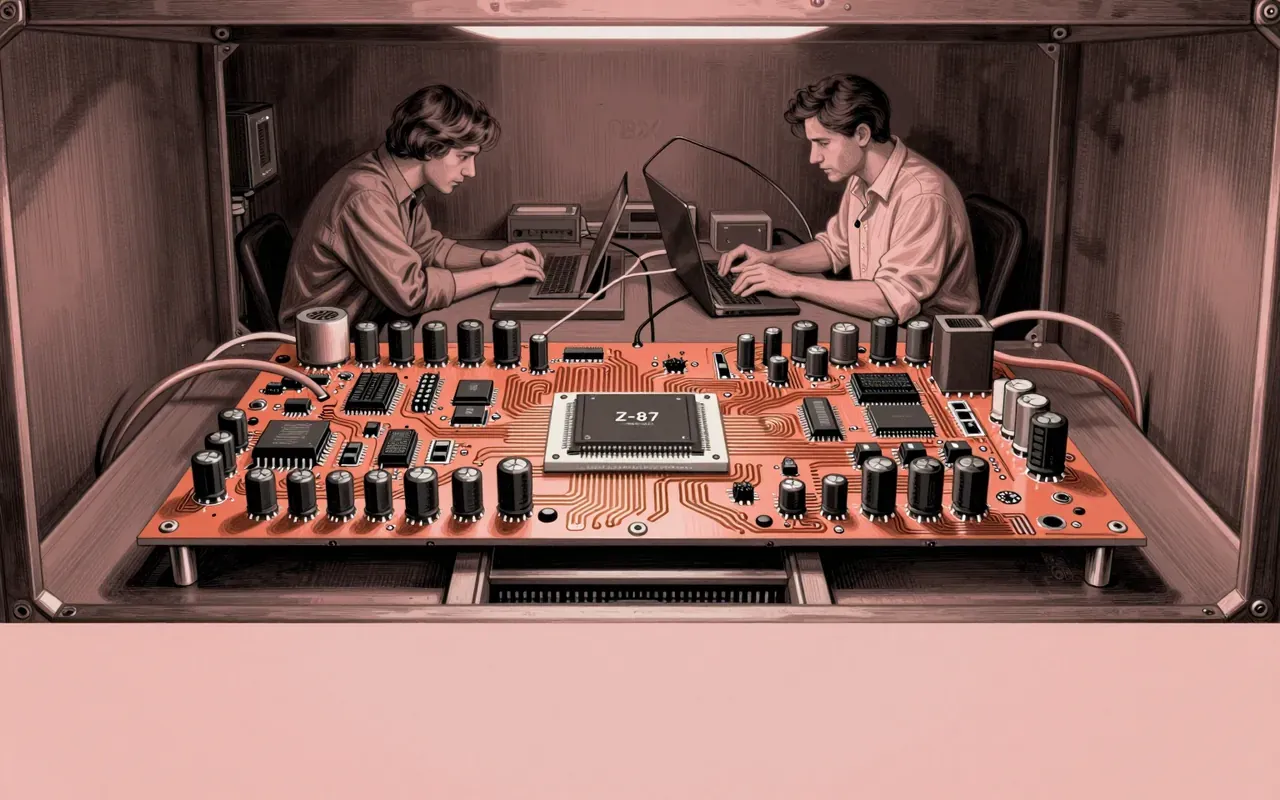
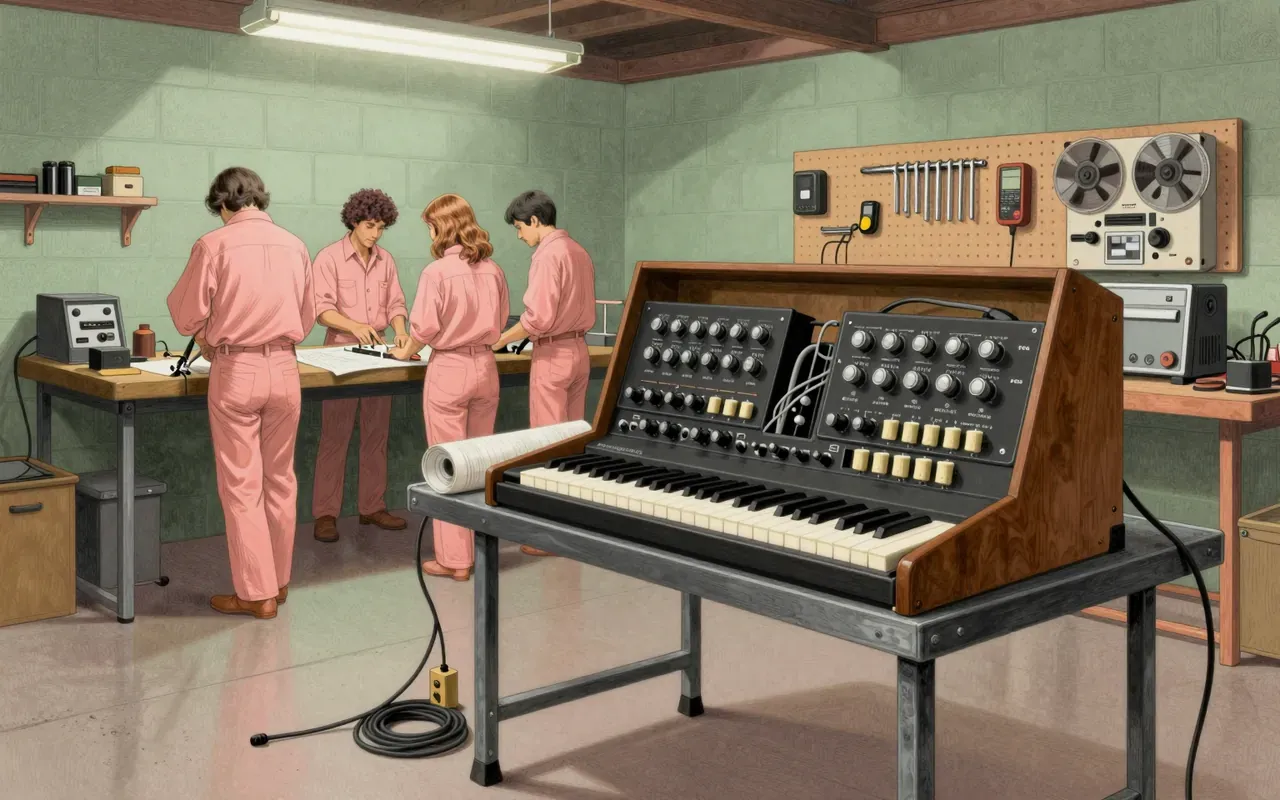
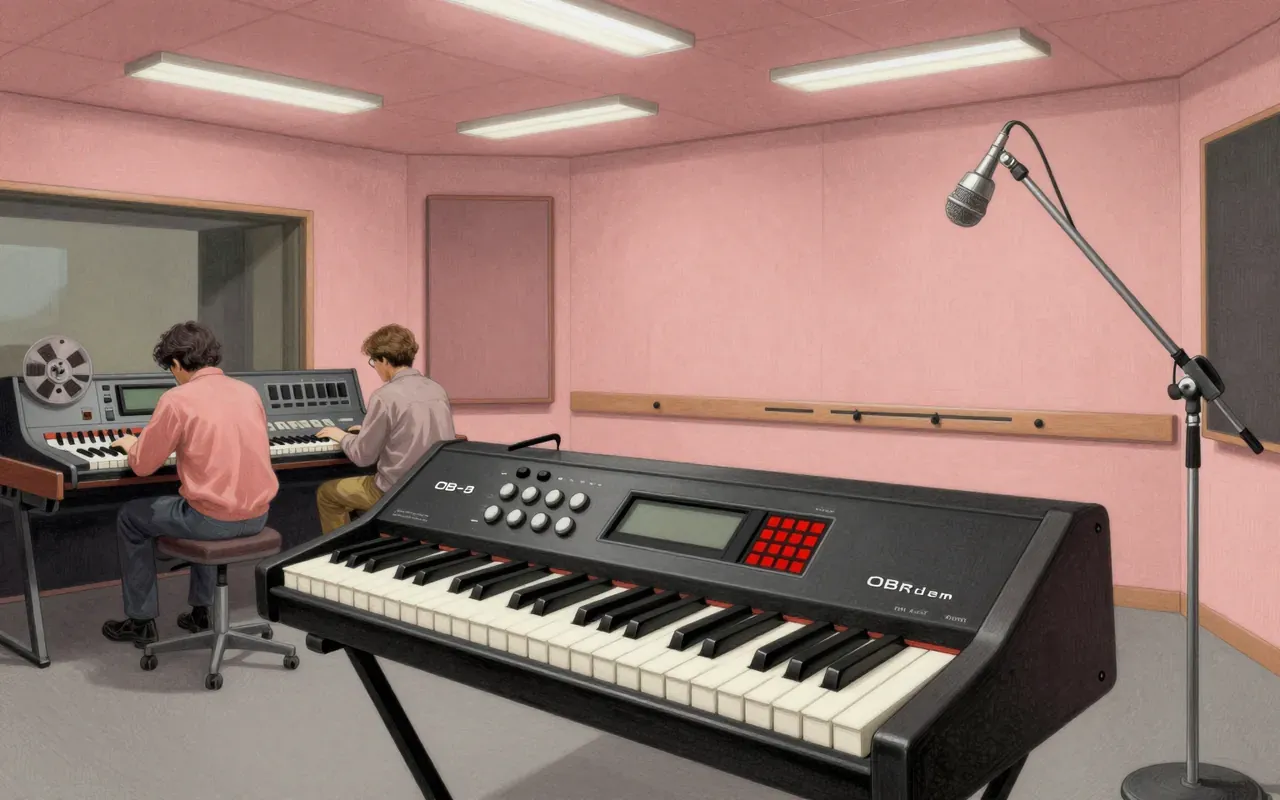
The Oberheim Polyphonic Synthesizer is a series of analog music synthesizers produced from 1975 to 1979. It was the first production synthesizer capable of playing chords. It works by combining multiple SEM modules — each generating one voice — under shared keyboard control and a two-channel sequencer. Its sonic thickness and depth arise partly from random variance between SEM modules. It has no patch memory, suffers tuning drift, and demands high maintenance. Musicians used it for unstable, breathing chordal textures. It suits players who prioritise tactile, variable analog polyphony over stability or recall.

Chapters & takeaways4
  1. 0:48
    The First Chordal Synth

    It was the first production synth that could play chords.

  2. 2:12
    How It Makes Polyphony

    It stacks independent SEMs under one keyboard and sequencer.

  3. 3:37
    Why It Sounds Like It Does

    Its 'thickness' comes from random variance between SEM modules.

  4. 5:30
    The First Oberheim-Branded Products

    Two Voice, Four Voice, and Eight Voice debuted at June 1975 NAMM.

Worth your time?

Yes. Use the whole thing.

4/ 5
What works
  • chordal thickness from SEM variance
  • immediate tactile control per voice
  • sequenced two-channel pattern playback
What does not
  • offer patch memory
  • maintain stable tuning across voices
  • support modern DAW integration
Use it if
  • players who value hands-on analog chordal synthesis
  • producers seeking organic, non-identical voice layering
Skip it if
  • users needing reliable recallable presets
  • performers requiring stable intonation
The written brief1 min read

What it is and what it was built for

It is a series of analog music synthesizers produced from 1975 to 1979. It was built to play chords — the first production synthesizers capable of doing so.

How it works, in terms a player would use

It uses multiple SEM modules — each generating one voice — under shared keyboard control. A digitally scanned keyboard routes notes to active SEMs. A two-channel sequencer records and plays back patterns.

What it does better than anything else

It delivers unmatched chordal thickness and depth from random variance between discrete analog SEMs — a trait no later polyphonic synth replicates identically.

What it does badly

It offers no voice allocation logic beyond fixed assignment. It has no patch memory. Tuning drifts across SEMs. Maintenance is costly and parts are rare.

What people made with it

Musicians used it to create layered, evolving pads and basslines that breathe with instability — textures defined by SEM-to-SEM inconsistency, not precision.

Who should use it, and who should not

Use it if you work with hands-on, performance-driven analog synthesis and accept tuning instability as part of the voice. Do not use it if you rely on recallable patches or stable intonation.

Is it worth your time

Yes, if you need chordal analog synthesis with organic variation between voices. No, if you need reliability, patch memory, or modern workflow integration.
Same bench · Synths & drum machines4 of 40
9:20
ARP 2600ARPThe ARP 2600 is a foundational analog synthesizer designed for education. Its semimodular architecture, front-panel signal graphics, and duophonic voice count reflect its classroom purpose—not stage use. Its original filter was replaced after a patent dispute. It teaches synthesis more directly than any contemporaneous instrument, but offers no polyphony, no presets, and unstable tuning.
8:47
Roland CR-78RolandThe CR-78 is historically singular: the first microprocessor-based drum machine and the first to allow user-programmable pattern creation. Its analog synthesis yields 14 fixed drum sounds. Its four-note polyphony defines its rhythmic ceiling. It does not offer sound editing, velocity layers, or sample playback. It belongs in rooms where constraint is compositional strategy—not a flaw to be patched.
8:36
Yamaha CS-80Yamaha · 1976The Yamaha CS-80 is an analog synthesizer introduced in 1977. It supports true 8-voice polyphony, with two independent synthesizer layers per voice each with its own set of front panel controls. It has a layered keyboard that is both velocity-sensitive and pressure-sensitive, with polyphonic aftertouch and a ribbon controller for polyphonic pitch-bends and glissandos. Production of the instrument ceased in 1980.
9:20
Casio CZ synthesizersCasioThe Casio CZ series is a line of low-cost, digitally implemented phase distortion synthesizers introduced by Casio in 1984. They simulate analog filter behaviour without physical filters, using digital phase distortion instead. Each oscillator plays waveforms in series—not parallel—enabling sub-harmonics but restricting waveform pairing. Polyphony drops from eight to four voices when using two oscillators per voice. They were built for amateur musicians, prioritising affordability and portability over expressive control or sonic flexibility.
Up next in Audio

Roland Corporation

Roland · 1972 · 8:50

Roland didn’t make instruments — it built the first programmable infrastructure for electronic music.

8:50