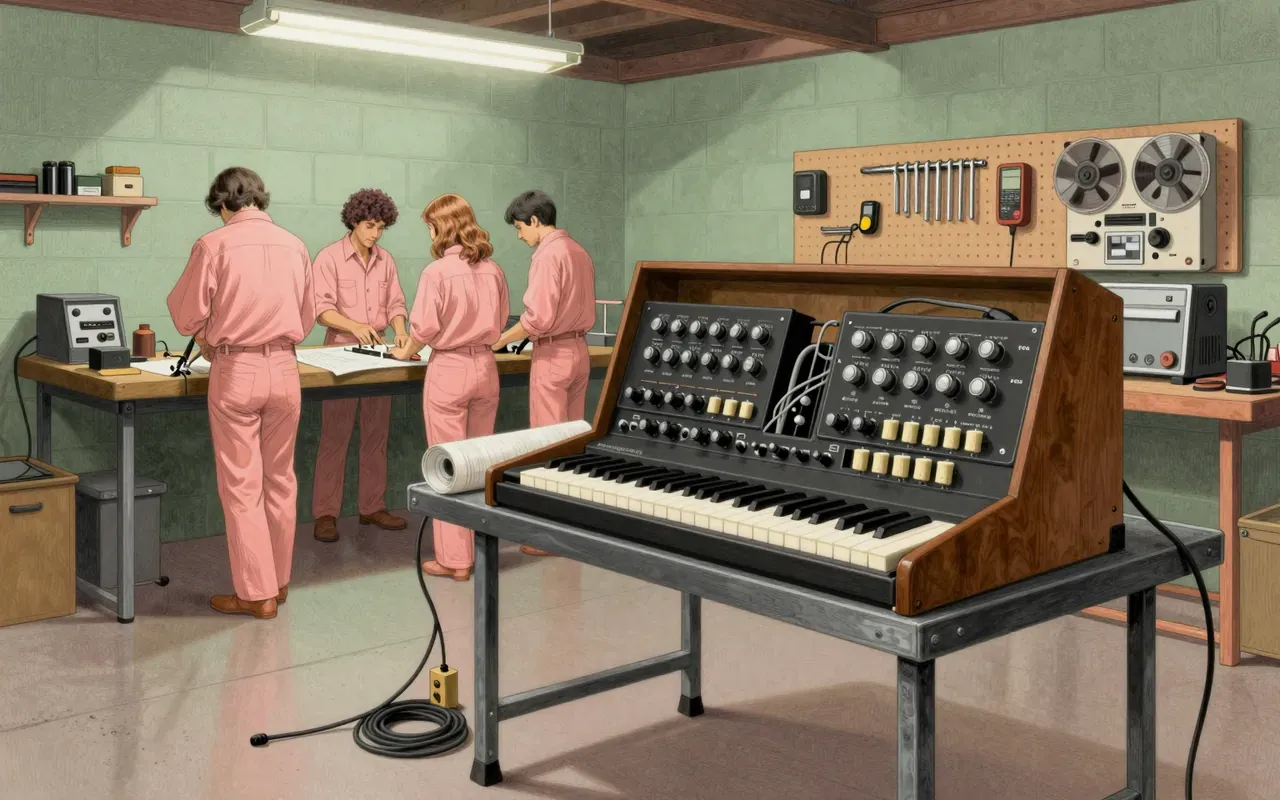
What it is and what it was built for
The Oberheim Matrix-12 is a 12-voice, 61-key, fully analog synthesizer introduced in 1985. It was built for deep sound design, not performance simplicity or accessibility.
How it works, in terms a player would use
It uses Matrix Modulation for virtual patching: every control can affect another parameter. It gives 15 LFO types and VCAs per voice. Its 61-key, 12-voice architecture is fully analog.
What it does better than anything else
It produces thicker, more layered analog pads, sweeps, buzzes, basses and textures than the Matrix-6 or Xpander. Its modulation range is wider and more interwoven.
What it does badly
It does badly for beginners. It offers no simplification, no guided workflow, no presets that teach. Its density overwhelms without commitment.
What people made with it
People made thick analog pads, sweeps, buzzes, basses and textures with it. Its output defined mid-eighties ‘king of analog sounds’ reception.
Who should use it, and who should not
Experienced players who value modulation depth and sonic thickness should use it. Beginners should not. It demands time, attention and tolerance for opaque routing.
Is it worth your time
Yes—if you need thick, complex analog textures and have time to master its depth. No—if you want immediate results or simple programming.