What it is and what it was built for
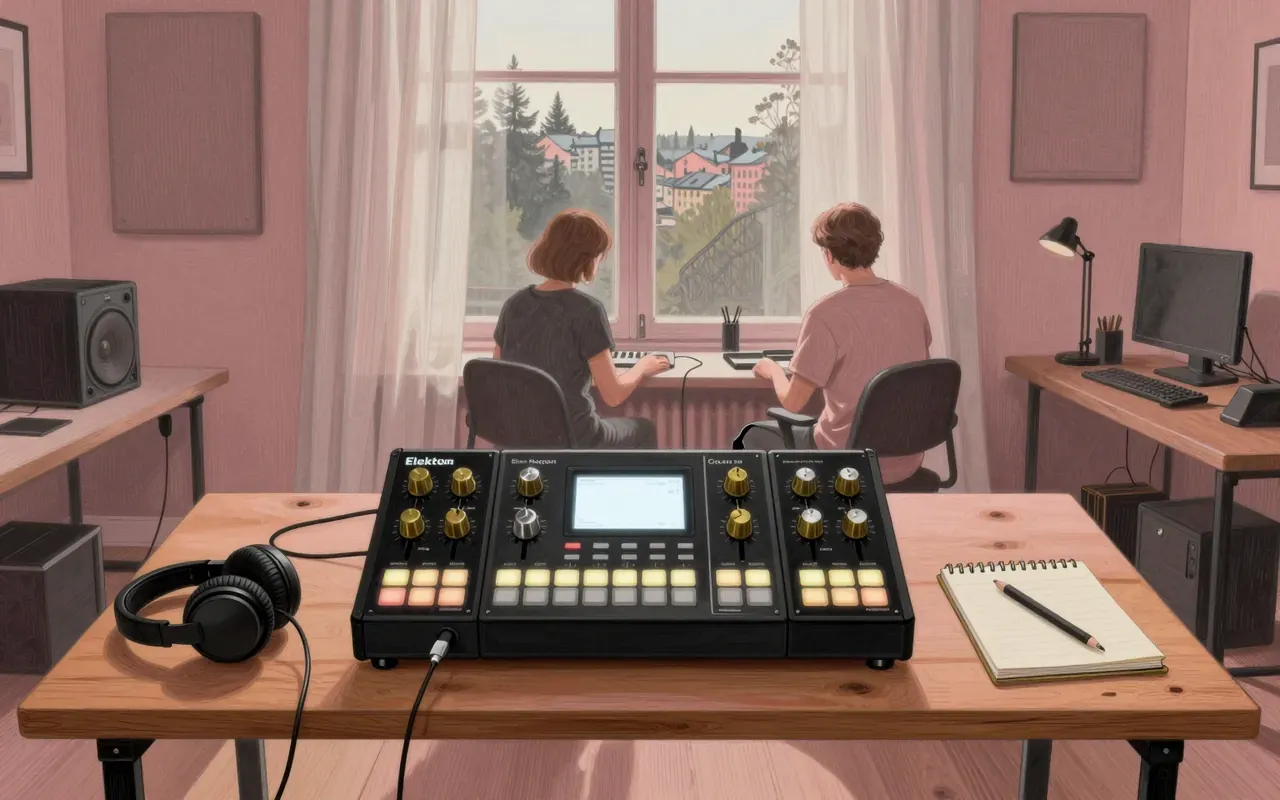
An advanced drum machine and drum synthesizer released in 2001. Built to generate, morph, and sequence analog, electronic, and acoustic drum sounds with surgical per-voice control.
How it works, in terms a player would use
It runs four independent sound engines—TRX, EFM, E12, and PI—each assigned to one of 16 drum voices. Each voice has its own amplitude modulation, 1-band EQ, multimode resonant filter, distortion, sample-rate reduction, delay, and reverb. The master mix adds a 3-band EQ and compressor. Sequencing switches between Classic mode—TR-style step input without kit persistence—and Extended mode, which stores kit and parameter changes, supports odd time signatures, and allows up to 32-step patterns.
What it does better than anything else
It mixes TR emulation, FM percussion, SP1200/Simmons samples, and acoustic physical modelling in one kit—each voice fully editable with effects and modulation. No other 2001 drum machine lets you run all four engines simultaneously while applying independent distortion, sample-rate reduction, and multimode filtering to each voice.
What it does badly
Classic mode discards kit and tweak data when saving patterns. The interface demands menu diving for basic edits. There is no visual feedback for filter resonance or distortion amount. It offers no built-in sampling or audio import. The sequencer lacks real-time pattern chaining or song mode.
What people made with it
Producers used it for intricate, evolving electronic percussion—layering TRX kicks with EFM hi-hats, processing E12 snares through sample-rate reduction, and blending PI toms into hybrid kits. Its Extended mode enabled non-repetitive, polyrhythmic patterns across genres like IDM and experimental techno.
Who should use it, and who should not
Sound designers who need granular control over hybrid drum synthesis. Producers building complex, evolving rhythm beds. Anyone comfortable with layered menus and committed to deep editing. Not for beginners, live performers needing instant recall, or those prioritising workflow speed over sonic flexibility.
Is it worth your time
Yes—if you need deep, per-voice synthesis control across hybrid drum sources and want sequencing that handles complex rhythms without sacrificing kit integrity. No—if you rely on immediate tactile feedback, real-time pattern muting, or intuitive sound layering across kits.