What it is and what it was built for
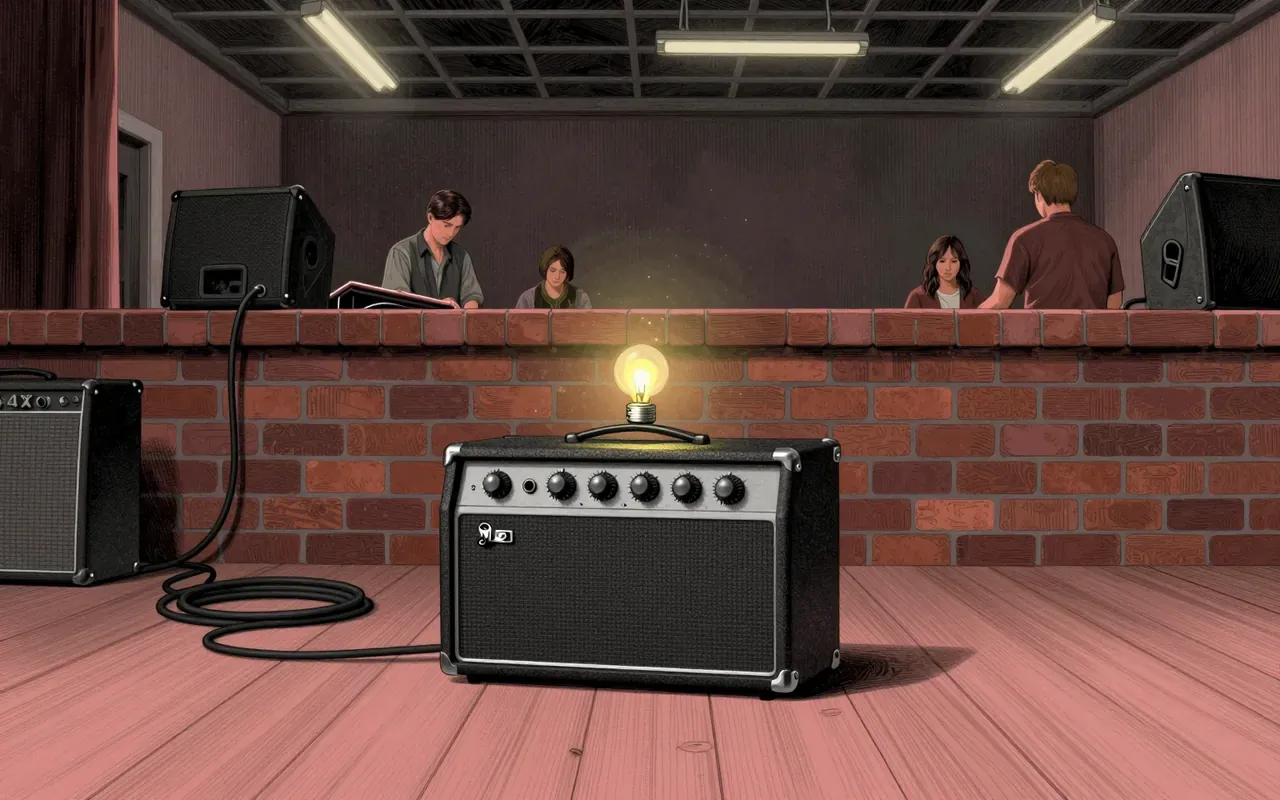
The Mesa Boogie Mark I Combo is a late-1970s tube guitar amplifier built for players who wanted controlled, responsive overdrive from a compact combo. It was not originally exported, later adapted for 220 V use in France.
How it works, in terms a player would use
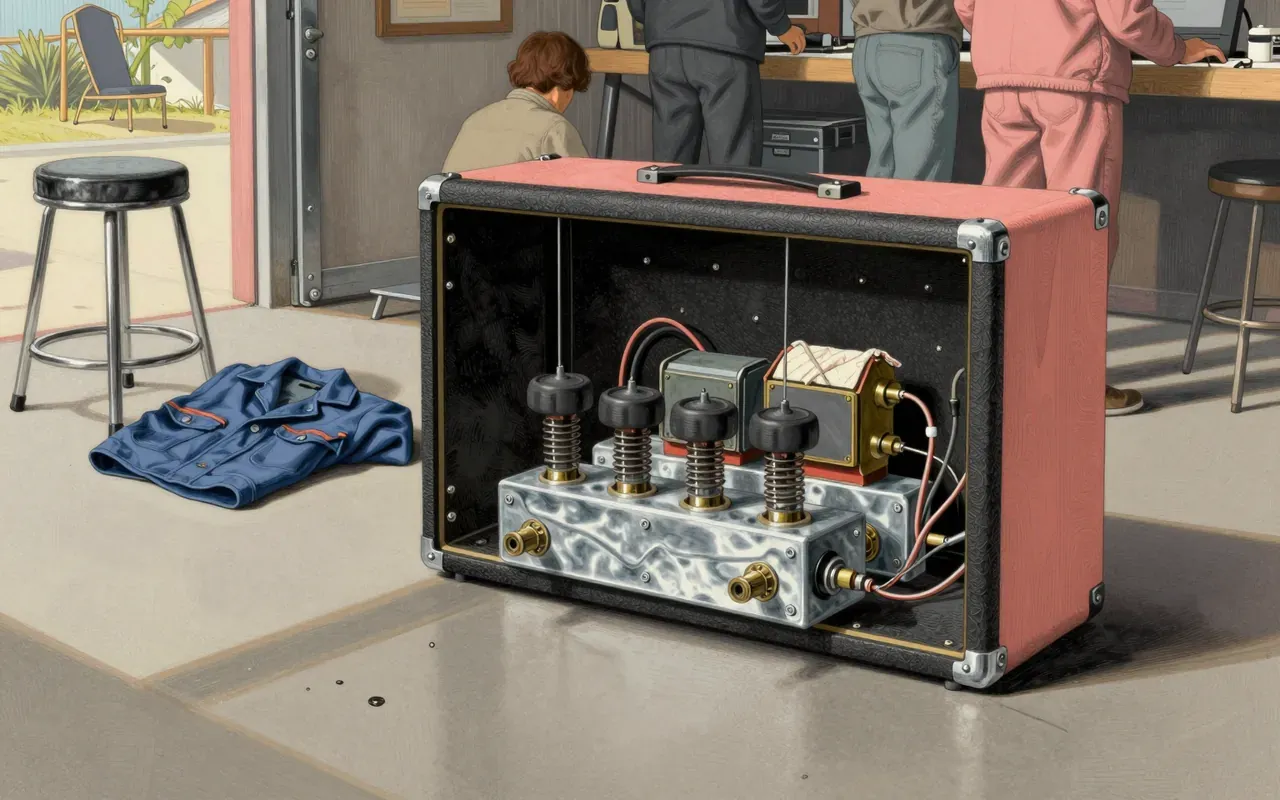
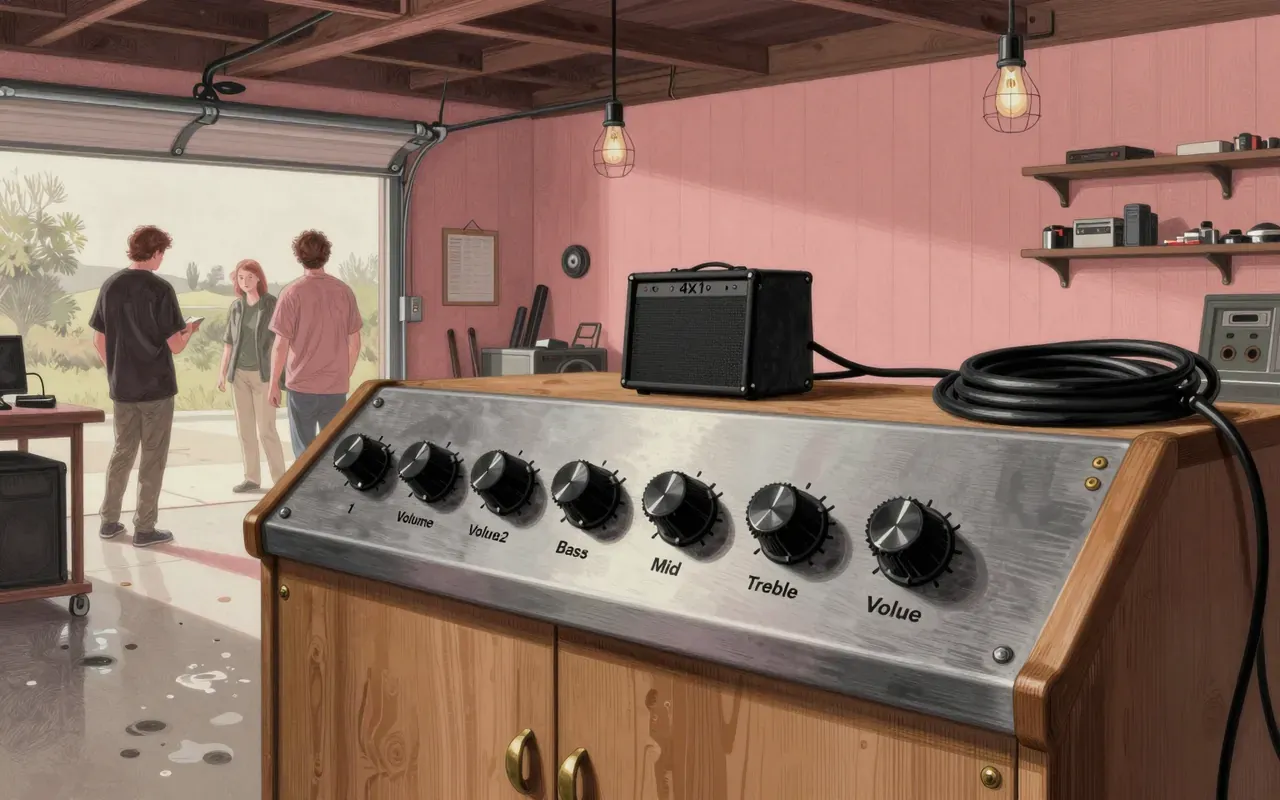
It has two inputs—Volume 1 and Volume 2—each feeding a separate preamp drive path. It uses two 6L6GT power tubes and four or five preamp tubes. A three-band EQ (Bass / Mid / Treble) and a master volume shape the tone. There is no reverb. There is no 60/100 watt switch.
What it does better than anything else
It delivers precise, warm, generous overdrive that deepens and tightens with sustained use. Its two-input architecture gives immediate access to two distinct gain stages without pedals or external switching.
What it does badly
It does not deliver reverb. It does not offer wattage switching. It gives no channel switching beyond the two fixed input paths. It offers no presence or resonance controls. It cannot clean up with guitar volume alone once saturated.
What people made with it
Players made crunchy, warm, articulate lead and rhythm tones with it—tones that sharpened and gained texture after several hours of playing, requiring no extra gain staging.
Who should use it, and who should not
Players who value hands-on, no-frills tube response and are willing to burn in the amp for 4–5 hours to unlock its natural crunch. Not for players who rely on reverb, low-noise cleans at stage volume, or multi-watt flexibility.
Is it worth your time
Yes—if you want a tightly focused, warm tube amp that gains natural crunch after 4–5 hours of use and fits in a room without needing effects or wattage switching. No—if you need reverb, footswitchable channels, or high-wattage headroom.