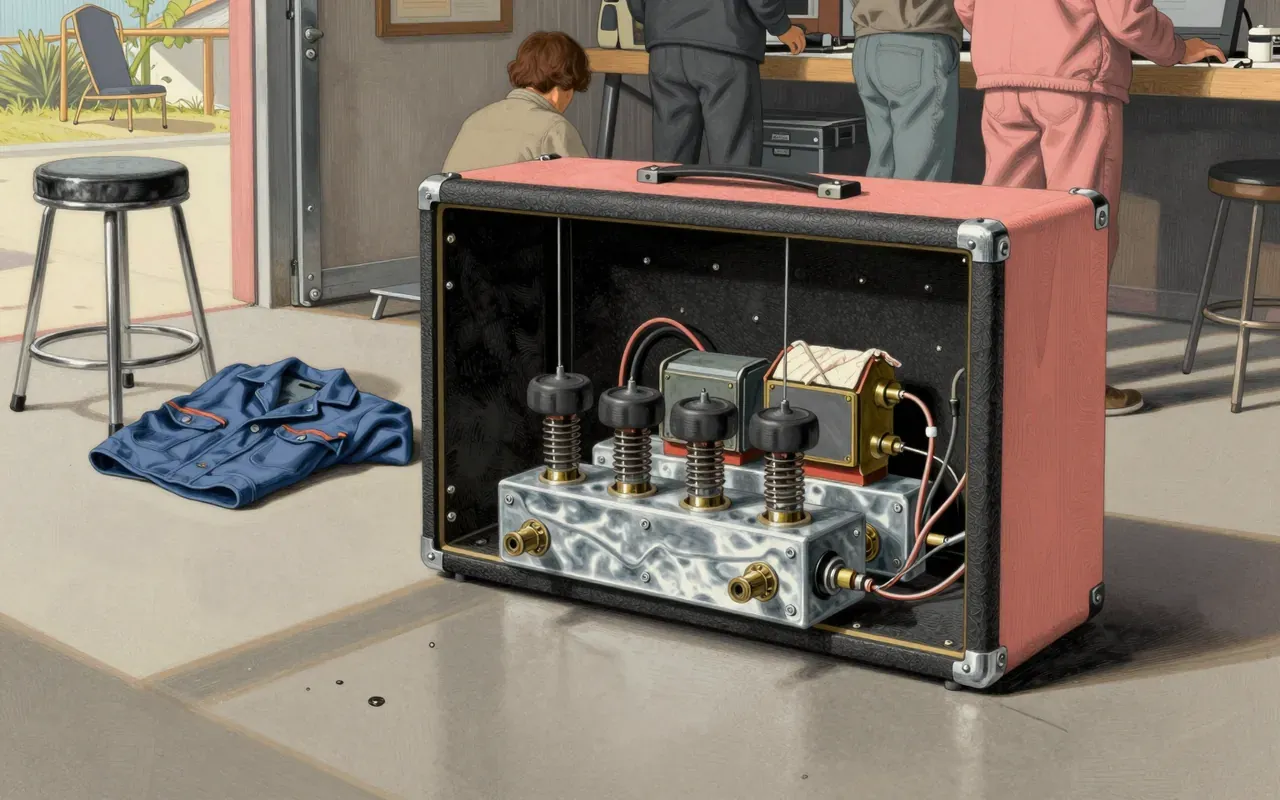
What it is and what it was built for
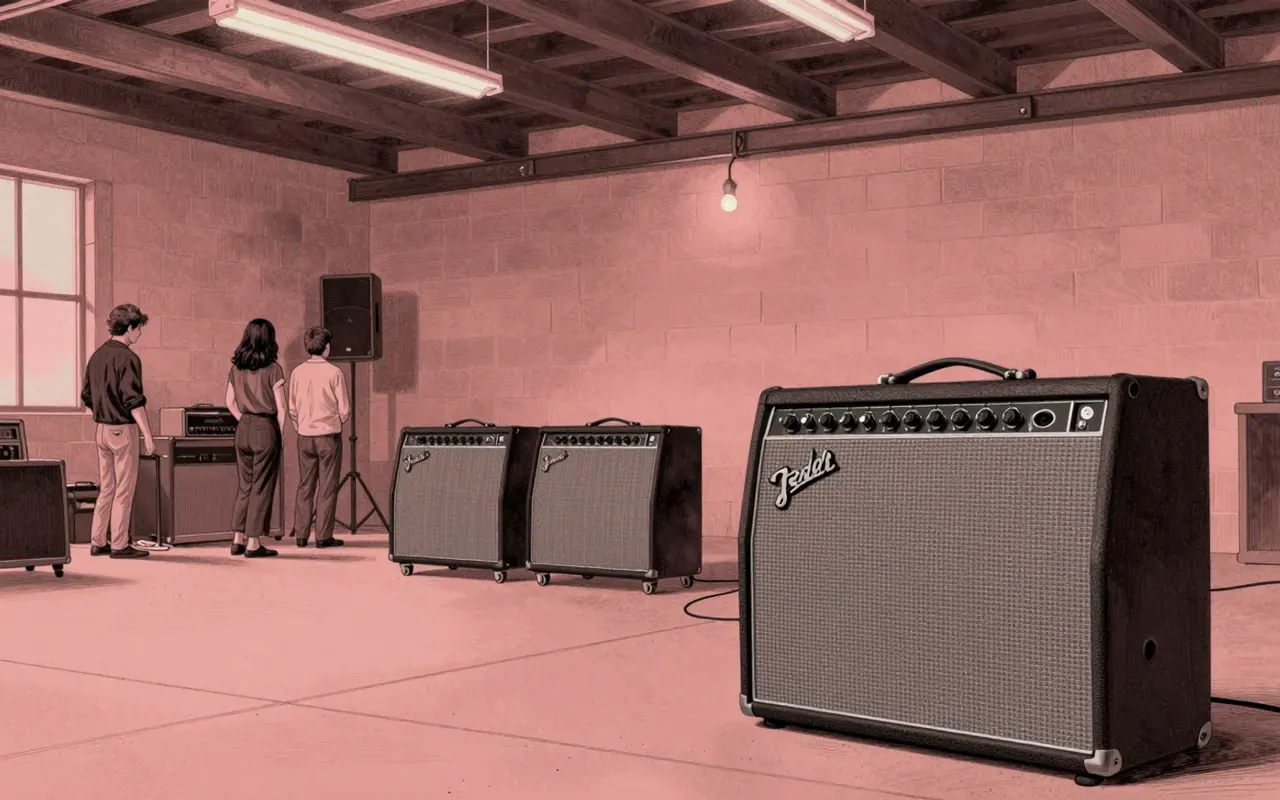
A guitar amplifier built for stage volume and tonal authority. Introduced in 1963, it was designed to project cleanly at high wattage while retaining touch-sensitive breakup — with built-in reverb and tremolo as standard, not add-ons.
How it works, in terms a player would use
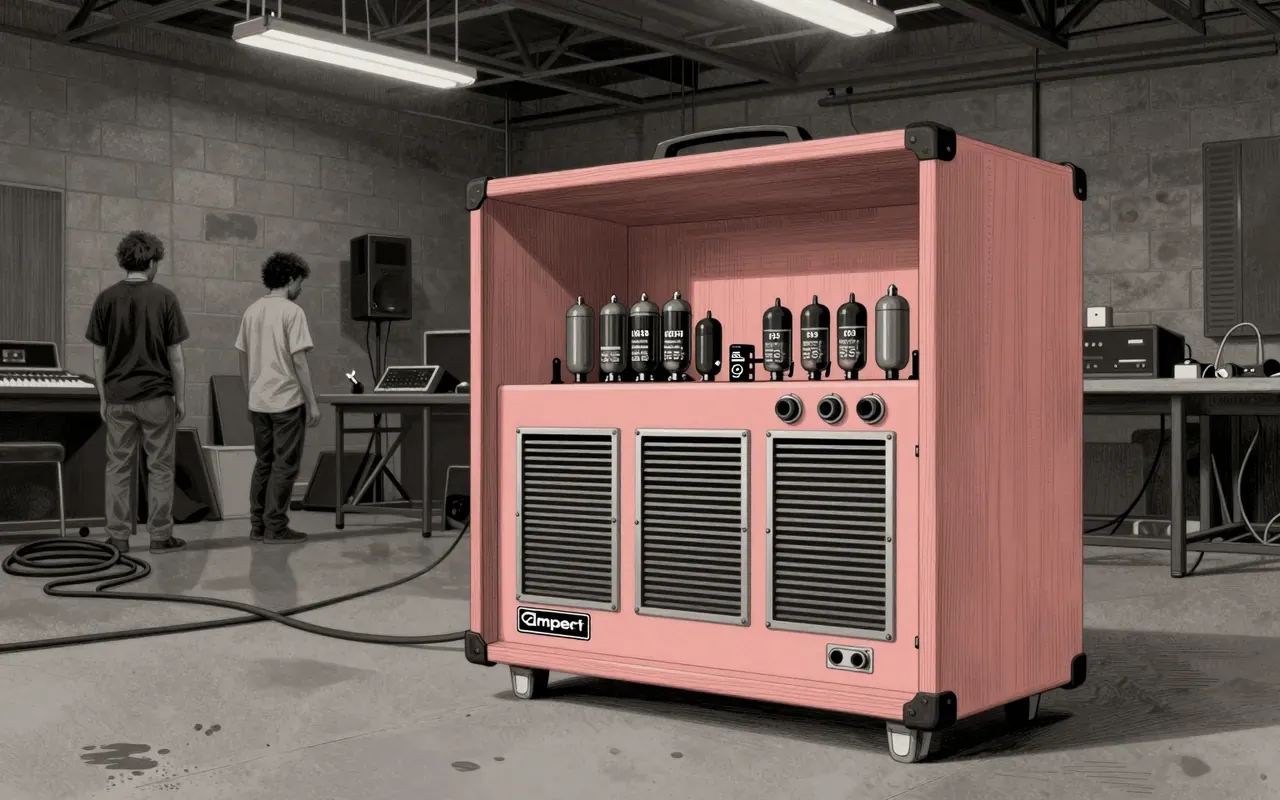
It is an all-tube guitar amplifier with built-in spring reverb and tremolo. Players plug in, turn knobs, and hear immediate response — no digital layer, no presets. Controls include volume, tone, reverb, and tremolo depth and speed. Later models add master volume (1974), Boost (1975), Mid (1978), and Line Out (1978).
What it does better than anything else
It delivers raw, unfiltered tube saturation across a wide dynamic range — especially in blackface versions (1963–1967). Four 10-inch speakers produce tight low-end punch and articulate midrange cut that cuts through live drums without EQ stacking. The spring reverb and tremolo interact physically, not digitally — giving organic, unpredictable motion.
What it does badly
It does not scale down well. Even with master volume, the power section remains stiff at low settings. The 4×10” cabinet is heavy and unwieldy. Tremolo is fixed-rate only — no sync or tap tempo. Reverb is spring-based: lush but uncontrollable, prone to splash and decay that bleeds into fast passages.
What people made with it
Players used it for clean chime, surf twang, garage crunch, and bluesy overdrive — relying on speaker breakup and power-tube saturation rather than preamp distortion. Optional JBL speakers extended its headroom and high-end response for louder, brighter applications.
Who should use it, and who should not
Guitarists who prioritise tactile amp response, physical modulation, and full-cabinet projection — especially those playing live with drum kits or in medium-to-large rooms. It is not for players needing silent practice, compact rigs, or precise, repeatable effect parameters.
Is it worth your time
Yes — if you need loud, responsive, all-tube headroom with physical modulation and four 10-inch speakers in one cabinet. No — if you need portability, low-volume bedroom play, or modern features like effects loops or footswitchable channels.