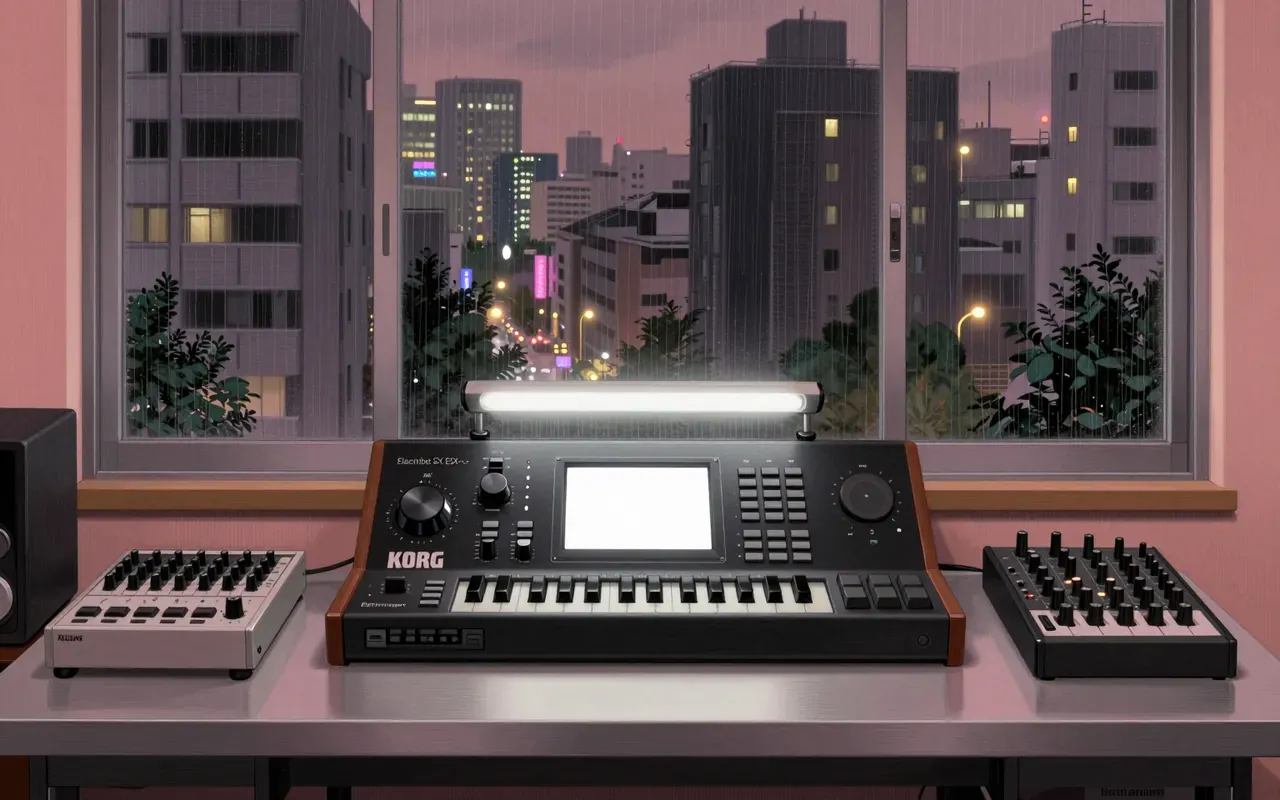
It doesn’t synthesise—it slices, stretches, and sequences samples with surgical rhythm awareness—and that’s why it still outperforms most grooveboxes at turning a loop into a living pattern.
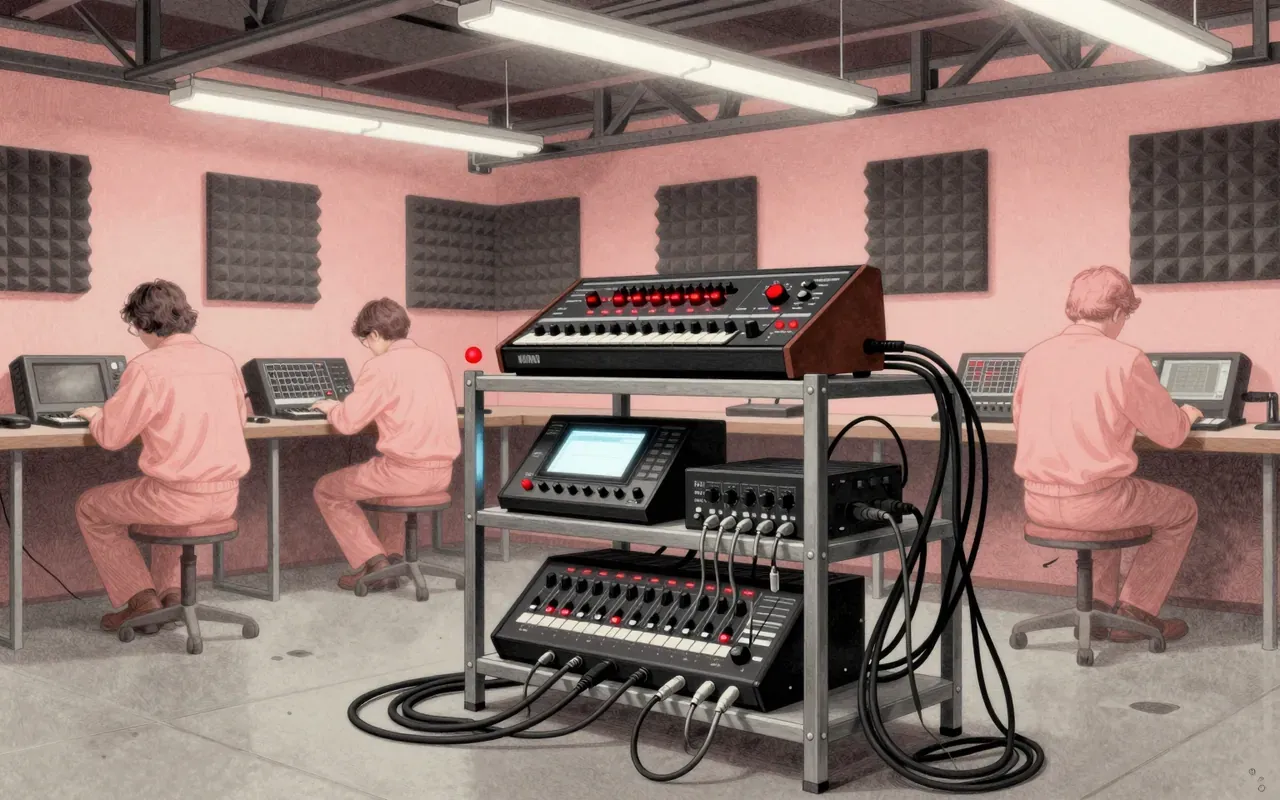
The Korg Electribe SX (ESX-1) is a 2003 sample-based groovebox built for dance music production and live performance. It uses sample-based sound creation to generate 16 assignable parts—including nine one-shot drum parts, two keyboard parts for melodic playback, two stretch parts for tempo-adjusted loops, one slice part for rhythmic phrase division, one audio-in part, and one drum accent part. It ships with 196 preloaded samples, 128 factory patterns, and 3 demo songs. A major upgrade over earlier ElecTribe models, it offers 285 seconds of sample memory at 44.1kHz for up to 384 user samples, slicing at rhythmic peaks, Motion Sequencing for real-time parameter automation, and three stereo effects processors with chaining.
It builds patterns from 16 sample-based parts—not oscillators or generators, but loaded, sliced, stretched audio.
2:34
Rhythmic Slicing + Motion Sequencing
It slices phrases at rhythmic peaks, then lets you twist pitch, filter, or effects per slice—or automate them all in real time.
3:40
Tempo-Locked Loops & Melodic Sampling
Stretch Parts keep loops in time without pitch shift. Keyboard Parts let you play samples melodically—right from the step keys.
5:14
Memory Limits & Part Allocation
285 seconds of 44.1kHz sample memory supports up to 384 user samples—but nine parts are locked as one-shot drums.
Worth your time?
Yes. Use the whole thing.
4/ 5
What works
rhythmic slicing
tempo-locked loop stretching
real-time motion sequencing
tactile pattern building
What does not
synthesize
record audio internally
support modern storage media
Use it if
loop-based producers
live electronic performers
sample manipulators
Skip it if
sound designers needing deep synthesis
recording-focused users
DAW-integration dependents
The written brief2 min read
What it is and what it was built for
The Korg Electribe SX (ESX-1) is a 2003 desktop sampling groovebox built for dance music production and live performance. It uses sample-based sound creation to generate 16 assignable parts for building rhythmic and melodic patterns.
How it works, in terms a player would use
It builds patterns from 16 sample-based parts: nine one-shot drum parts, two keyboard parts for melodic playback, two stretch parts for tempo-adjusted loops, one slice part for rhythmic phrase division, one audio-in part, and one drum accent part. You load samples via SmartMedia, slice phrases at rhythmic peaks, apply pitch or filter changes per slice, and automate parameters in real time with Motion Sequencing.
What it does better than anything else
It slices phrase samples at rhythmic peaks and applies per-slice pitch, filter, or effect changes more intuitively than any contemporary groovebox. Motion Sequencing lets you record real-time knob tweaks directly into pattern steps—no menus, no take-lanes, no DAW tethering.
What it does badly
It cannot resample internally. It offers no built-in microphone input. Its 285 seconds of sample memory at 44.1kHz forces tight curation—no long recordings or layered multisamples. Stretch Parts only preserve pitch during tempo shifts; they do not correct timing drift or offer granular control.
What people made with it
Producers used it to build full tracks from sliced vocal phrases, stretched breakbeats, and one-shot drum kits—especially in UK garage, IDM, and early electro house—relying on its tube-driven analog warmth and chained stereo effects to glue sampled elements together.
Who should use it, and who should not
Use it if you work with loops and one-shots, value tactile pattern construction, and want analog-tinged stereo effects with zero setup. Avoid it if you need real-time audio recording, MIDI sequencing beyond step input, or integration with modern DAWs beyond basic MIDI clock and note data.
Is it worth your time
Yes—if you need a compact, hands-on groovebox that turns loops and one-shots into live-ready patterns without a computer. No—if you require deep synthesis, polyphonic sampling, or modern file workflows like USB audio or SD cards.