audiobriefs
8:46in productionCh. 1 · What it is/ 8:46 · ceiling 15 min
Mixing & mastering · Studio & recording

Rupert Neve Designs Portico 5043

It doesn’t just compress — it redefines what every source is allowed to sound like.

The Portico 5043 is a studio compressor in Rupert Neve Designs’ Portico series. It delivers consistent, source-agnostic compression with optional harmonic colouration. Its physical format undermines its rack-ready promise. It does not replace a dedicated clean limiter or a compact multi-channel solution — but it rarely needs replacing on a track once engaged.

Chapters & takeaways4
  1. 0:57
    What it is

    It’s a studio compressor — not a channel strip, not a preamp, not a saturator by default.

  2. 2:29
    How versatile it really is

    Users treat it as source-agnostic: if it doesn’t work on something, they suspect the source — not the unit.

  3. 3:53
    Where the magic lives

    Vintage character isn’t an afterthought — it’s a toggleable layer baked into the compression.

  4. 5:15
    The physical cost of versatility

    Rack mounting is possible, but the format forces compromises — and extra expense.

Worth your time?

Yes. Use the whole thing.

4.5/ 5
What works
  • on any source without reconfiguration
  • as both insert and bus processor
  • with or without vintage character engaged
What does not
  • replace a clean digital limiter
  • fit neatly in tight 1U rack spaces
  • operate without audible harmonic texture
Use it if
  • engineers who treat compression as tonal design
  • studios building around flexible analog colour
Skip it if
  • those seeking transparent gain reduction
  • mobile or space-constrained setups
The written brief1 min read

What it is and what it was built for

The Portico 5043 is a studio compressor in Rupert Neve Designs’ Portico series. It was built for tracking, mixing, and mastering with adjustable vintage character.

How it works, in terms a player would use

It works as a rack-mountable studio compressor. It offers optional harmonic colouration to add vintage character. Users deploy it on individual tracks, group buses, or console outputs.

What it does better than anything else

It handles any audio source more consistently than most compressors in its class. Users report discovering new uses daily, and treat failure on a source as grounds to question the source — not the unit.

What it does badly

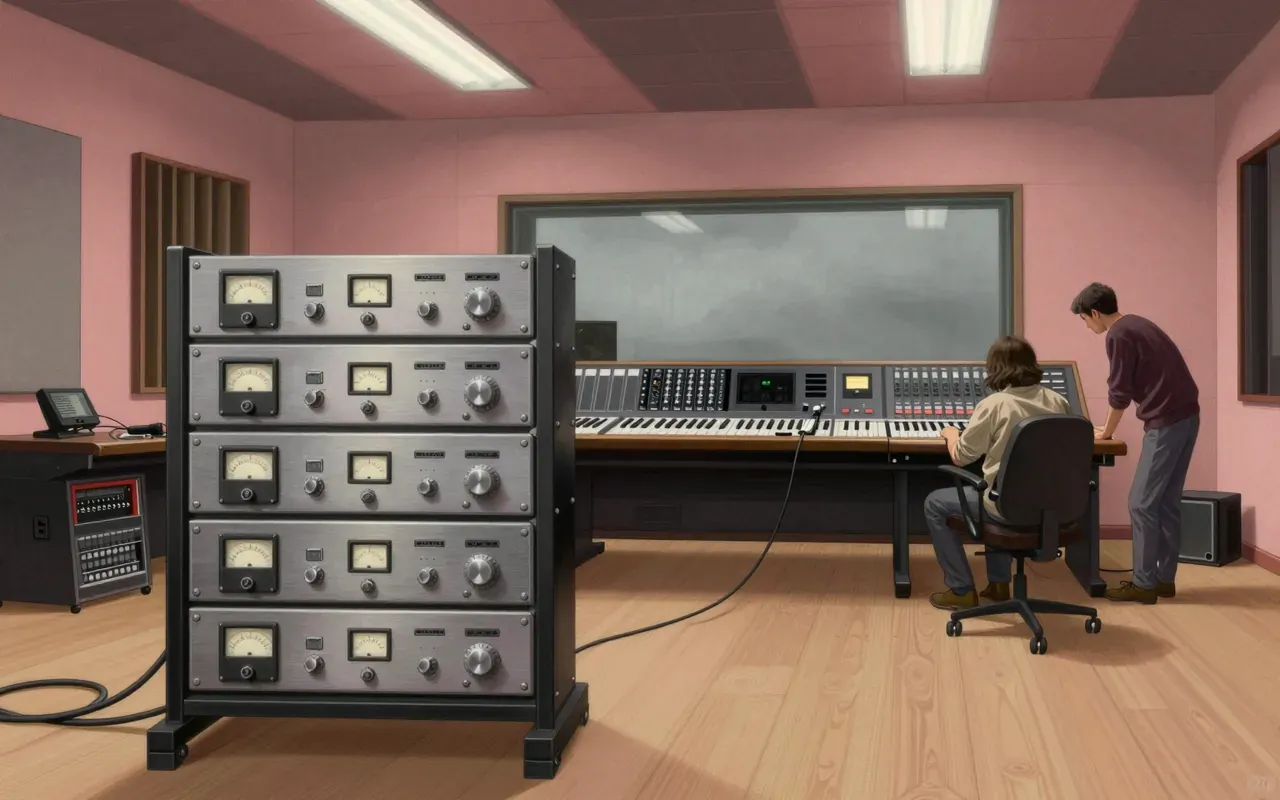
Its physical format is awkward for rack mounting. Multiple units require expensive additional hardware to stack securely.

What people made with it

Users apply it across full mixes, drum buses, vocals, and instruments — treating it as a go-to insert or group processor without source-specific hesitation.

Who should use it, and who should not

Studio engineers and mixers who value adaptable tonal shaping and trust a single unit across many signal types should use it. Those needing dense 1U rack layouts or transparent dynamics control should not.

Is it worth your time

It is worth your time if you need a versatile, characterful compressor that works across sources — but not if you prioritise compact rack integration or neutral transparency.


Same bench · Mixing & mastering4 of 110
Up next in Audio

Roland PR-100

Roland · 8:05

A plastic-bridged, no-electronics dreadnought built in China — functional, not expressive.

8:05