audiobriefs
9:14in productionCh. 1 · No Power, No Problem/ 9:14 · ceiling 15 min
Mixing & mastering · Studio & recording

Auratone 5C Super Sound Cube

Flat, punchy, and brutally incomplete — the Auratone 5C doesn’t tell you what your mix sounds like. It tells you what it *doesn’t* sound like.

The Auratone 5C is a passive monitor requiring an external amplifier. Its extremely flat response and limited frequency range make it useful for quick A/B checks — but its lack of low-end response rules it out for primary mixing. It does one thing well: revealing what a mix loses when stripped of bass and extension.

Chapters & takeaways4
  1. 0:44
    No Power, No Problem

    It’s passive: no amp, no power, no controls — just speaker terminals.

  2. 1:52
    Flat Where It Counts

    Extremely flat response within a narrow band — clear, punchy, listenable, but incomplete.

  3. 3:23
    No Bass, No Mix

    No usable low end — makes it useless as a primary mixing tool.

  4. 5:27
    A Reality Check, Not a Reference

    Built for A/B comparison and quick reality checks — not for shaping sound.

Worth your time?

Yes. Use the whole thing.

3.5/ 5
What works
  • delivering flat midrange clarity
  • revealing balance issues quickly
  • fitting in tight spaces
What does not
  • cover the full frequency spectrum
  • have enough low end for mixing
Use it if
  • engineers with full-range monitors
  • producers needing translation checks
Skip it if
  • anyone without a main monitoring system
  • those expecting bass response
The written brief1 min read

What it is and what it was built for

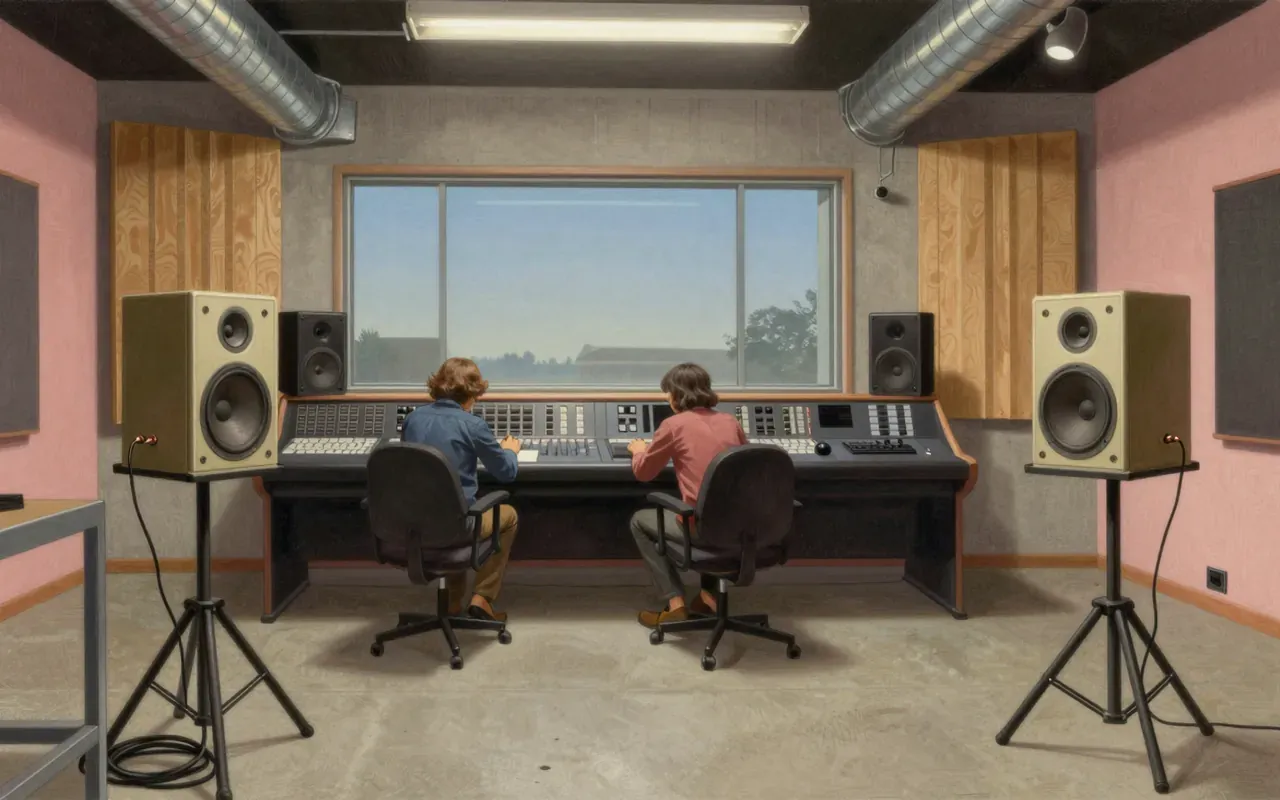
The Auratone 5C is a set of small, portable, passive studio monitors. It was built for A/B comparison and monitoring — not for final mixing, but for checking how a mix translates to consumer playback systems.

How it works, in terms a player would use

The Auratone 5C is a passive monitor. It needs an external power amplifier to operate. It has no built-in electronics, no volume control, no inputs beyond speaker-level connections.

What it does better than anything else

It delivers an extremely flat frequency response across its limited range. It gives immediate, uncoloured perspective on balance and clarity — better than most small nearfields at revealing midrange masking and vocal intelligibility.

What it does badly

It lacks sufficient low-end response for mixing. It does not cover the full frequency spectrum. It cannot reproduce bass information reliably.

What people made with it

People used it to gain perspective on mixes. They used it for monitoring and listening. No specific people, projects, or recordings are named in the source material.

Who should use it, and who should not

Audio engineers and producers who already have full-range monitors should use it. Anyone relying on it as their only monitor should not.

Is it worth your time

It is worth your time if you need a fast, flat, low-fidelity reference for mix translation — not as a primary monitor, but as a reality check. It is not worth your time if you expect full-range playback or hands-on control.
Same bench · Mixing & mastering4 of 110
Up next in Audio

Avalon Design Avalon AD2022

Avalon Design · 8:36

A preamp that refuses to get in the way — and therefore refuses to help you decide.

8:36