What it is and what it was built for
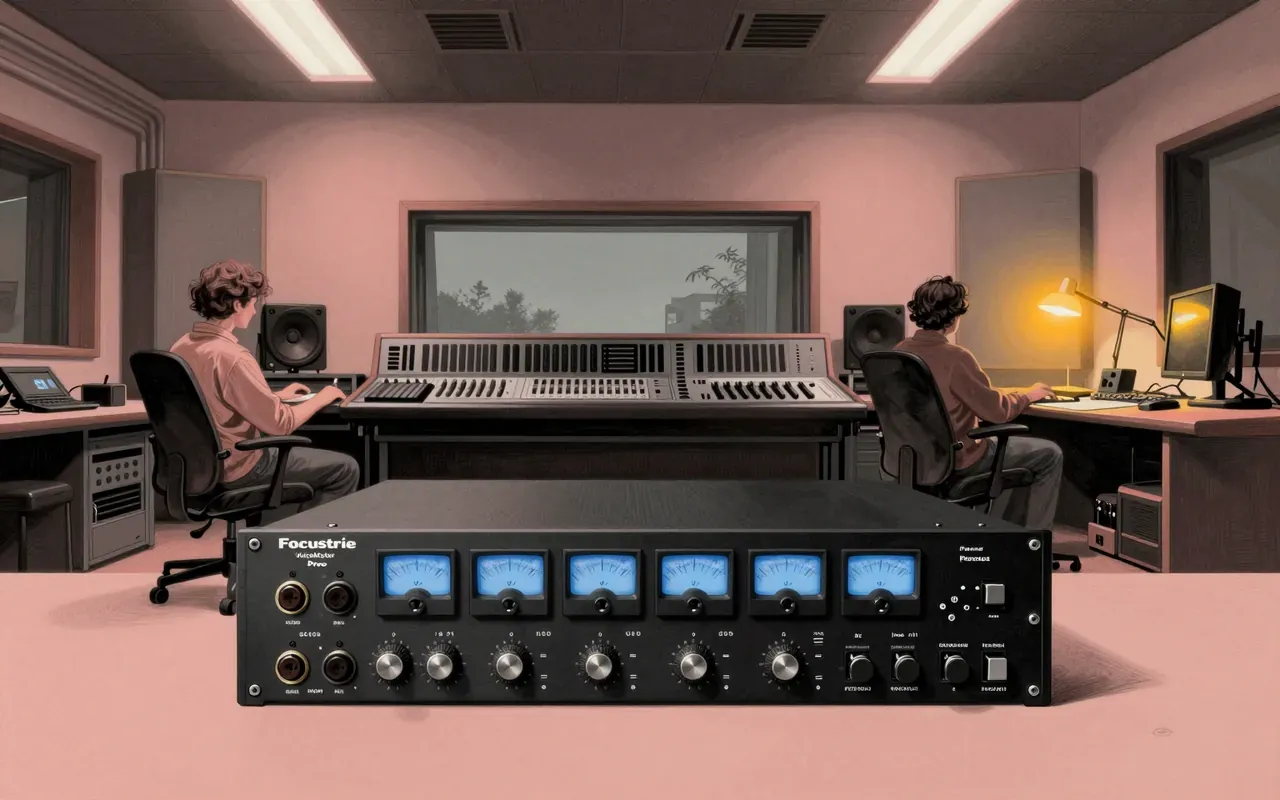
The Focusrite VoiceMaster Pro is a rack-mount channel strip built for vocal recording and tracking. It bundles a discrete Class A preamp, optical compressor and expander/gate, voice-optimised EQ, ISA-series de-esser, vintage harmonic generator, FET-based tube sound module, and zero-latency headphone monitoring.
How it works, in terms a player would use
It is a rack-mounted channel strip with XLR I/O, front-panel controls for every function, and per-section bypass switches. It has no rear-panel switches for phantom power or input type. Eight VU meters give real-time level feedback. The signal path runs preamp → EQ → de-esser → compressor → expander/gate → harmonic generator → tube module, with zero-latency headphone monitoring and optional 24-bit/96-kHz digital output.
What it does better than anything else
Its optical compressor is transparent and effective—more so than many plug-ins of its era—and its ISA-derived de-esser delivers targeted sibilance control without artefacts. The tube simulation adds subtle presence without harshness.
What it does badly
The voice-centred EQ is functional but less musical than high-end alternatives like the UAD-1 Pultec emulation. The preamp is slightly softer in the highs compared to the Mackie VLZ, limiting air and definition on bright sources.
What people made with it
No verified examples of specific recordings, releases or artists are given in the source material.
Who should use it, and who should not
Vocalists and home studio engineers who want a single-box solution for tracking vocals with minimal latency and consistent tonal shaping. Not for engineers who rely on surgical EQ or high-frequency clarity as a primary tool.
Is it worth your time
Yes—if you need a compact, all-in-one vocal chain with transparent compression and reliable monitoring at under €700. No—if you demand musical EQ character or high-frequency precision from the preamp.