It doesn’t shape sound — it refuses to. That’s its strength and its limit.
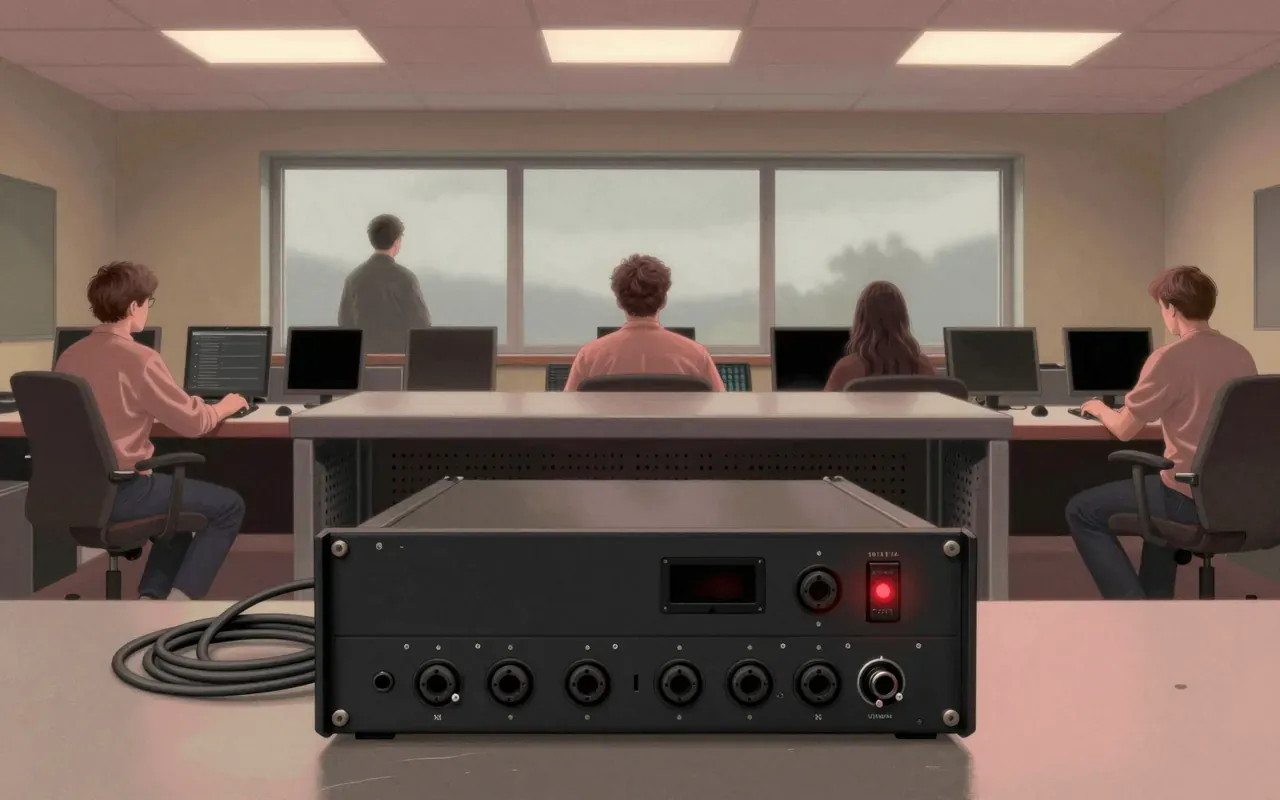
The Millennia HV-3D is a solid-state mic preamp built for fidelity, not flavour. It gives you three transparent gain stages per channel, 1.5 dB stepped gain, phantom power, no phase flip, and eight channels in two rack units — all on internal power. It excels on strings, voice, and piano. It fails on distorted guitar and bright cymbals. It is not subtle. It is literal.
Gain is stepped in precise 1.5 dB increments — a mastering-grade feature, standard here.
2:37
Three Stages, Not One Pushed Far
Three separate circuits deliver three transparent gain stages — not one stage pushed hard.
4:07
No Tricks in the Path
Phantom power per channel. No phase inversion. Signal path stays literal.
5:13
Dense, Self-Contained, Rack-Efficient
Eight channels fit into two units. No external power supply required.
Worth your time?
Yes. Use the whole thing.
4/ 5
What works
on delicate sources
in dense rack setups
where phase integrity matters
What does not
add colour
compress
distort
enhance transients
Use it if
classical engineers
acoustic session recordists
Skip it if
rock producers
hip-hop beat makers
metal engineers
The written brief1 min read
What it is and what it was built for
The Millennia HV-3D is a solid-state microphone preamplifier built for acoustic and classical recording, available in two-, four-, or eight-channel rack-mount configurations.
How it works, in terms a player would use
It uses transistor circuitry with XLR inputs and gain knobs that click in precise 1.5 dB steps. Each channel supplies phantom power and preserves phase. It runs on internal power — no external brick or adapter needed.
What it does better than anything else
It delivers three distinct, highly transparent gain stages in a single unit — more than most high-end preamps offer per channel.
What it does badly
It flattens electric guitars and cymbals. Its transparency becomes unflattering where harmonic complexity or transient bite is desired.
What people made with it
The sources do not state what people made with it.
Who should use it, and who should not
Classical engineers and acoustic session recordists should use it. Rock, metal, and hip-hop producers who rely on colouration or aggressive transients should not.
Is it worth your time
Yes — if you need eight pristine, uncoloured preamp channels in minimal rack space and can accept its neutrality as a constraint, not a flaw.