What it is and what it was built for
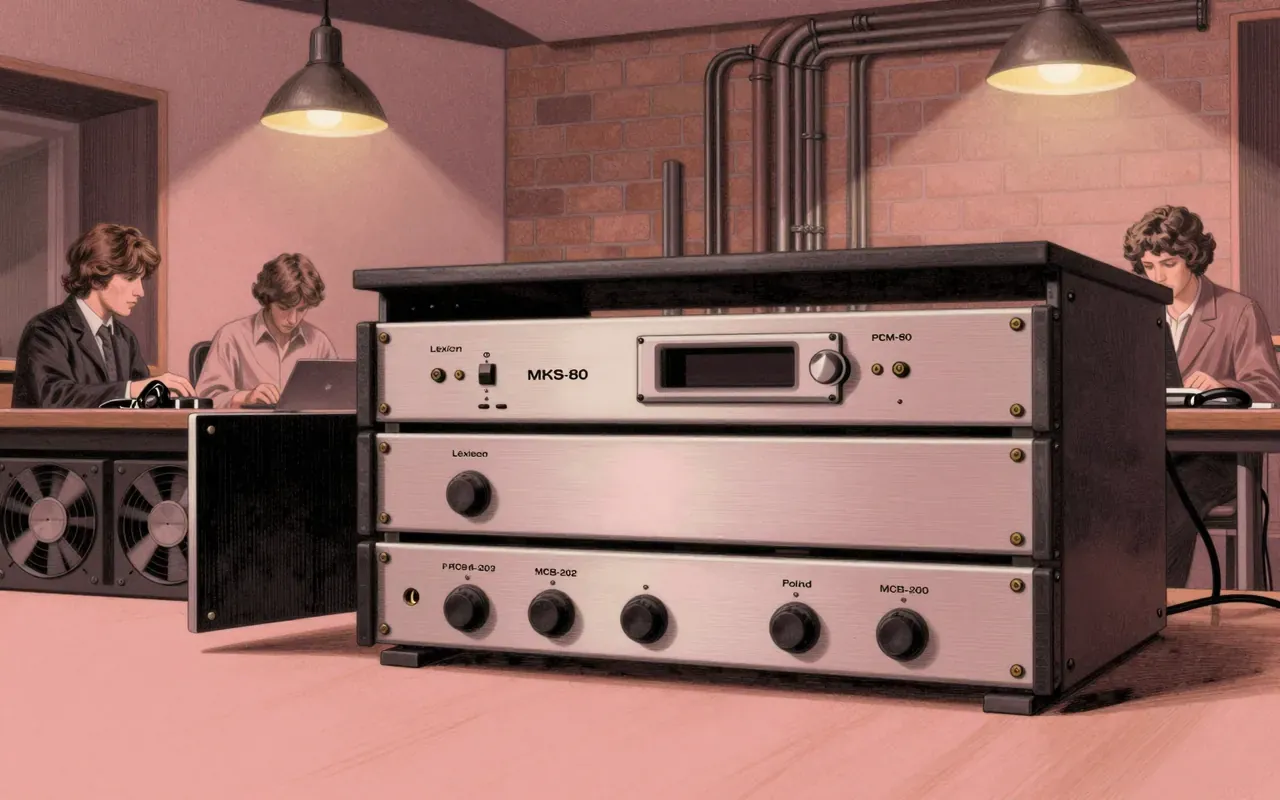
The Roland MKS-70 is a 1986 2U rack-mount analog subtractive synthesizer module. It was built to bring the JX-10’s sound into studio racks without a keyboard — combining two JX-8P engines for 12-voice polyphony and stereo tone separation.
How it works, in terms a player would use
It runs two JX-8P synth engines side by side. Each voice uses two DCOs, one VCF, one VCA and two envelope generators. Patches combine two of 64 tones. Editing happens via front-panel buttons and a single data slider — slow and tedious without the PG-800 Programmer or a PC with v1.08 firmware. Chorus is off, slow or fast. Delay repeats voices with chase-play. It has three stereo outputs: one per tone and one mix.
What it does better than anything else
It delivers the JX-10’s dual-tone architecture in a rack with full SysEx control — something the JX-10P keyboard lacks. Its two independent tone engines, each with six voices, give richer layering than most 12-voice synths of its size and era.
What it does badly
Front-panel editing is cumbersome and tedious. It has no arpeggiator or sequencer. It lacks a keyboard. You cannot adjust patches meaningfully without external hardware or software.
What people made with it
Modern studios use it for warm analog pads and basses. Its layered tones and chorus support lush, evolving textures — especially when routed through its separate tone outputs.
Who should use it, and who should not
Studio engineers and producers who want hands-off, patch-based analog layering in a rack, and who already own or can access a PG-800 or PC editor. Not for live performers needing instant control or keyboard players wanting an all-in-one unit.
Is it worth your time
Yes — if you need warm, layered analog pads and basses in a rack, and can route around its editing limits. No — if you want real-time tweaking, arpeggiation, or keyboard control built in.