audiobriefs
9:00in productionCh. 1 · Battery-Backed Memory/ 9:00 · ceiling 15 min
Studio & recording · Instruments

Roland MSQ-700

It never forgets a note—and it won’t let you edit one either.

The Roland MSQ-700 is an 8-track MIDI sequencer with lithium battery-backed memory, step-time and real-time recording, punch-in, merge, quantization, chaining, and analog tape sync. It stores 6500 notes per track. It has no screen, no file export, no velocity editing, and no USB.

Chapters & takeaways4
  1. 0:48
    Battery-Backed Memory

    Memory stays alive for decades—no floppy disks, no crashes, no backup rituals.

  2. 2:11
    Eight Tracks, Zero Compromise

    Step-time, real-time, punch-in, merge, quantize, chain—all on a single panel with physical buttons.

  3. 4:00
    Syncs to Tape

    It locks to tape machines—not just MIDI gear—making it a bridge between digital timing and analog recording.

  4. 5:32
    No Display, No Distraction

    You build sequences by doing, not clicking—no screen, no menus, no abstraction.

Worth your time?

Yes. Use the whole thing.

3.5/ 5
What works
  • audio/studio-and-recording
  • audio/instruments
  • audio/keyboards-and-organs
What does not
  • audio/daws-and-software
  • audio/effects-and-pedals
  • audio/guitars-and-amps
  • audio/headphones-and-hi-fi
Use it if
  • audio/studio-and-recording
  • audio/instruments
  • audio/keyboards-and-organs
Skip it if
  • audio/dj-gear
  • audio/mixing-and-mastering
  • audio/sound-design-and-sampling
The written brief1 min read

What it is and what it was built for

The Roland MSQ-700 is an 8-track desktop MIDI sequencer built for live sequencing and tape-based studio workflows in the late 1980s.

How it works, in terms a player would use

It records MIDI notes across eight tracks using step-time or real-time input. Punch-in lets you overwrite sections. Merge layers new parts over existing sequences. Quantization tightens timing. Chaining links sequences end-to-end. Sync outputs lock to MIDI Clock, DIN Sync, or analog tape machines via its sync function.

What it does better than anything else

It retains sequence memory reliably via lithium battery—no floppy disk swaps, no corrupted files, no boot delays. That memory has run unchanged since at least 1997.

What it does badly

It has no visual display for editing note data. You cannot edit velocity, controller data, or pitch bend beyond basic track-level adjustments. It offers no undo, no copy/paste between tracks, and no file export.

What people made with it

Users recorded full arrangements onto 8-track analog tape machines like the Yamaha 8-track and Fostex Model 80, syncing the MSQ-700 directly to tape via its analog sync function.

Who should use it, and who should not

A hardware-focused producer building sequences for analog tape or vintage MIDI rigs should use it. Anyone needing deep parameter editing, recallable scenes, or computer integration should not.

Is it worth your time

Yes—if you need a compact, battery-backed sequencer that boots instantly and runs without floppy disks or software. No—if you require USB, editing on screen, or integration with modern DAWs.
Same bench · Studio & recording4 of 146
8:30
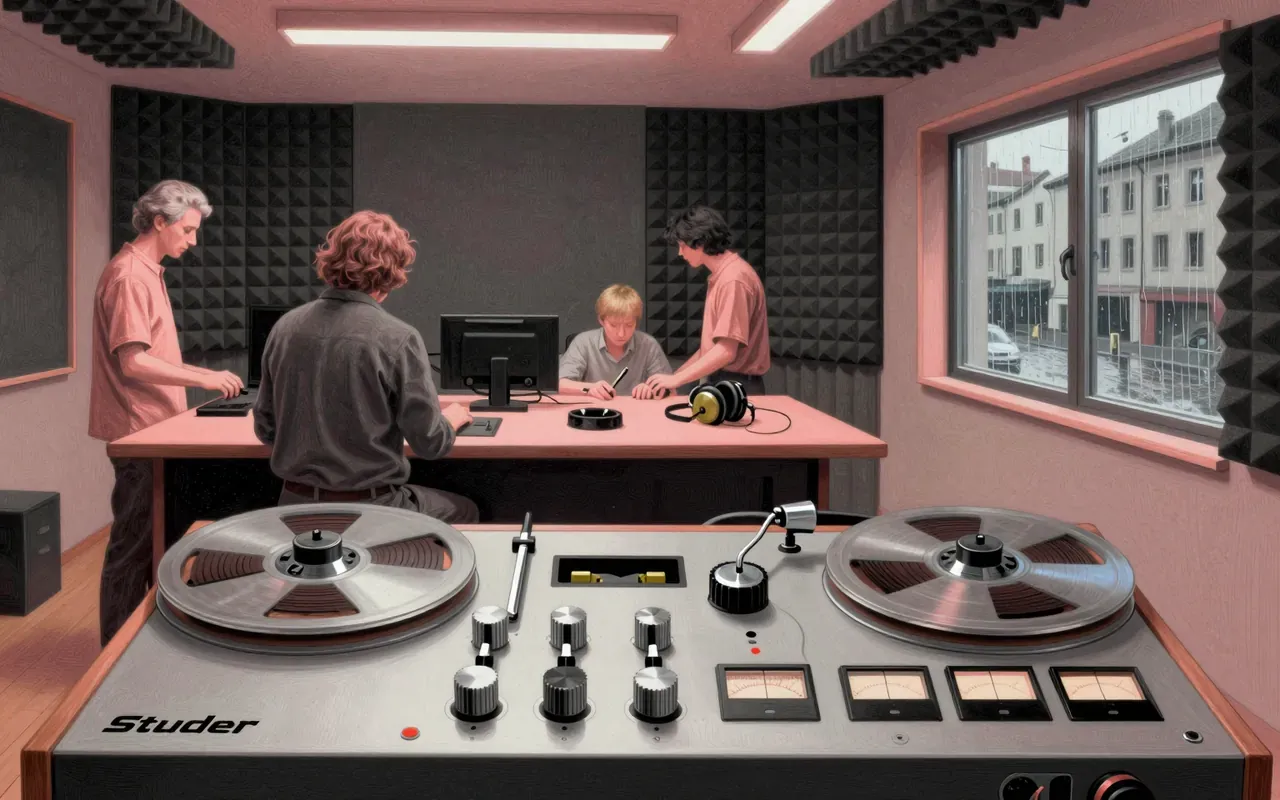
Studer A80StuderThe Studer A80 is a tape recorder that shapes sound by softening transients and adding organic saturation. It works only when configured precisely: 19/38 or 38/76 cm/s, 1/2-inch tape, GP9-aligned heads. It excels in rock. It fails in dance, house and electro. It is not flexible. It is not neutral. It is a deliberate, physical constraint.
8:50
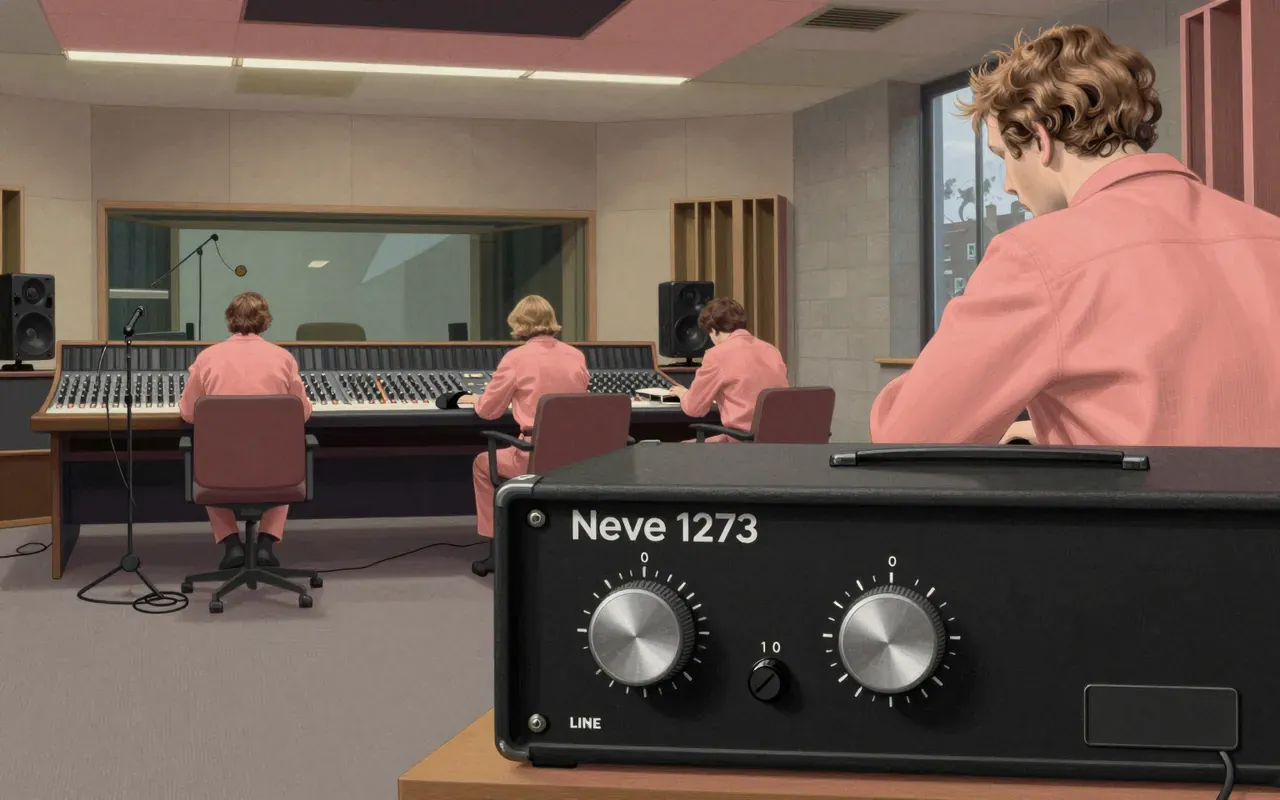
Neve 1272 Line AmpNeveThe Neve 1272 is a solid-state line amplifier. It does not accept microphone signals. It adds clean, transformer-coupled gain to line-level sources. It offers no input flexibility, no EQ, no saturation controls. Its value lies in its place in a fixed-path studio chain — not in versatility.
9:21
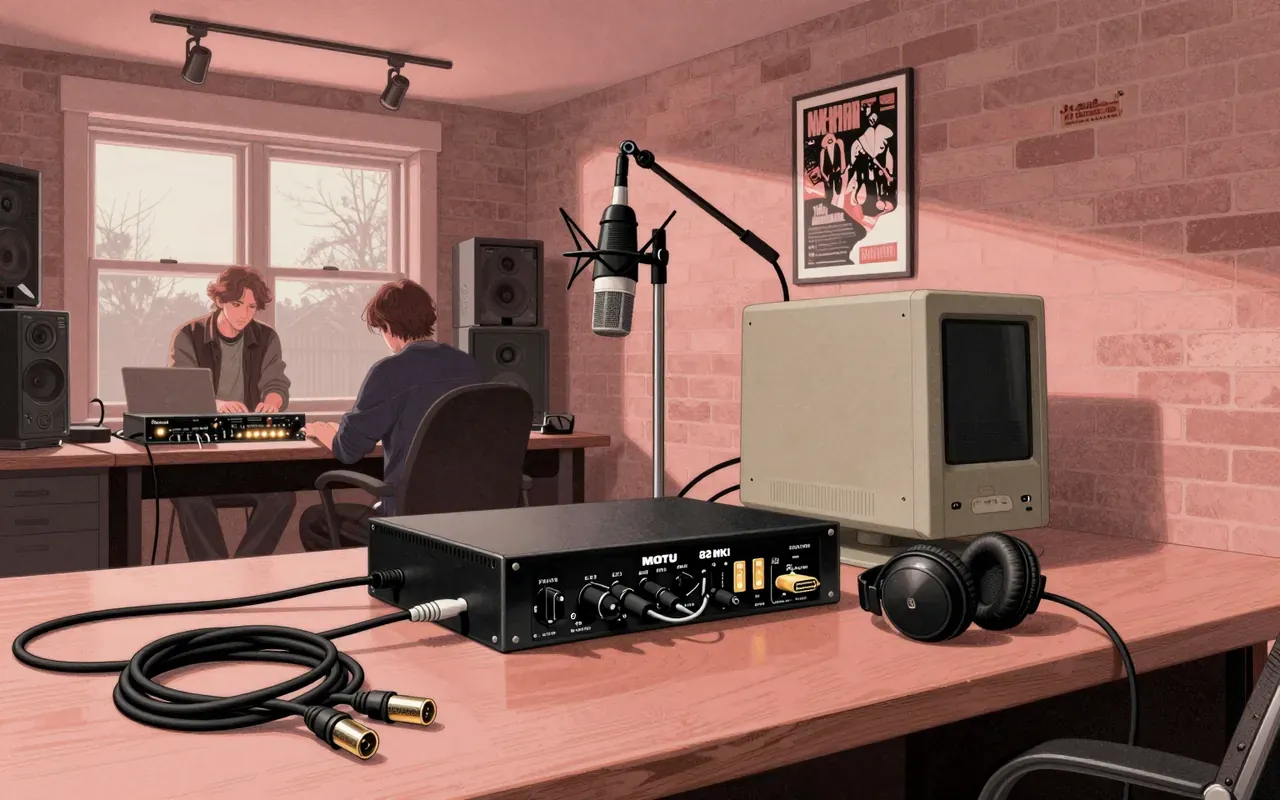
MOTU 828MOTUThe MOTU 828 MKI is a discontinued FireWire audio interface introduced around 2001–2002. It offered two mic preamps with phantom power and XLR/1/4" inputs, six additional balanced line inputs, eight balanced outputs, ADAT and optical I/O, 24-bit 64x/128x oversampling converters, and front-panel monitoring controls. Priced at $800 at launch, it was considered expensive but highly stable and easy to install. It remains functional for years in typical home studio use but is no longer sold and has been succeeded by newer models including the 828 (2024).
9:48
Digidesign 888/24 I/ODigidesignThe Digidesign 888/24 is a Pro Tools–only analog-to-digital converter with eight XLR I/O channels and four AES-EBU digital paths. It delivers clean conversion, solid build quality, and low used-market cost—but only functions inside a compatible TDM system. No standalone mode. No MIDI. No monitor control. No software editor. It is a tool, not a platform.
Up next in Audio

Otari MTR-10

Otari · 8:20

An analog multitrack recorder with no specs is not a tool — it's a question mark on tape.

8:20