audiobriefs
10:14in productionCh. 1 · The Master Volume Breakthrough/ 10:14 · ceiling 15 min
Guitars & amps

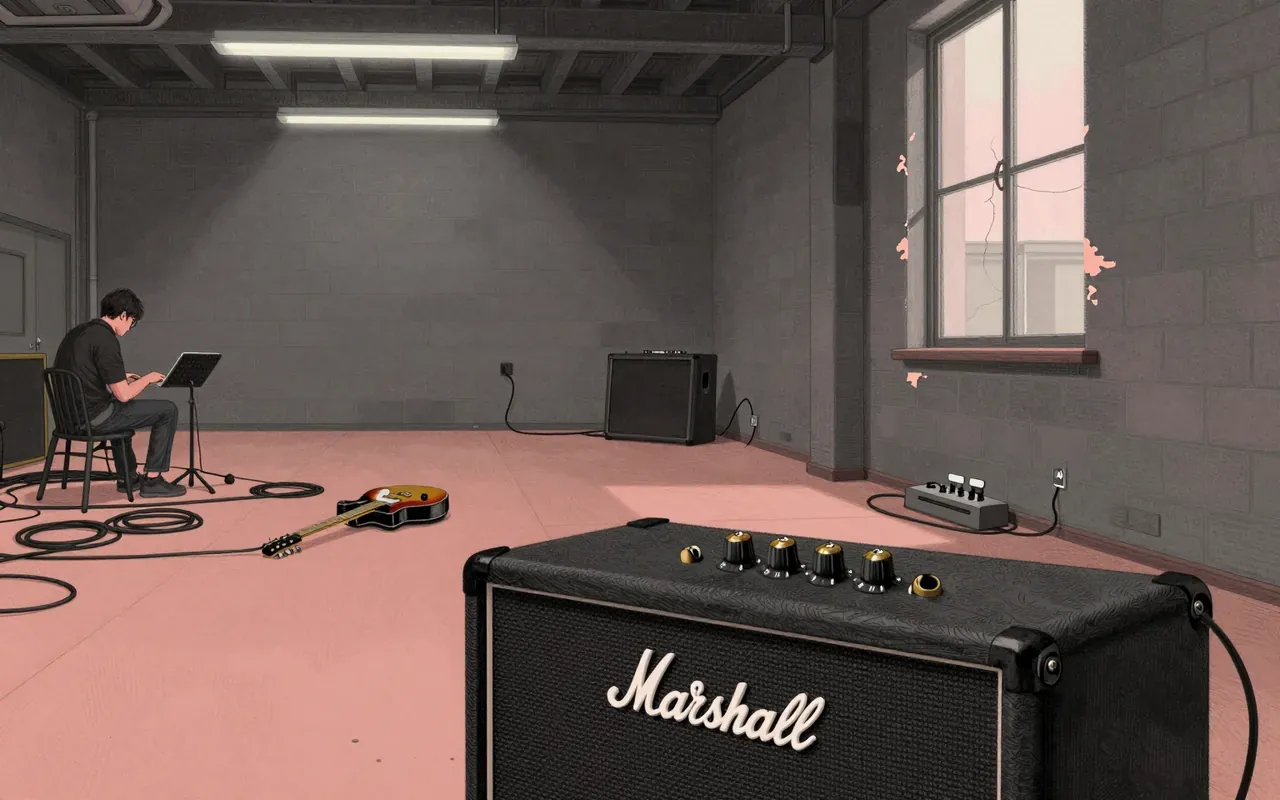
Marshall JCM800 2203

The JCM800 2203 doesn’t clean up — it leans in. Loud, rude, and unapologetically mid-heavy.

The Marshall 2203 JCM800 Master Volume Lead is a tube guitar amp head introduced in 1981 and produced until 1989. It delivers aggressive, mid-forward distortion at manageable stage volumes — but offers no clean headroom, no effects loop, and no modern conveniences.

Chapters & takeaways4
  1. 1:02
    The Master Volume Breakthrough

    Launched in 1981, it was Marshall’s first widely adopted master-volume solution for high-gain rock.

  2. 2:44
    All-Valve, No Compromise

    It is a pure tube head — no solid-state components in the signal path, no digital modelling, no presets.

  3. 3:47
    The Amp That Defined a Decade

    Its production run (1981–1989) coincided with the rise of 80s hard rock and thrash metal.

  4. 5:29
    No Safety Net

    Two channels, one master volume, no effects loop — its simplicity forces direct interaction with the valves.

Worth your time?

Yes. Use the whole thing.

4/ 5
What works
  • high-gain distortion at lower volumes
  • cutting midrange presence
  • immediate valve response
What does not
  • clean up well
  • suit quiet environments
  • offer flexible EQ or effects integration
Use it if
  • loud rock guitarists
  • players who prefer valve responsiveness over feature sets
Skip it if
  • bedroom players
  • jazz guitarists
  • pedalboard-heavy users
The written brief1 min read

What it is and what it was built for

The Marshall 2203 JCM800 Master Volume Lead is a tube guitar amp head built for high-gain rock guitarists who needed distortion without deafening volume.

How it works, in terms a player would use

It is a tube guitar amp head with master volume control. It has two channels: clean and lead. The lead channel delivers high-gain distortion at lower volumes than earlier Marshalls.

What it does better than anything else

It delivers saturated, harmonically rich overdrive with immediate response and strong midrange presence — more consistently and at lower stage volumes than the non-master-volume Plexis it replaced.

What it does badly

It lacks clean headroom. The clean channel breaks up early. It offers no effects loop, no reverb, no EQ beyond bass/mid/treble knobs, and no footswitchable channel switching in the original design.

What people made with it

Players used it to define hard rock and heavy metal tones in the 1980s. Its sound appears on recordings where loud, cutting, aggressive guitar tones were required.

Who should use it, and who should not

It suits guitarists who play loud, use pedals minimally, and want raw, responsive valve distortion. It does not suit bedroom players, jazz guitarists, or those needing versatile clean tones or modern features.

Is it worth your time

It is worth your time if you need a loud, aggressive, mid-forward rock tone that cuts through a band mix. It is not worth your time if you need clean headroom, tight low-end control, or silent recording options.
Same bench · Guitars & amps4 of 147
9:06
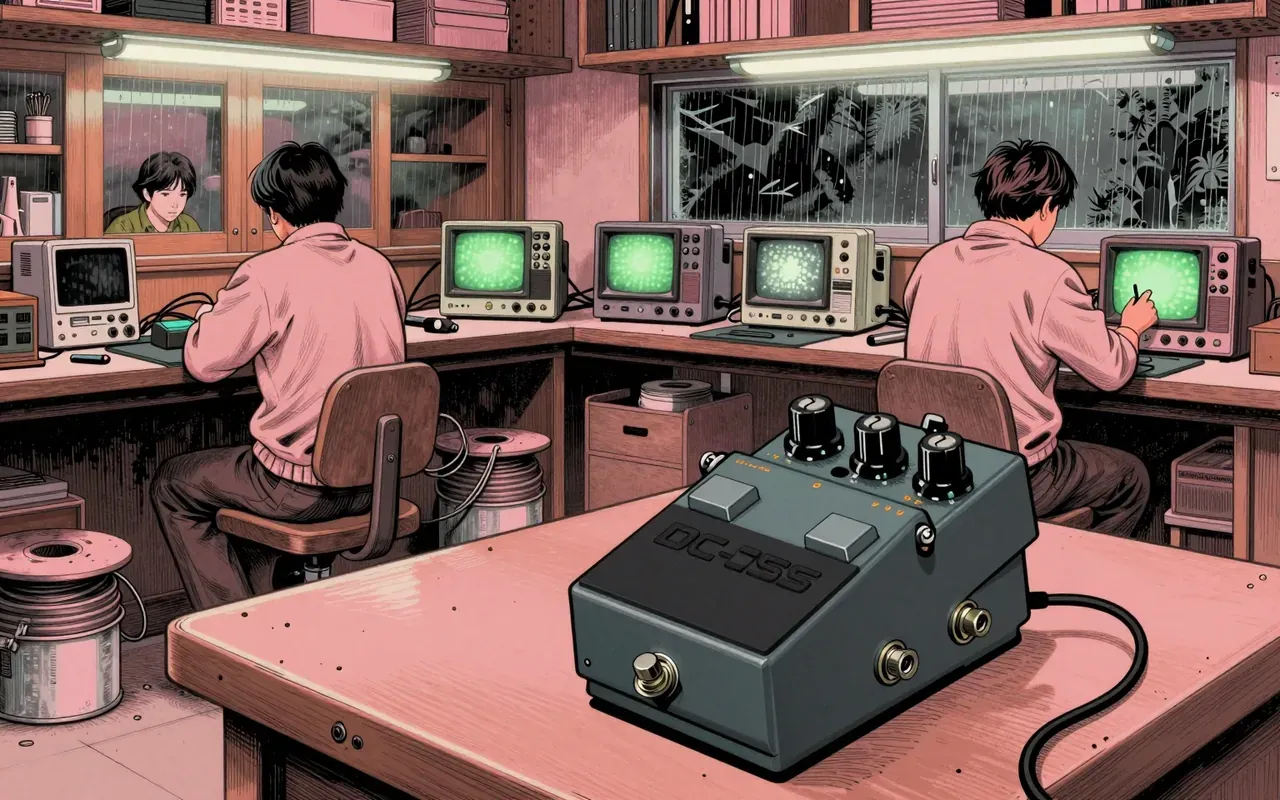
Boss DC-2 Dimension CBossThe Boss DC-2 Dimension C is a fixed-preset stereo analog chorus pedal made from 1985 to 1989. It offers five distinct chorus tones — one automatic, four selected by buttons — with no user controls. It reproduces the Roland SDD-320 Dimension D’s spatial effect: thickness, depth and width for a 3D sound. Stereo outputs widen the effect. Built-in noise reduction lowers hiss. It cannot be adjusted mid-performance. It belongs in a rig where consistency matters more than flexibility.
9:18
Fuzz FaceArbiter · 1966The Fuzz Face is a minimal, high-character fuzz pedal built for affordability—not precision. Its two-knob interface and six-component design deliver immediate, touch-sensitive distortion, especially with NKT275 germanium transistors. But its crude biasing makes germanium units thermally unstable. Silicon versions trade warmth for harshness and reliability. It excels at organic, swelling fuzz tones shaped by the player—not the pedal.
9:58
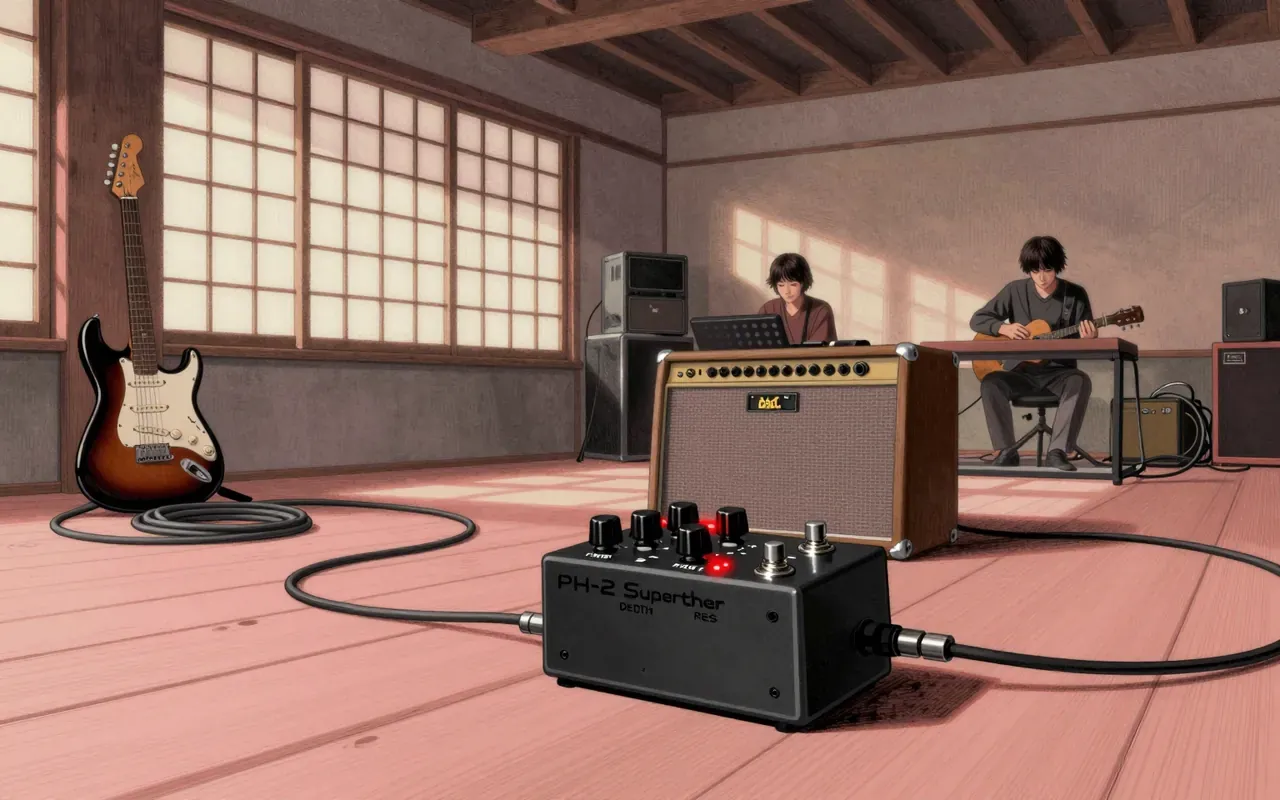
Boss PH-2 Super PhaserBossThe Boss PH-2 Super Phaser is a discontinued analog guitar stompbox pedal built from 1984 to 2001. It adds a rate knob and two-mode switch to the PH-1 lineage. Mode 1 uses 10-step phasing. Mode 2 uses 12-step phasing. Controls are Rate, Depth, Res, and a 2-way Mode switch. LFO speed ranges from 100 ms to 14 s. Input impedance is 1 Mohm (FET). Residual noise is -80 dBm (IHF-A). Current draw is 20 mA at 9 V DC. Early Incubus used it for its distinctive ‘in-your-face’ phase character—especially in mode 2.
10:29
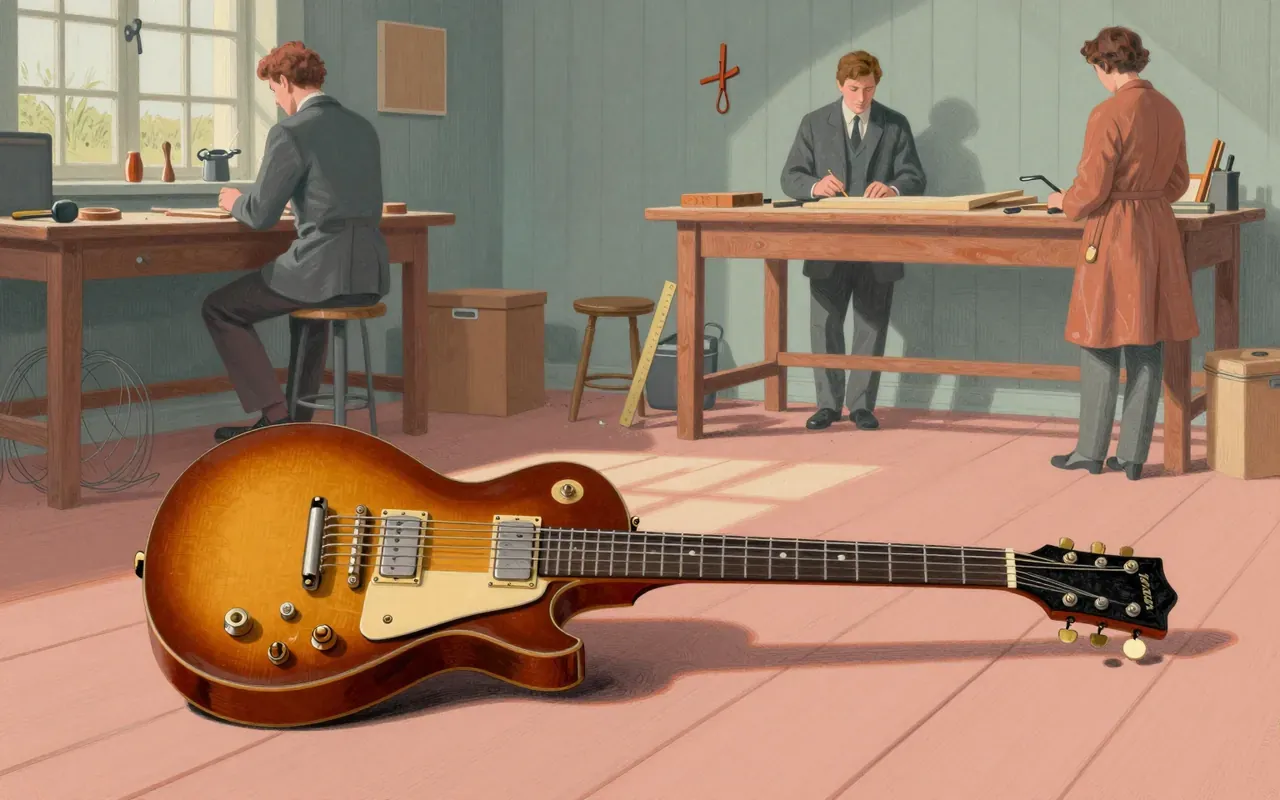
Gibson Les PaulGibson · 1952A physically dense, sonically authoritative solid-body guitar built for sustain and midrange focus — not speed or lightness.
Up next in Audio

Roland Juno-2 / Alpha Juno-2

Roland · 8:02

A studio synth that gives you analog filters and velocity response — but locks you into one sound at a time.

8:02