What it is and what it was built for
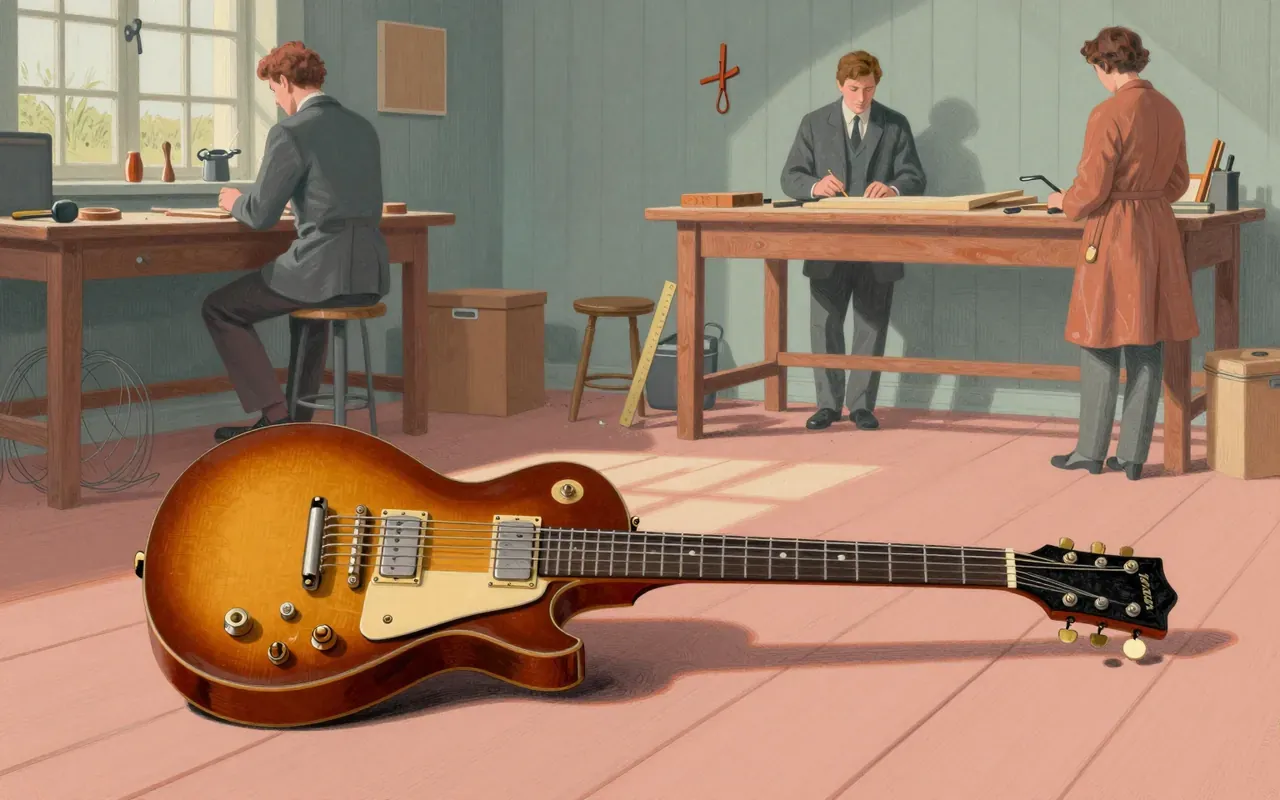
A solid-body electric guitar built for sustain, tonal density, and stage projection. Designed in 1952 by John Huis and team with input from Les Paul, it was meant to compete with Fender’s thinner, brighter instruments by offering warmth, stability, and acoustic-like resonance.
How it works, in terms a player would use
It has two pickups — P-90s until 1957, then humbuckers — each with its own volume and tone control. The set-in mahogany neck gives sustain. The stoptail bridge anchors strings directly to the body. The carved maple top sits over solid mahogany. The single cutaway gives access to the upper frets, but not as freely as double-cut designs.
What it does better than anything else
It sustains longer than most solid-body guitars of its era. The mahogany-and-maple combination delivers a thick, focused midrange with tight low-end definition. The set-in neck improves resonance transfer and note-to-note clarity under distortion.
What it does badly
It is heavy. The single cutaway limits upper-fret reach. The stoptail bridge makes string changes slower than with a tremolo system. It feeds back more readily than lighter, hollower guitars when cranked.
What people made with it
Players used it to define hard rock rhythm tones and lead sustain in the late 1960s and 1970s. Its 1958–1960 sunburst models became reference points for blues-rock lead articulation — though they sold poorly on release.
Who should use it, and who should not
Players who value rich harmonic decay, consistent response under overdrive, and tactile feedback from a dense, resonant body. Not for players who prioritise weight savings, ergonomic upper-fret access, or quick string changes.
Is it worth your time
Yes — if you want a guitar that prioritises sustain, warmth and physical presence over agility or lightness. No — if you need comfort for long sessions, easy high-fret access, or resistance to feedback at high gain.