What it is and what it was built for
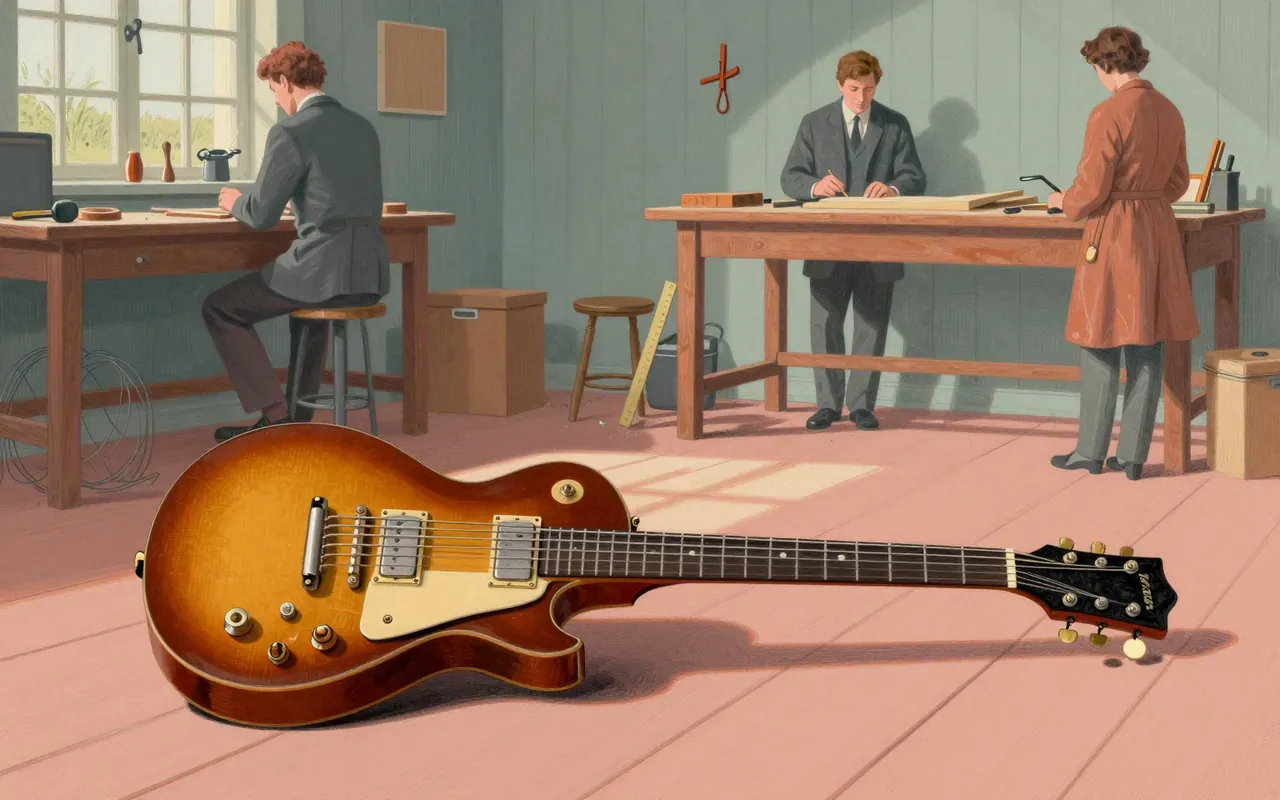
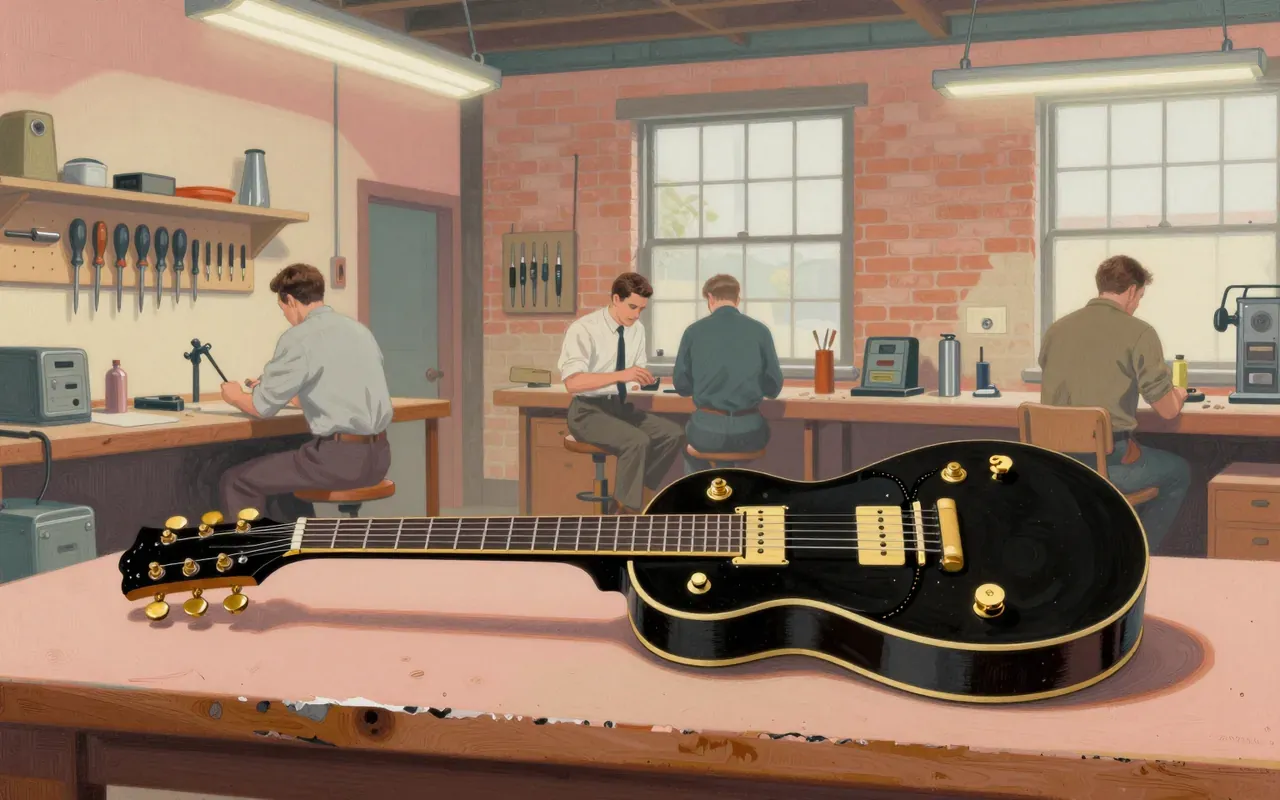
A luxury variant of the Gibson Les Paul, developed in 1953 at Les Paul’s request for a black, tuxedo-like instrument. It was built to project prestige and sonic authority—not versatility or accessibility.
How it works, in terms a player would use
It is a solid-body electric guitar with fixed bridge and stop tailpiece. The ABR-1 bridge appeared in 1954. It uses passive magnetic pickups: PAFs from mid-1957. Tuners changed from Kluson to Grover Rotomatics by 1958. It has volume and tone controls, a three-way pickup selector, and a double-cutaway body until 1963.
What it does better than anything else
It delivers dense, focused sustain and tight low-end response from its mahogany body and glued-in neck. The black finish and gold hardware establish immediate visual gravitas. The ABR-1 bridge improves string vibration transfer over earlier designs.
What it does badly
It does not accommodate extended playing sessions comfortably. Its weight and lack of contoured body cause fatigue. It offers no coil-splitting, no active circuitry, no vibrato system. It cannot adapt to tonal demands beyond what its two PAFs and passive controls allow.
What people made with it
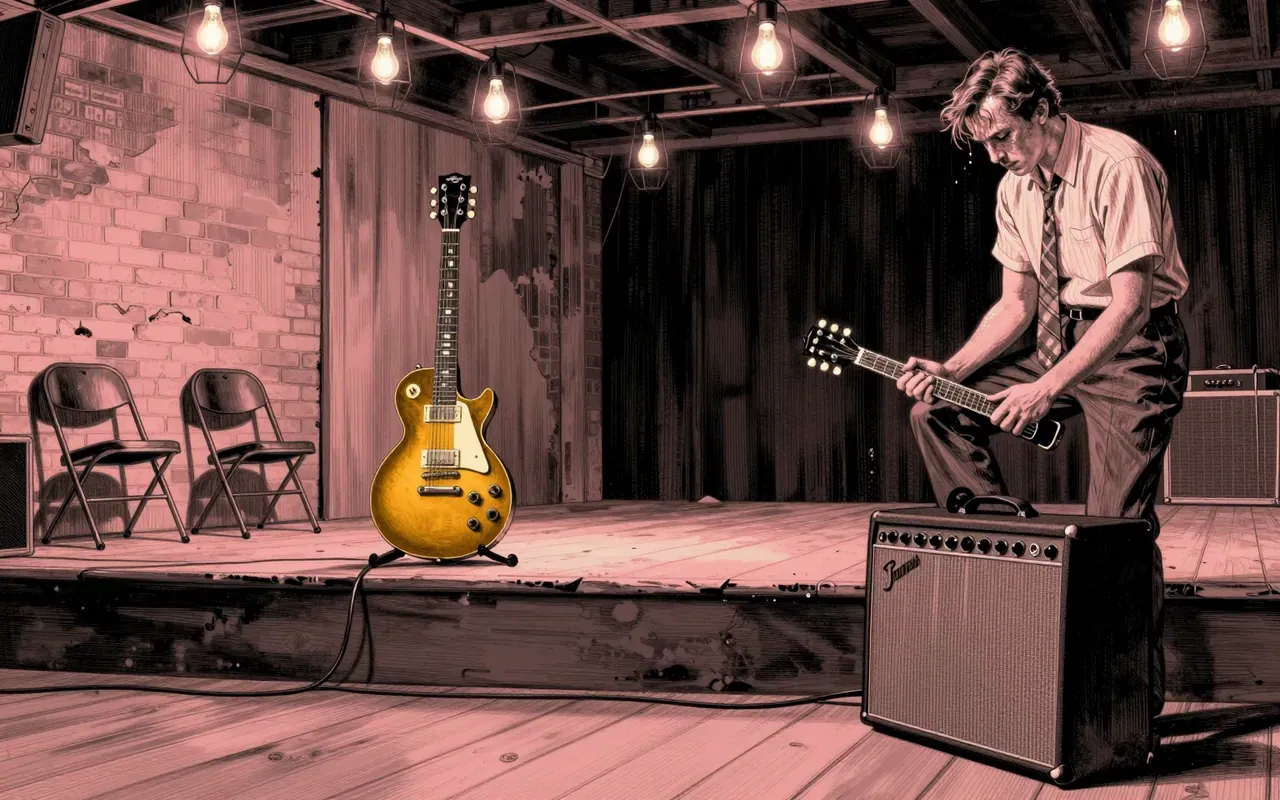
Players used it for jazz, blues, and early rock—genres where clarity, note definition, and stage presence mattered more than sonic flexibility or physical ease.
Who should use it, and who should not
A player who values historical lineage, tactile solidity, and unambiguous tonal character—and who accepts its physical heft and fixed sonic architecture. Not for players who prioritise portability, modularity, or tonal variety.
Is it worth your time
Yes—if you need a black, high-spec Les Paul built for sustain, clarity and visual authority on stage. No—if you need lightweight ergonomics, modern electronics, or a guitar that evolves beyond its 1950s signal path.