What it is and what it was built for
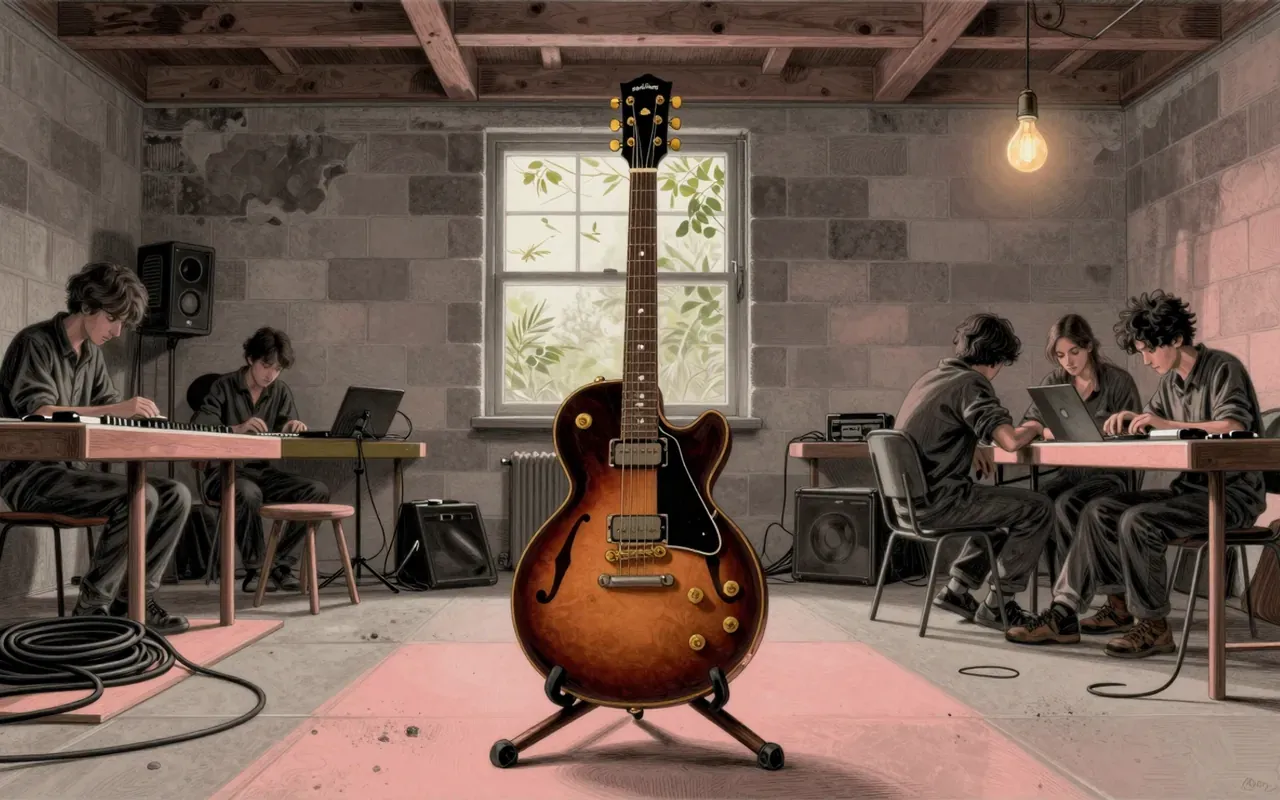
The Gibson ES-345 is a semi-hollow electric guitar introduced in 1959. It was built to bridge jazz guitar tradition and solid-body practicality — using a maple block to reduce feedback while preserving acoustic character.
How it works, in terms a player would use
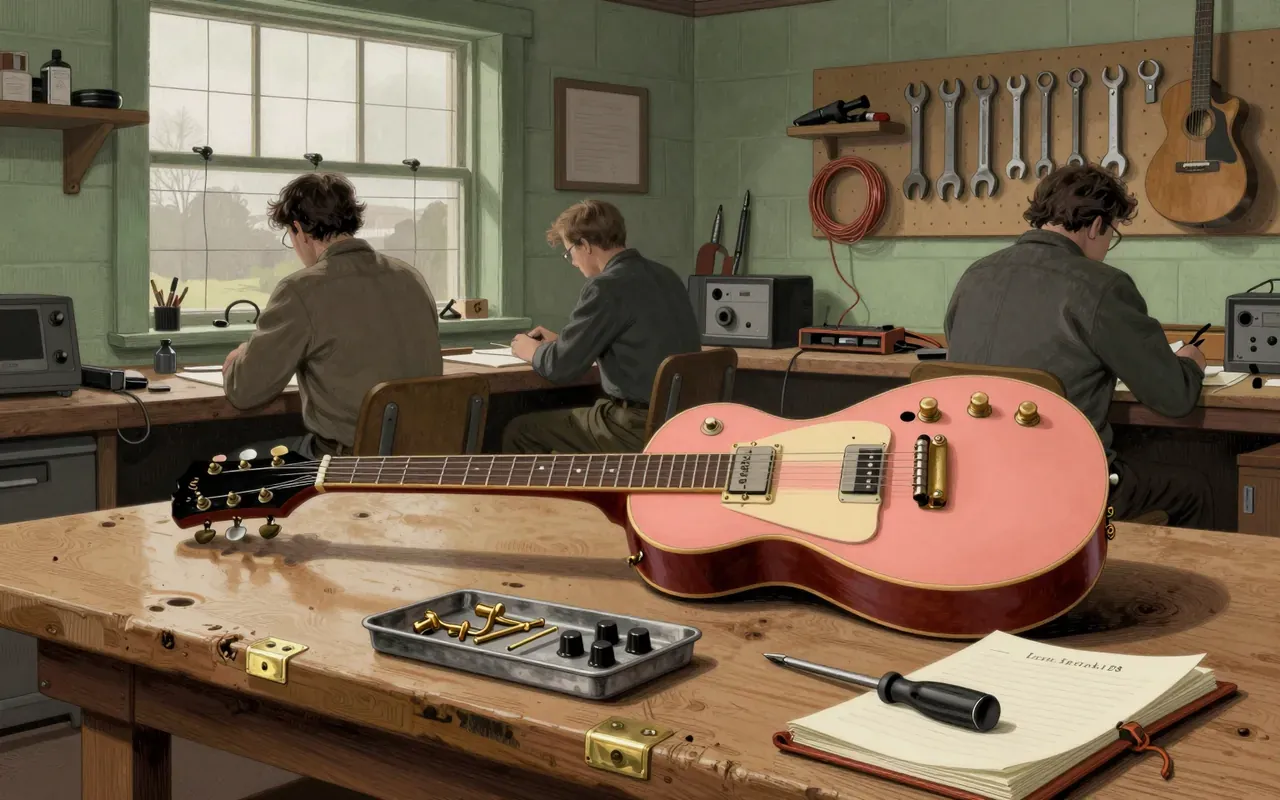
It has a semi-hollow body with a solid maple center block running from the strap button to the neck joint. It uses dual humbuckers, often wired in stereo, and includes a Varitone switch that alters tone via capacitor-based filtering. The controls are volume, tone, and Varitone selector — all mounted on the top edge of the body.
What it does better than anything else
It delivers warm, articulate jazz tone with more sustain and less acoustic bloom than a full hollow-body, while retaining more resonance and complexity than a solid-body. Nothing else blends those traits with this control layout and physical balance.
What it does badly
It does not suppress all feedback at high stage volumes. The Varitone circuit muffles highs and can thin the signal when engaged. Stereo wiring requires two amps or a splitter, adding complexity with no onboard mono/stereo toggle.
What people made with it
Players used it for jazz, blues, and early rock — leveraging its clean headroom, warm decay, and Varitone’s mid-scooped voicings. Its stereo output enabled spatial effects before pedalboards existed.
Who should use it, and who should not
It suits players who prioritise tonal nuance over convenience, and who play genres where note definition, dynamic response, and organic decay matter most. It is not for players who avoid weight, dislike top-mounted controls, or need aggressive distortion without modification.
Is it worth your time
Yes — if you need feedback-resistant jazz tone with solid-body punch and want hands-on tonal shaping without pedals. No — if you prefer simplicity, single-coil clarity, or modern high-gain response.