What it is and what it was built for
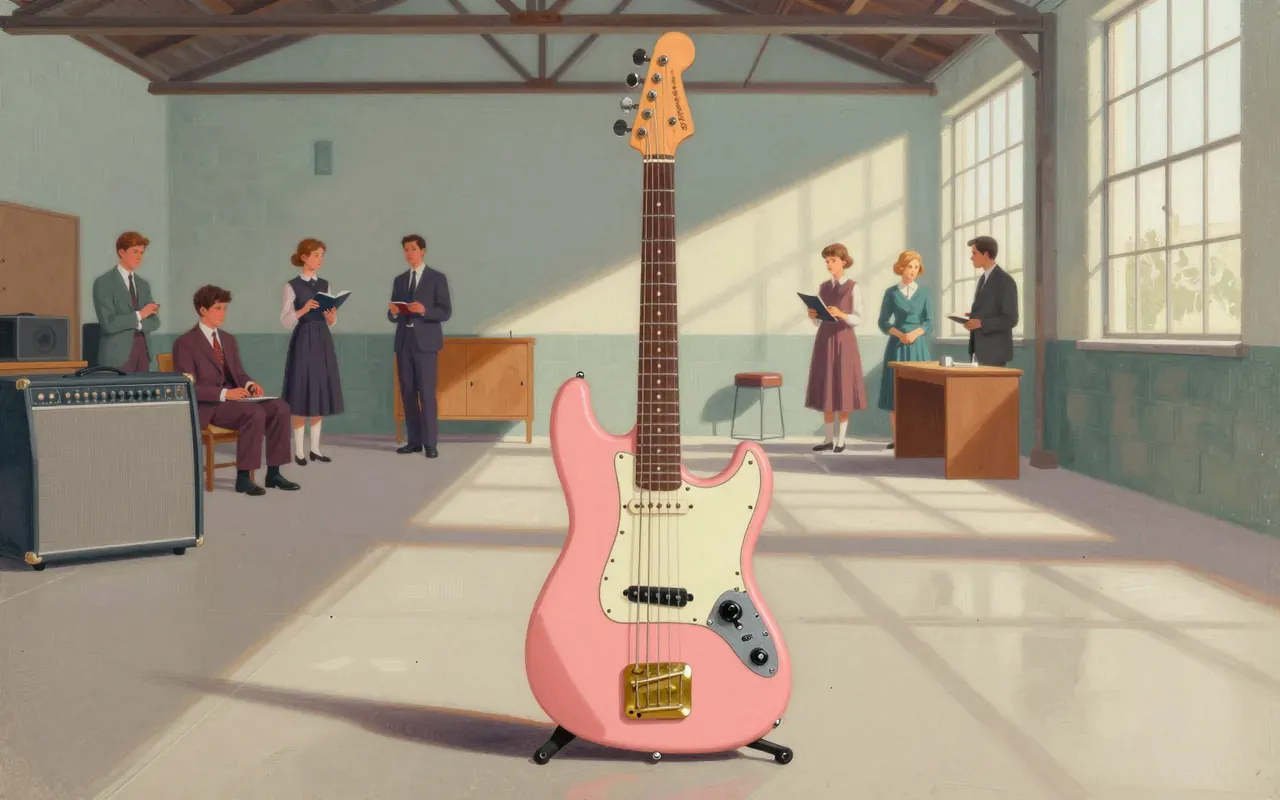
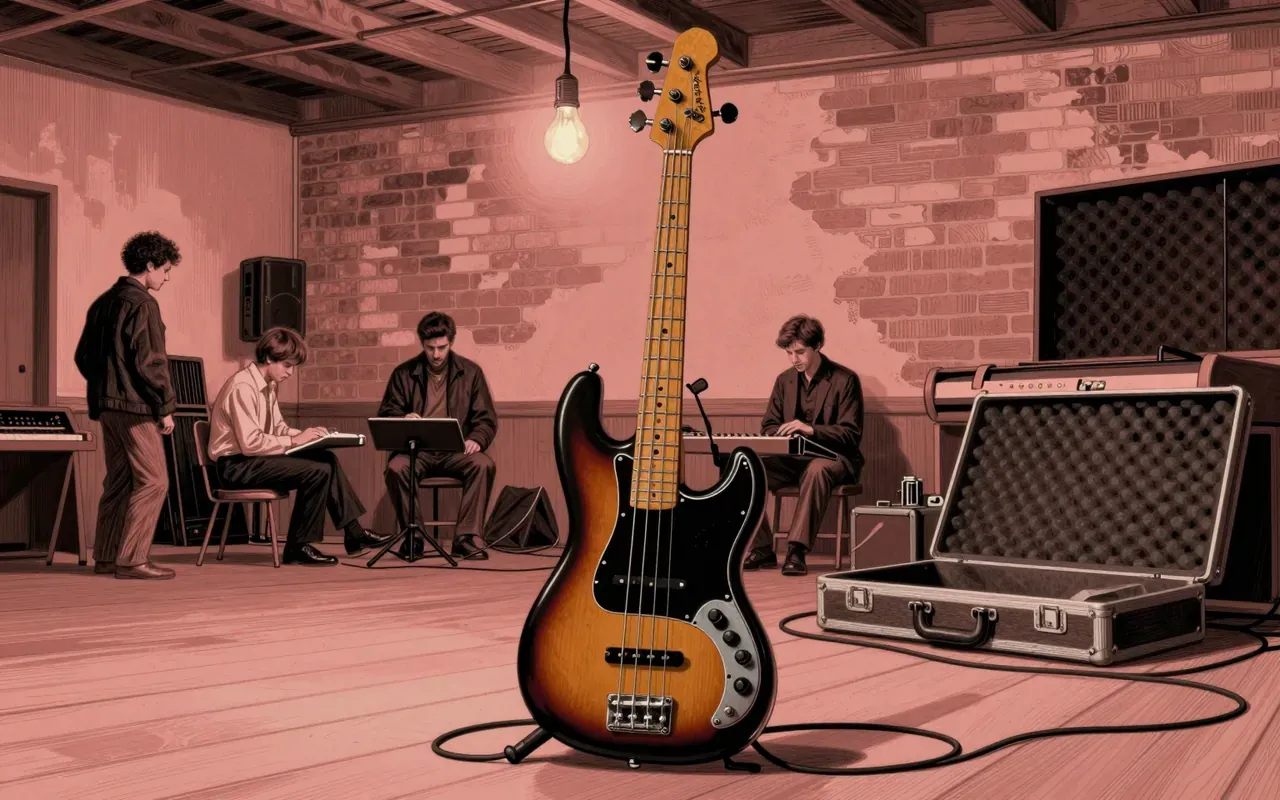
It is the second electric bass guitar created by Leo Fender. It was introduced in 1960 as the Deluxe Model. It was built to offer a tonal and ergonomic alternative to the Precision Bass—targeting players who wanted more articulation and agility.
How it works, in terms a player would use
It has two single-coil pickups with two pole pieces per string. Its neck is narrower and more rounded than the Precision Bass’s, with a noticeably narrower nut width. The body has an offset lower bout and sculpted edges, borrowed from the Jazzmaster guitar.
What it does better than anything else
It delivers brighter, more cutting tone than the Precision Bass—especially in the midrange and treble. Its narrower, more rounded neck enables faster left-hand movement across the fretboard.
What it does badly
It emphasises midrange and treble at the expense of the fundamental frequency. Its single-coil pickups are susceptible to hum. Its offset body offers no inherent advantage for seated playing or strap stability over symmetrical designs.
What people made with it
Players used it to define the sound of funk, R&B, and jazz-fusion bass lines—where clarity, note separation, and midrange presence were essential.
Who should use it, and who should not
Players who prioritise note definition, midrange punch, and nimble left-hand technique should use it. Players who depend on deep fundamental tone, noise-free operation, or maximum low-end sustain should not.
Is it worth your time
Yes—if you need articulate midrange and treble cut, or a slimmer neck for faster playing. No—if you rely on fundamental-heavy tone or need hum rejection in high-gain or fluorescent-lit environments.