What it is and what it was built for
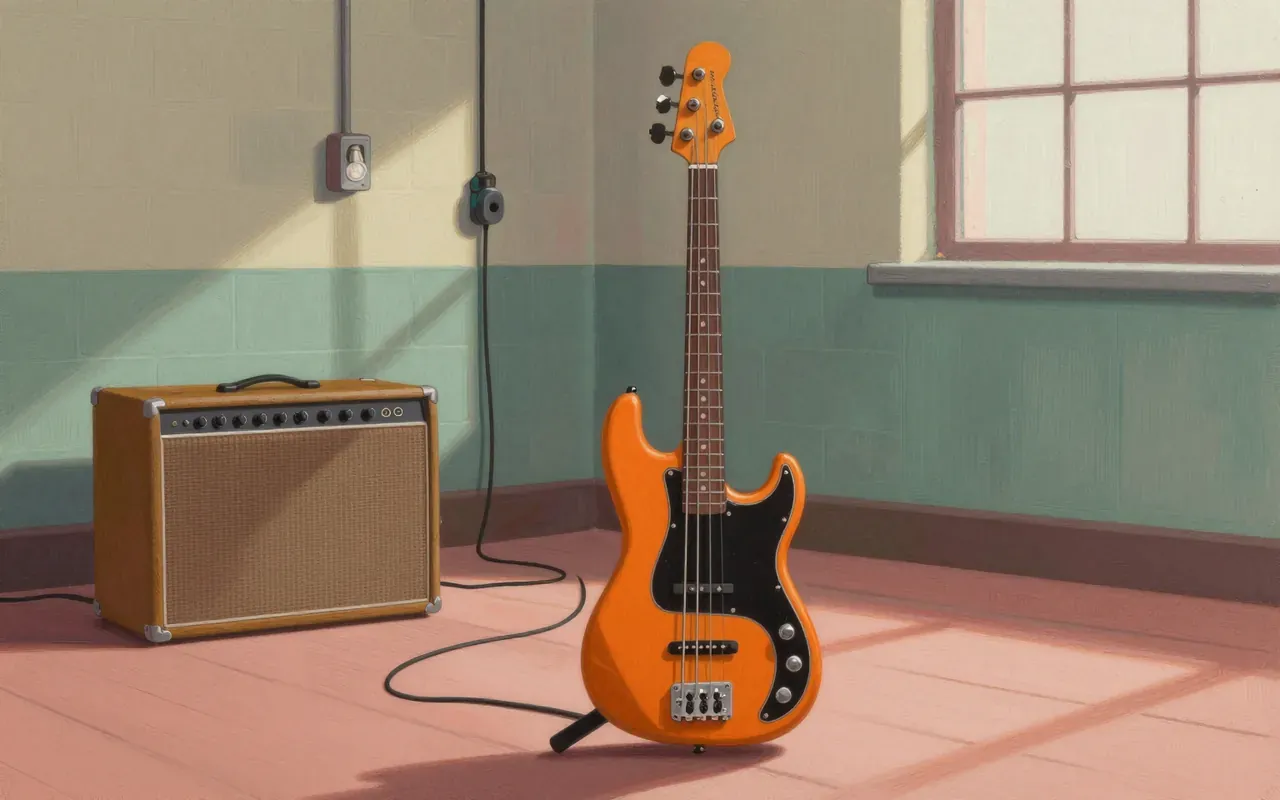
A shortscale electric bass guitar introduced in 1966 as a student instrument. It shares its body with the Mustang guitar and was the last original bass designed by Leo Fender before his 1965 departure.
How it works, in terms a player would use
The 30” scale length and 19-fret neck make it easier to fret low notes with less hand strain. The string-through body design anchors strings firmly at the bridge, increasing sustain and tuning stability. The 7-bolt bridge is rigid but not adjustable per-string. The metal control plate holds volume and tone knobs separate from the pickguard. The split-coil pickups deliver a focused, mid-forward thump — no exposed pole pieces means less fingerboard noise and a smoother attack.
What it does better than anything else
It delivers tight, punchy, articulate low-mids faster than any full-scale Fender bass of its era. Its compact size makes it ideal for smaller players, long sets, or cramped stages. The split-coil design gives clarity without brightness — a focused voice that sits cleanly in indie and alternative mixes.
What it does badly
It lacks low-end authority below E1. The short scale limits string tension and harmonic complexity. The fixed bridge offers no intonation fine-tuning. The plastic-covered pickups mute high-frequency detail and dynamic nuance. It does not project with authority in loud, low-tuned contexts.
What people made with it
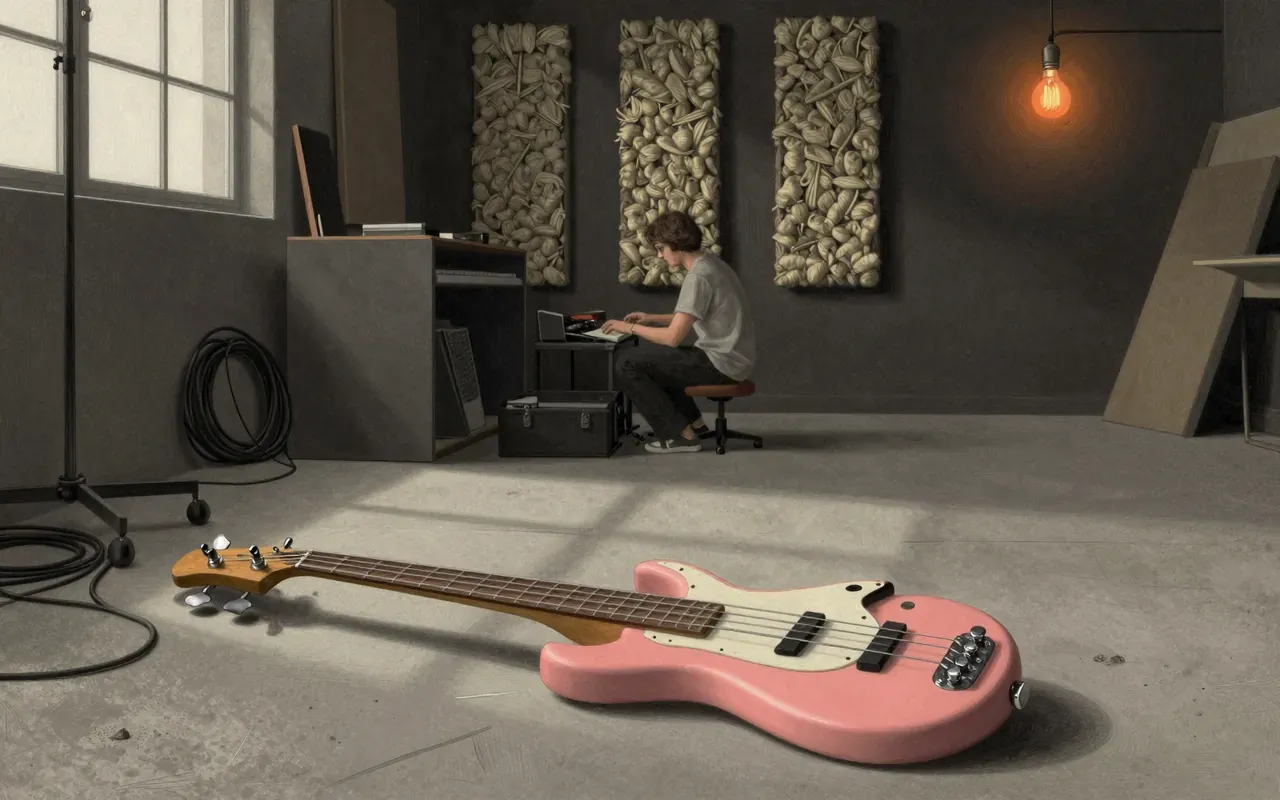
Players used it to anchor lo-fi, angular, rhythm-driven recordings in alternative and indie genres — where immediacy and character outweighed extended range or precision.
Who should use it, and who should not
Small-handed players, touring musicians needing portability, and writers who prioritise tactile responsiveness over tonal breadth. It is not for players requiring extended low-end, slap articulation, or studio-grade consistency across registers.
Is it worth your time
Yes — if you need a compact, responsive bass that cuts through dense mixes without demanding physical endurance. No — if you rely on deep sub-20Hz extension, wide tonal range, or fine-grained articulation for slap or fast syncopation.