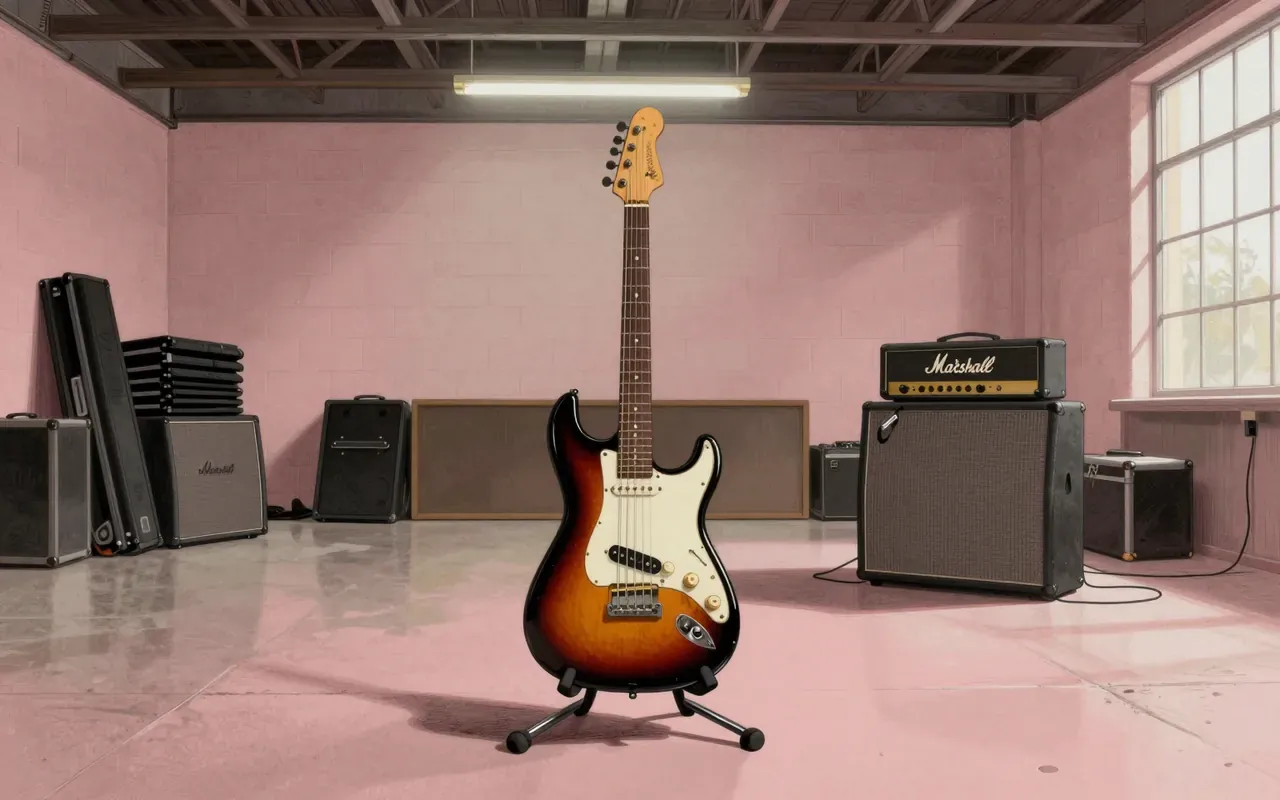
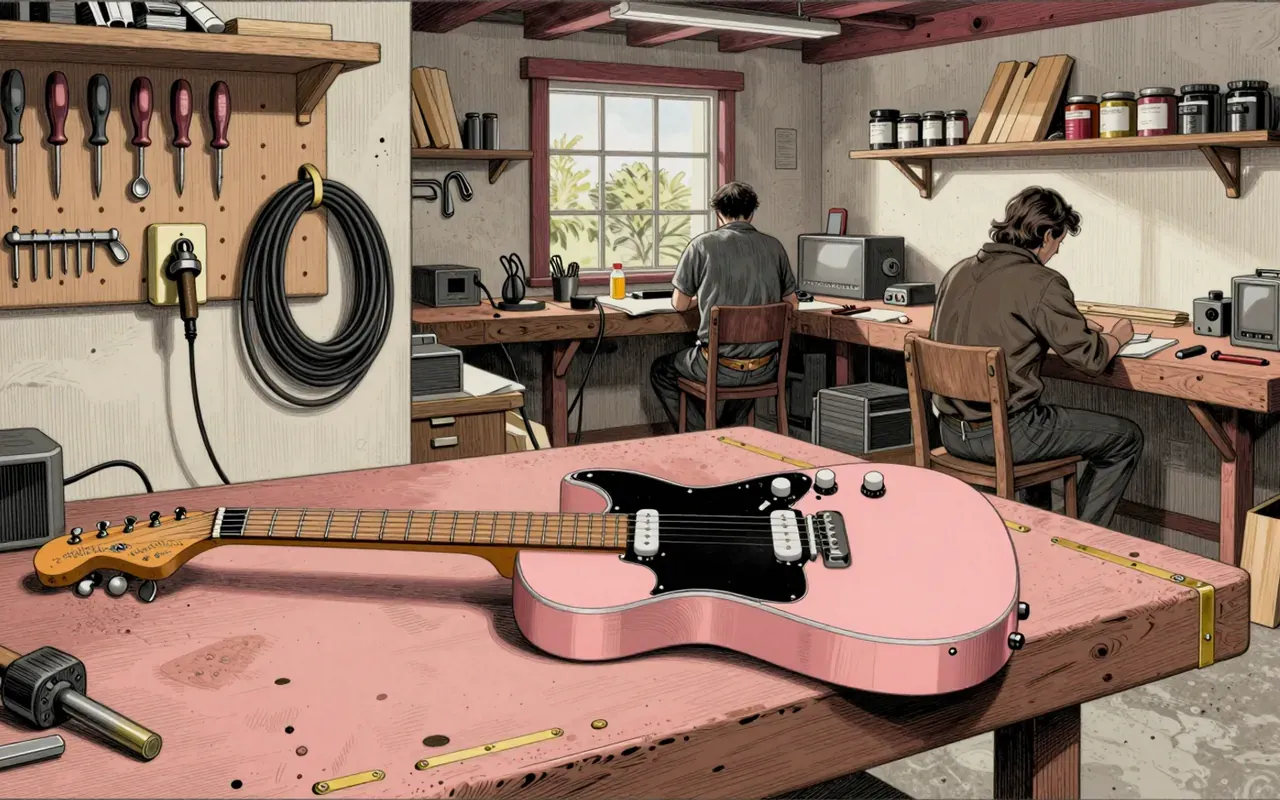
The Fender Mustang is a solid body electric guitar introduced in 1964 as the basis of a major redesign of Fender's student models. It was produced until 1982 and reissued in 1990. It features two single-coil pickups, an unusual pickup switching configuration, and a unique vibrato system. It was originally available in two short scale lengths: 24 inches and 22.5 inches. It has two angled single-coil pickups, each with an adjacent on-off-on switch, and a master tone and volume control. It introduced the Fender Dynamic Vibrato tailpiece, which together with a floating bridge forms the Mustang vibrato system.
Built for students in 1964 — not as a budget copy, but as a deliberate redesign of how beginners interact with the instrument.
2:07
Switching, not selecting
Two on-off-on switches — one per pickup — give four distinct combinations with zero selector lag.
3:28
Short scale, built in
22.5-inch and 24-inch scale options shrink the fretboard physically — not just in feel.
5:12
Vibrato that moves, not locks
The Dynamic Vibrato tailpiece and floating bridge deliver expressive pitch shifts — at the cost of tuning reliability.
Worth your time?
Yes. Use the whole thing.
3.5/ 5
What works
The on-off-on switches deliver instant, unambiguous pickup selection.
The short scale enables rapid position shifts and relaxed left-hand tension.
The Dynamic Vibrato offers wide, singing pitch drops — not just subtle wobble.
What does not
It does not have humbuckers.
It does not use a fixed bridge.
It does not feature a 25.5-inch scale.
It does not include active electronics.
Use it if
Players who value immediate tactile control over tuning stability.
Players with smaller hands or those exploring microtonal or detuned textures.
Writers and performers building angular, staccato-driven parts.
Skip it if
Players needing reliable tuning across extended live sets.
Those seeking warm, full-bodied clean tones at low gain.
Anyone unwilling to adjust technique for floating-bridge intonation.
The written brief1 min read
What it is and what it was built for
A solid body electric guitar introduced in 1964 as Fender’s new student model — built for accessibility, not prestige.
How it works, in terms a player would use
Two angled single-coil pickups. Each has its own on-off-on switch — no selector blade. One master volume and one master tone. The vibrato uses the Fender Dynamic Vibrato tailpiece and a floating bridge.
What it does better than anything else
Switching between pickup combinations is faster and more direct than on any Fender of its era. The 22.5-inch scale gives exceptional left-hand ease for small hands or fast position shifts.
What it does badly
The floating bridge and Dynamic Vibrato make tuning unstable during aggressive use. Short scale lengths limit string tension and low-end authority. Master controls offer no pickup-specific tone shaping.
What people made with it
Post-punk, indie rock, and garage bands used its wiry snap and quick-switching to cut through dense mixes — often detuning or abusing the vibrato for texture.
Who should use it, and who should not
Players with smaller hands, those who prioritise switching speed over tuning stability, or anyone building a short-scale-focused rig. Not for players who rely on consistent intonation across long sessions or need thick rhythm tones.
Is it worth your time
Yes — if you want a short-scale guitar with immediate, tactile switching and vibrato that bends pitch without choking the string. No — if you need stable tuning under heavy use or standard-scale ergonomics.